Caring for Life from the First Breath
How specialised training and mentorship helped Victoria Bintu Fofanah respond when a newborn needed urgent care

MAKENI, Sierra Leone — Victoria Bintu Fofanah stood beside the operating table, holding a clean wrapper and watching the doctors perform an emergency Caesarean section. The mother had experienced obstructed labour, a serious complication that prevented the baby from progressing through the birth canal. Victoria was ready to receive the newborn.
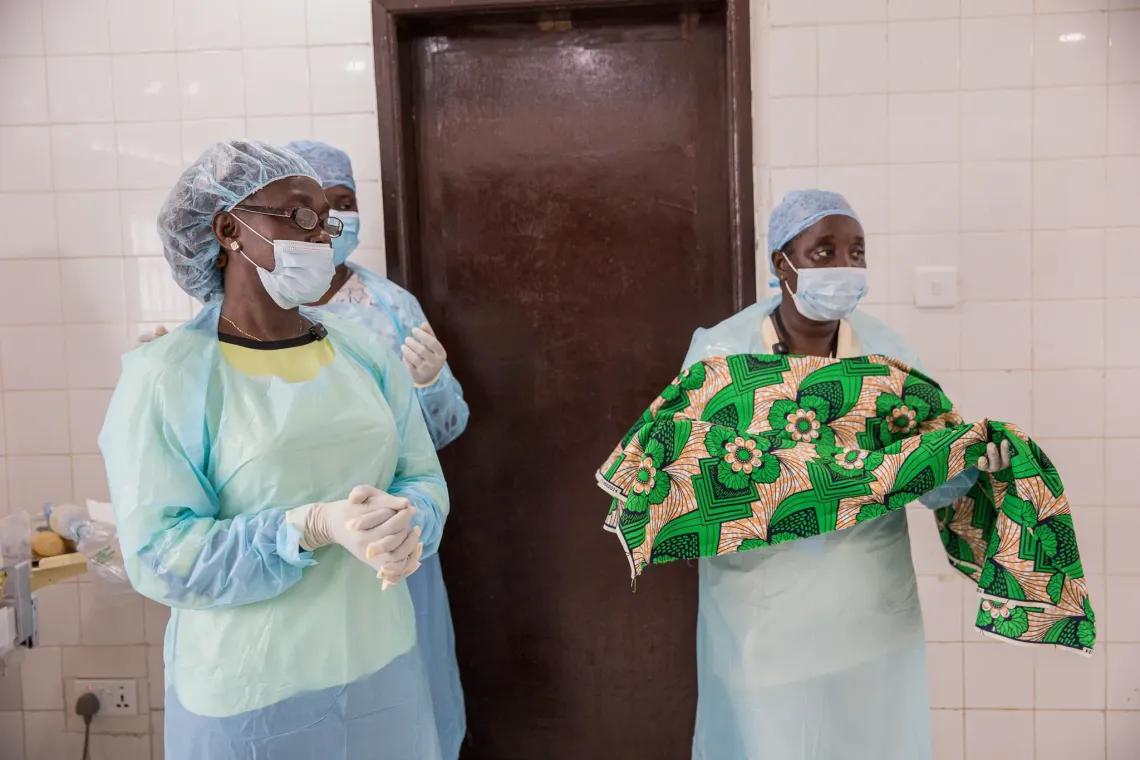
The surgical team worked for some time before delivering the baby. Victoria remained close, watching and waiting. When the little girl was finally born, Victoria stepped forward to receive her and immediately realised that something was wrong. The baby did not cry. Her body was limp, with little muscle tone, and she was not breathing.
Victoria moved quickly to the newborn resuscitation area and placed the baby beneath the warmer. Guided by her mentor and working alongside the team, she applied her training as they began the urgent steps needed to help the baby breathe.
“The baby’s Apgar score was one after the first minute,” Victoria recalls. The score, which health workers use to assess a newborn’s condition immediately after birth, indicated that the baby needed urgent support.
The team continued resuscitation.
“After five minutes it improved to five, and after ten minutes it was seven,” she says.
The improvement was encouraging. The baby was now breathing, but she still needed further medical care. She was transferred to the Special Care Baby Unit (SCBU), where she was managed for respiratory distress and received oxygen to support her breathing.
For Victoria, those minutes tested more than what she knew. They tested her confidence to act.
“I had learned newborn resuscitation before,” she says. “But I wasn’t confident enough to do it on my own.”
Learning to care for two lives
As a midwife, Victoria was trained to care for women through pregnancy and childbirth. But her work had also shown her how much could depend on the care a baby received in the first moments after birth.
“There are two lives we care for,” she says. “The mother and the baby.”
Victoria wanted to be equally prepared for both. That determination led her to the Post-Basic Certificate in Neonatal Nursing programme, where specialised training and mentorship were strengthening the skills and confidence she needed in emergencies like this one.
Juliana Conteh, a neonatal nurse, mentors Victoria and other nurses as they put their classroom learning into practice. By working alongside them in the care of newborns, she has seen their knowledge, skills and confidence grow.
“The Post-Basic Certificate in Neonatal Nursing is giving them a wider scope and knowledge on how to carry out the management of sick newborns,”
For her, the real measure of that progress is what it ultimately means for families.
“Seeing them leaving the hospital to go home with a living child, with a smile on their face, gives me joy,” she says.
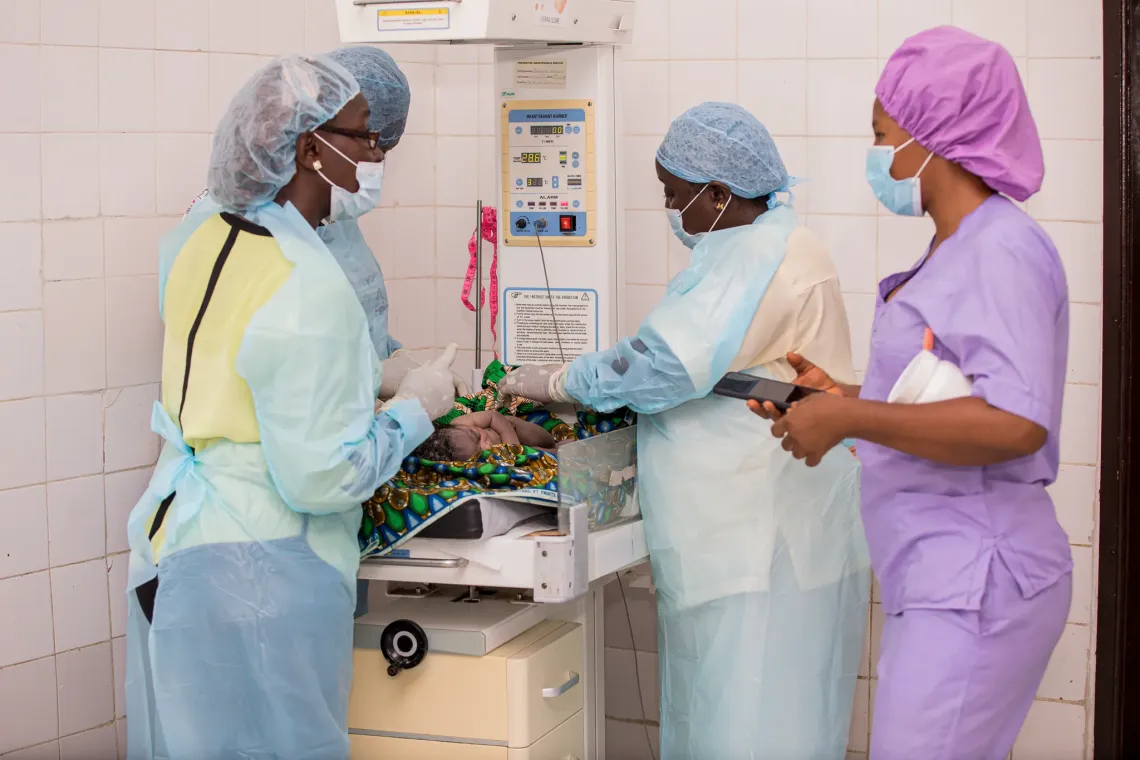
Back in the SCBU, the full-term baby continued receiving oxygen and close monitoring as the team managed her respiratory distress.
As her condition improved, Kangaroo Mother Care (KMC) was recommended as part of her continuing care. With her mother still recovering from the Caesarean section, the nurses introduced her grandmother, Zainab Manasary, to the practice.
KMC provided close skin-to-skin contact, helping to keep the baby warm and upright while encouraging touch and bonding. Because the unit had limited radiant warmer capacity, the practice also offered a safe and practical way to support the baby’s warmth as her recovery continued.
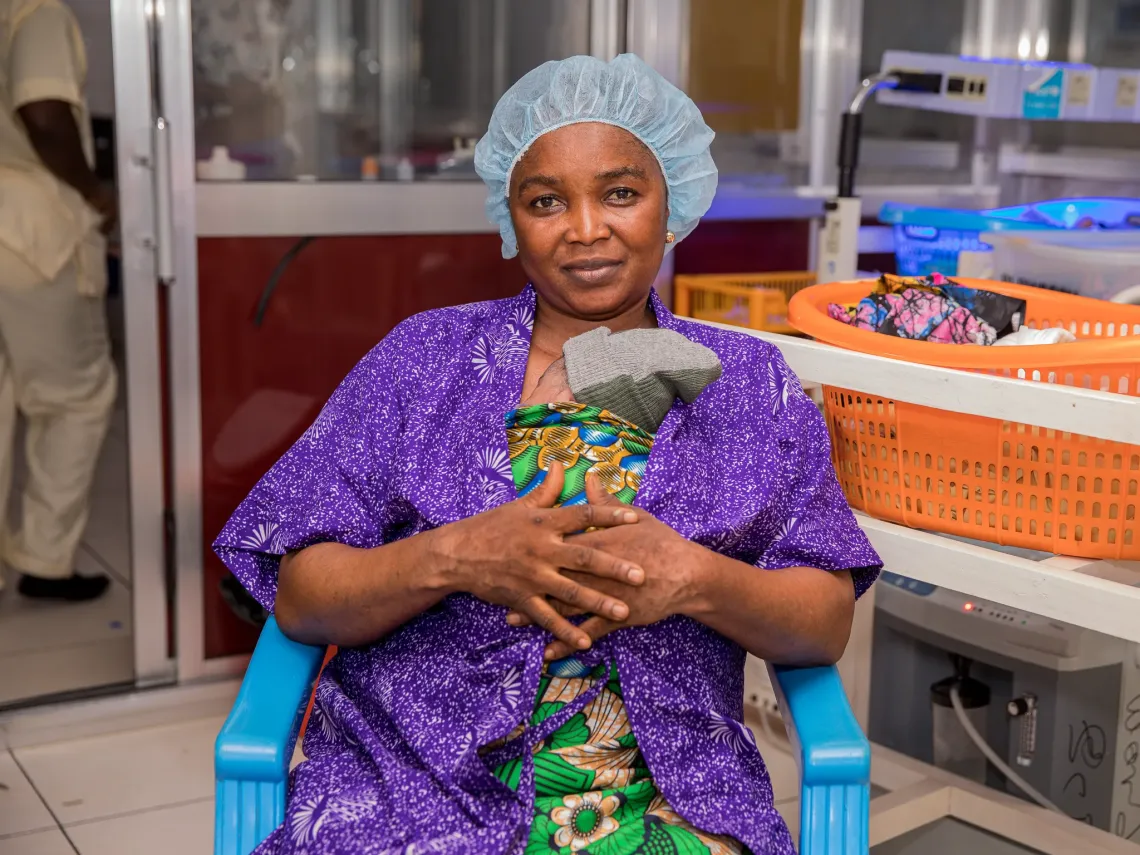
For Zainab, it was completely new.
“I didn’t know I was going to do Kangaroo Mother Care. I had never heard of it,” she says. “The nurse spoke to me clearly about its benefits and why it was necessary for us to do it.”
Soon, the little girl was resting against her grandmother’s chest beneath a wrapper. Zainab held her securely with both hands, gently tapping her back.
“I feel happy,” she says. “I feel connected to her.”
After continued care and monitoring, the baby recovered sufficiently to leave the hospital with her family.
Building the skills newborns need
Victoria’s experience reflects the wider purpose of the Post-Basic Certificate in Neonatal Nursing programme: equipping health workers with the specialised knowledge, practical skills and confidence to give vulnerable newborns the care they need.
Supported by the Government of China through the China International Development Cooperation Agency and implemented with the Ministry of Health and UNICEF, the wider programme aims to strengthen newborn and child health services across Sierra Leone.
It is expected to directly benefit nearly 400,000 children, build the capacity of nearly 1,000 health workers and community health workers, and strengthen more than 80 health facilities with essential medicines, equipment and reliable solar power.
At Makeni Regional Government Hospital, a referral facility serving communities across northern Sierra Leone, that investment is reflected in stronger health-worker skills, improved newborn care and the confidence nurses like Victoria bring to critical moments.
For Victoria, the training matters most in moments like that morning: when a newborn needs immediate help and a health worker must recognise the danger, know what to do and have the confidence to act.
She has her own way of describing what that responsibility means.
“When I save one baby, I know that I have saved a nation.”