Breathing new hope: Sierra Leone’s journey to building a lifesaving oxygen ecosystem
How lifesaving oxygen is giving babies, mothers, and families in Sierra Leone a second chance

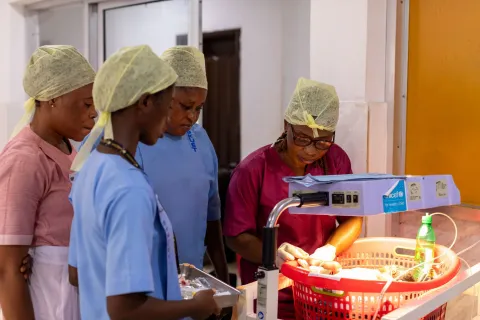
Freetown, Sierra Leone - At the Special Care Baby Unit (SCBU) at King Harman Road Hospital in Freetown, the steady hum of oxygen concentrators fills the ward. Tiny chests rise and fall as newborns fight for life, supported by a commodity that was once scarce in Sierra Leone: medical oxygen.
“I remember before, we used to struggle to keep babies alive when they came in with breathing difficulties,” recalls Lamin Kanu, Paediatric Clinical Officer at the King Harman Road Hospital SCBU. “Now, with reliable oxygen and the right equipment, we can stabilize them quickly. It has changed the way we care for our patients.”
For Gloria Fallah, a mother whose newborn was admitted with severe respiratory distress medically known as birth asphyxia immediately after birth, the difference is deeply personal. Holding back tears, she says, “When my baby couldn’t breathe, I was so afraid I would lose him. However, the doctors administered oxygen to him immediately. I am grateful to the hospital staff and the oxygen facility, which saved my child’s life.”

From scarcity to system strengthening
The story of Sierra Leone’s oxygen ecosystem is one of transformation. Before 2021, the country depended heavily on a single oxygen plant at Connaught Hospital in Freetown and a limited number of oxygen concentrators at selected facilities. The COVID-19 pandemic exposed the fragility of this system, as hospitals struggled to meet the surge in demand for medical oxygen—a lifesaving commodity for both COVID-19 patients and those suffering from other conditions such as pneumonia, birth asphyxia, and surgical complications.
Recognizing the urgent gap, the Ministry of Health, UNICEF, and partners mobilized resources and developed an Oxygen Landscape Assessment and Road Map, followed by the National Medical Oxygen Strategic Plan and Standard Operating Procedures for appropriate use across hospitals and primary healthcare units (PHUs).
At the new plant site in Jui, staff beam with pride as they watch cylinders being filled and loaded for delivery. “Working here is not just a job, it feels like we are part of something bigger,” says Frederick Kamara, a volunteer medical technician at the Jui Government Hospital oxygen plant. “When I see these cylinders leaving for this hospital and other health facilities, I know they will save lives. That motivates me every day.”
“The pandemic taught us that without oxygen, our health system cannot save lives at scale,” explains Dr. Denis Marke, Programme Manager for Health System Strengthening and lead of the national oxygen programme. “That is why we worked with UNICEF and partners to make strategic investments, including, new plants, training for staff, equipment, and even alternative power sources. Today, Sierra Leone is no longer the country with a single oxygen plant. We have twelve functioning PSA oxygen plants, with more on the way.”
Expanding access: From plants to patients
In just four years, Sierra Leone has progressed from one oxygen plant to twelve PSA plants, thanks to coordinated investments from partners including the Global Fund, Gavi, Islamic Development Bank, Republic of Korea, SFF (UNICEF fund), FCDO, and USAID. Alongside plants, thousands of oxygen concentrators, pulse oximeters, nasal prongs, and face mask ventilators have been distributed nationwide to hospitals and PHUs.

The system is also becoming more resilient. Two PSA plants are being solarized to address frequent power outages, and a hub-and-spoke model is under development so that smaller hospitals can access oxygen from nearby district plants. A Medical Gas Piping System (MGPS) is being introduced to allow direct bedside oxygen supply, further streamlining patient care.
Coordinated efforts, shared results
For the Ministry of Health, this progress is a symbol of collective achievement. The Chief Medical Officer, Dr. Sartie Kenneh, underscores this point: “The coordinated efforts of the Ministry of Health, UNICEF, and our donor partners have fundamentally strengthened the oxygen ecosystem in Sierra Leone. Today, oxygen is no longer a rare commodity. It is becoming an essential part of our health system, accessible, reliable, and lifesaving.”

These advancements have already changed outcomes on the ground. District Medical Officers report that referrals have reduced as hospitals can now stabilize patients locally. Health staff at community health centers highlight that children with pneumonia or women facing complications in childbirth can receive oxygen immediately, without waiting for long transfers.
A sustainable future for lifesaving oxygen
For UNICEF, this journey is about more than just infrastructure; it’s about building resilience in the health system. The UNICEF Chief of Health and Nutrition, Dr. Vandana Joshi, explains: “Our investment in system strengthening, leveraging resources, and providing technical support has brought positive and sustainable change. Oxygen is now firmly established as a key lifesaving commodity in Sierra Leone. It is helping children survive, mothers recover, and health workers deliver better care.”

Back at King Harman Road Hospital, Gloria's little baby boy is breathing on his own for the first time since birth. His mother cradles him close, whispering a quiet prayer of gratitude.
“Oxygen gave my baby a second chance,” Gloria says softly. “That means everything to me.”