We Love Learning With Wally
Assistive technology: turning barriers into opportunities
- Srpski
- English
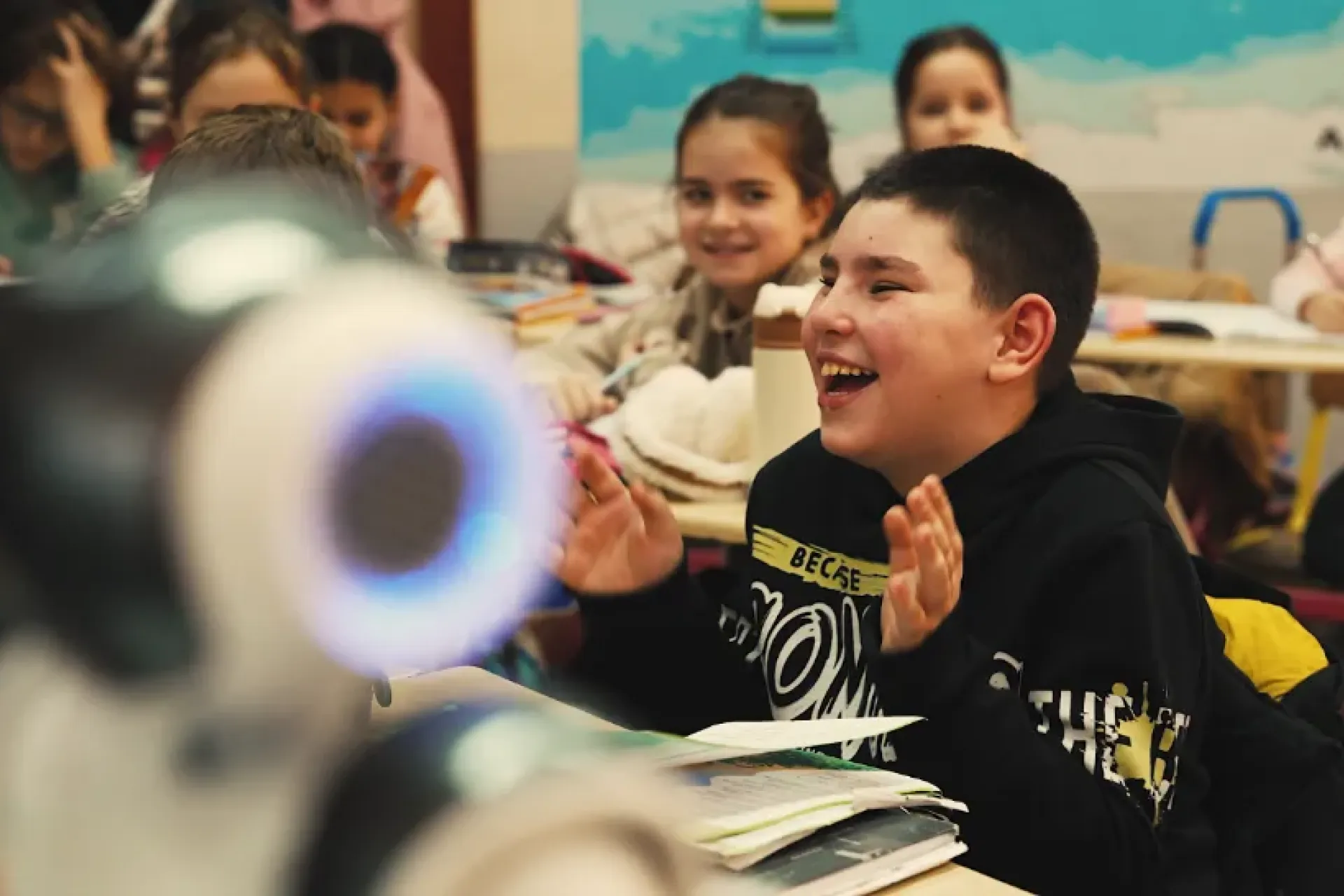
Belgrade, January 2026 – “What I like the most is Rasa, this robot Rasa. He laughs, plays, and jumps,” nine-year-old Ognjen tells us excitedly.
He enjoys going to school, especially mathematics classes. Ognjen also has learning difficulties. To help him overcome them, he is supported by his teacher, classmates and a small robot named Wally, whom the children have nicknamed Rasa, after the name of their school “Radoje Domanovic” and the Resource Centre “Radivoj Popovic” from which the robot comes. However, Rasa is not in school only because of Ognjen. He is there for all students and teachers.
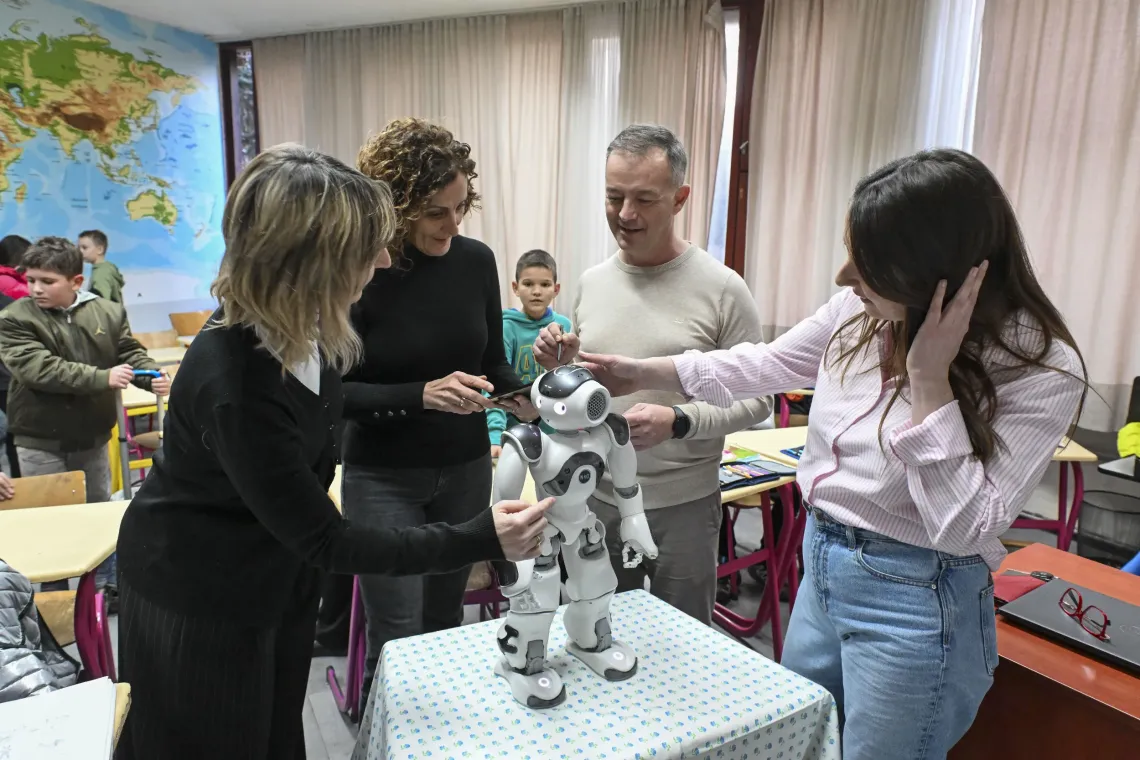
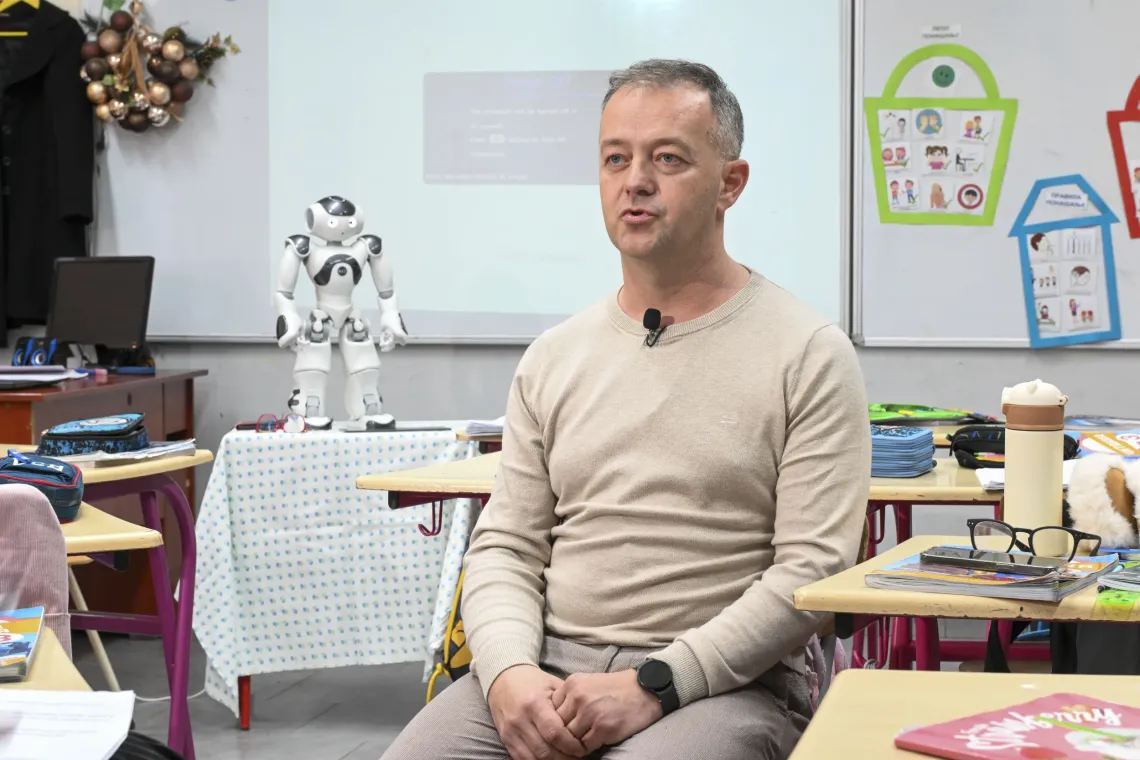
“One of the areas of work of resource centres is the use of modern tools, that is, assistive technologies. The robot Wally, or Rasa, is one such modern assistive technology tool. It is a humanoid robot that helps us support children in acquiring new knowledge and skills, and in improving communication and social interaction. In that sense, the robot truly helps us strengthen both our work and teaching across schools,” explains Stevan Nestorov, a special educator who has worked in inclusive education for many years. Stevan is also the head of the Resource Centre “Radivoj Popovic,” which has been allocated one of 11 humanoid robots.
As part of the project “Improving quality education for every child through assistive technologies,” the Ministry of Education, in cooperation with UNICEF, is equipping the libraries of resource centres with assistive technology, including a humanoid robot. The enrichment of this equipment has also been supported by the Intesa Foundation.
For some children, assistive technology represents the difference between the risk of exclusion and inclusion.
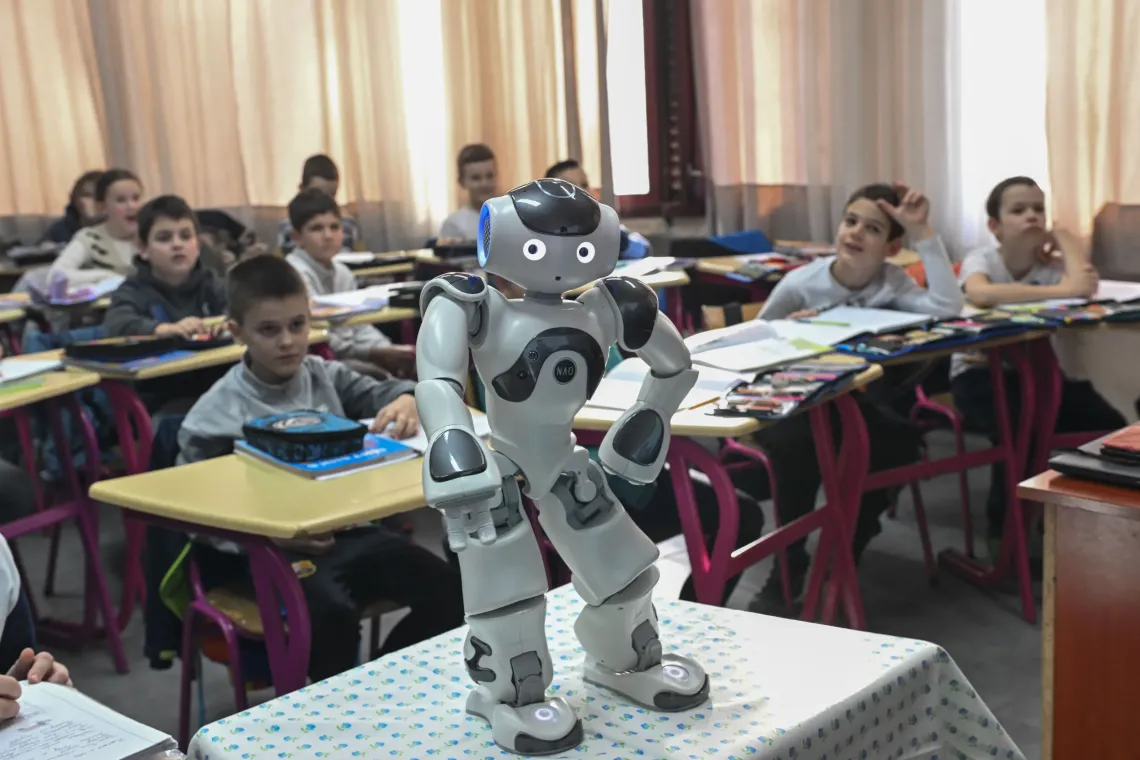
“In terms of inclusive education, the robot truly acts as a bridge to inclusion. It helps create a positive classroom atmosphere and makes children smile. Laughter is important. Movement is important. Interaction is important. With the support of teachers and our experts from the Resource Centre, the robot enables all of that,” says Stevan.
That the use of assistive technology in schools delivers results is confirmed by both children and teachers. Ognjen and his classmates simply adore it. When Rasa speaks, everyone listens. When Rasa sings, they cheer and applaud, and the classroom fills with laughter and joy.
“Rasa tells me bravo,” Ognjen shouts and hugs the classmate next to him every time he answers a question correctly, whether it is asked by the teacher or by Rasa.
Mila sees Rasa as a small, always smiling robot.
“Rasa really captures our attention in class, and I feel very happy when he is there. When we do something correctly, he applauds, and he always manages to make us laugh when he dances. It is nice that we all learn together with Rasa,” she says.
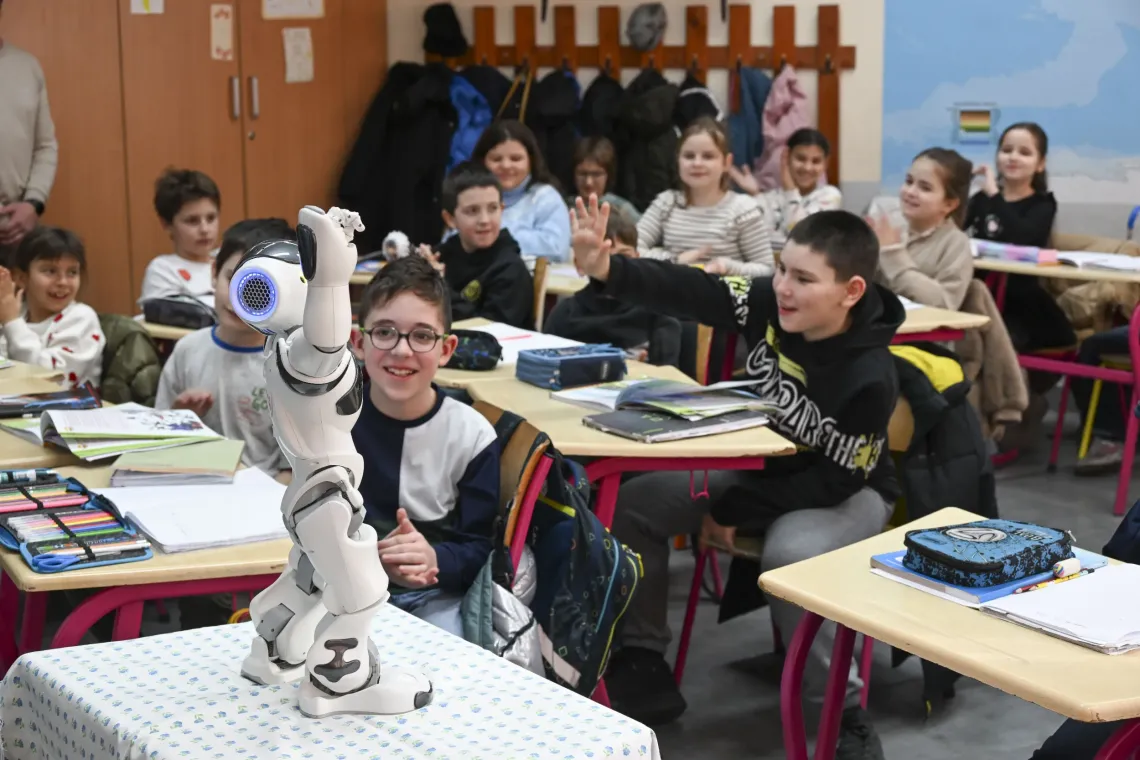
Klara wishes Rasa could always be at school.
“I would like Rasa to come to math class. He knows how to applaud, dance, and talk. We all learn together with Rasa through play,” Klara explains.
Luka is never bored when the robot is in the classroom. He especially enjoys singing and dancing with it. He also remembers the first time Rasa came to school.
“It was really nice when he talked to us. He was very kind, fun, and funny. He was great. We usually learn more easily with Rasa,” says Luka.
Children do not see the robot only as technology, Stevan explains. For them, it is much more.
“In their eyes, the robot is a source of motivation, a learning partner, a way to spark interest, improve attention and develop competencies that are essential for contemporary learning,” he says.
Teacher Marina Subotic has been working with children for more than two decades. She has extensive experience in educating children with developmental difficulties and attention disorders. She knows how to motivate them to learn, how to engage and inspire them. Still, when the robot arrives, she admits the classroom feels more joyful.
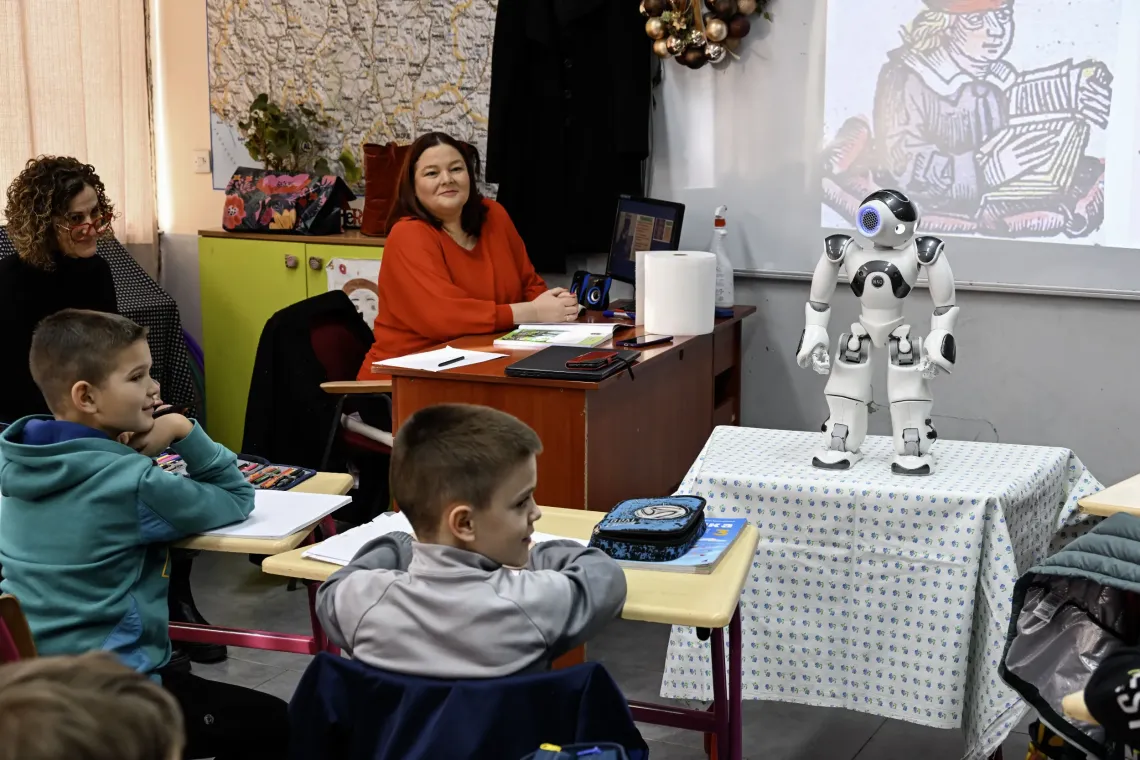
“When Rasa is in class, Ognjen is more active, raises his hand more often, and feels more confident. I think it provides equal opportunities to every child, whether it is Ognjen or any other child,” she says.
Rasa participates in teaching by, among other things, asking questions, drawing conclusions, and offering praise.
“Of course, everything is programmed in advance and carefully designed. The team we worked with from the Resource Centre and I plan the lesson together. They design the moments when Rasa should speak so that it makes sense within the lesson,” she explains.
For Marina, inclusion means that every child is accepted and has the same opportunity to learn, to be educated, to socialize, and to engage in sports and music.
“Good observation,” Rasa replies.
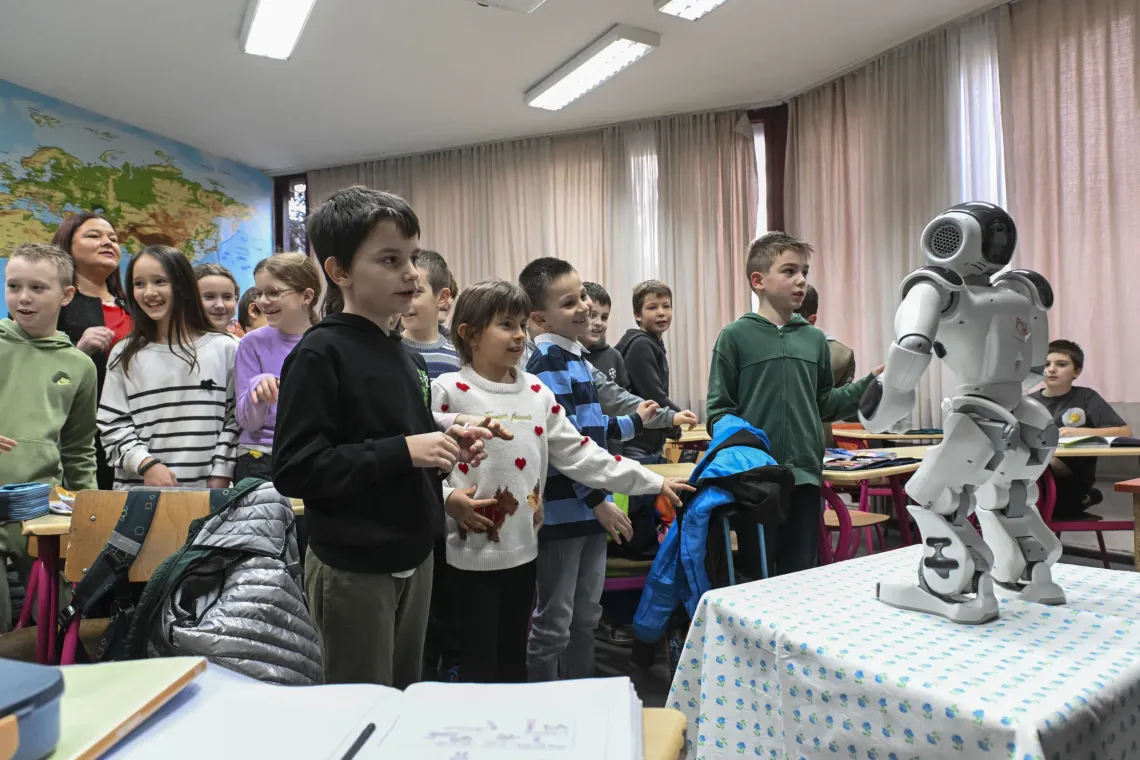
Assistive technology plays a major role in this process, Marina says.
“No robot can replace a teacher. It is here to motivate students, activate them, make lessons more engaging and joyful, and align learning with the realities of today’s world,” Marina says.
Rasa listened carefully to everyone. Before leaving, he waved his hand and said, “Thank you. I learned a lot from you!”