Science in Action
STEM Clubs – learning through research, hands-on practice, and teamwork.
- Srpski
- English
Kostolac, April 2026 – “In the STEM club we develop creativity and independence,” says fourteen‑year‑old Alina, a student at Jovan Cvijic Primary School. It is one of 30 schools participating in UNICEF’s project “Supporting the Development of 21st Century Skills”, implemented with the support of Nelt Group. Her classmate Uroš, one year her junior, especially enjoys the teamwork: “We learn through play, we learn to be fair to one another, to respect others, and to recognize that everyone has the right to express their own opinion and say what they want,” explains Uros.
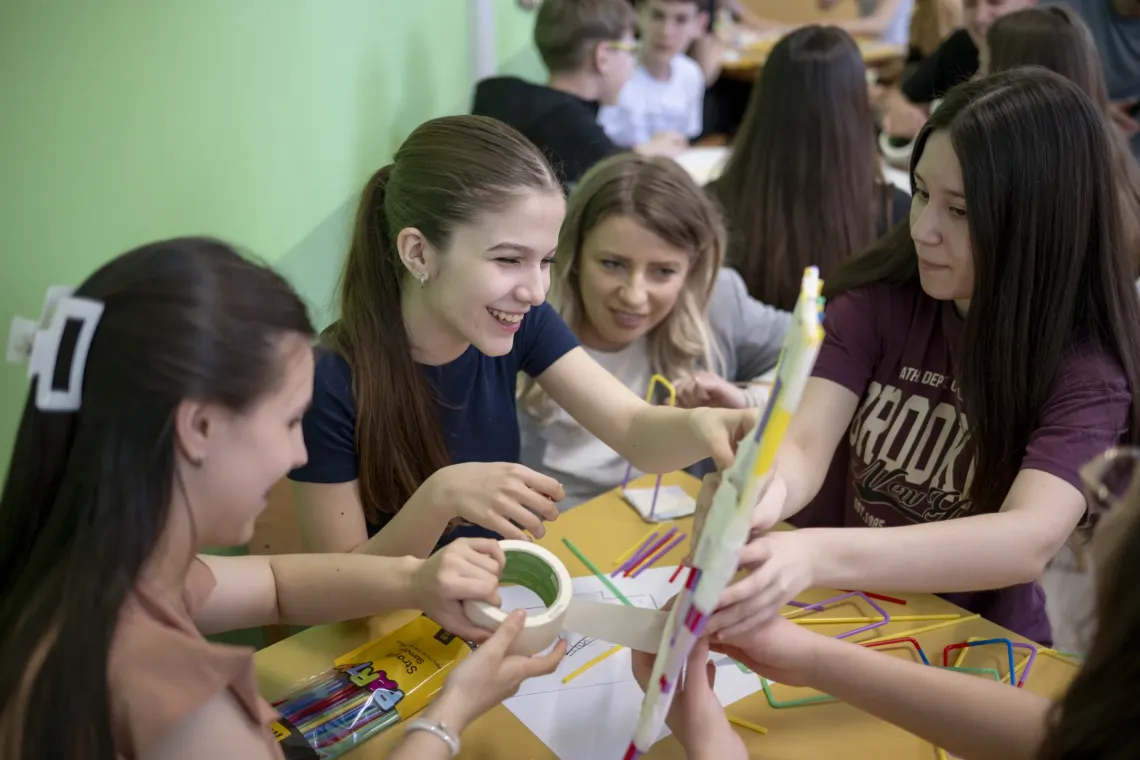
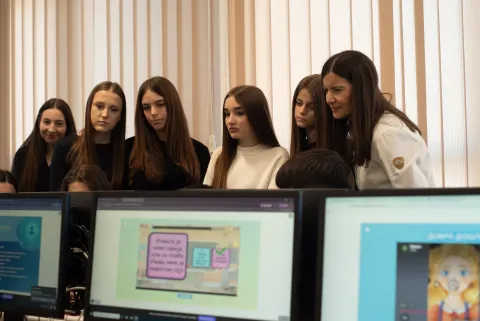
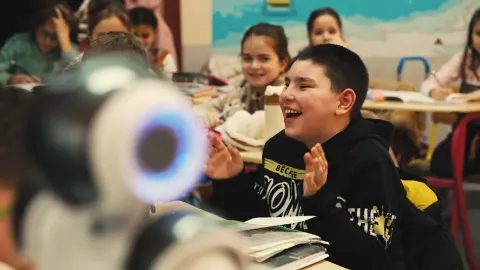
School clubs are places where students can learn in a more engaging and practical way — through play, exploration, and with the use of different materials and digital tools. In these clubs, children develop knowledge and skills that are valuable both in school and everyday life.
“School clubs are places where children can discover new things, approach problems in different ways, reach different conclusions, and in doing so develop their critical thinking,” explains Ivana Vucetic, chemistry teacher and coordinator of school clubs at Jovan Cvijic Primary School.
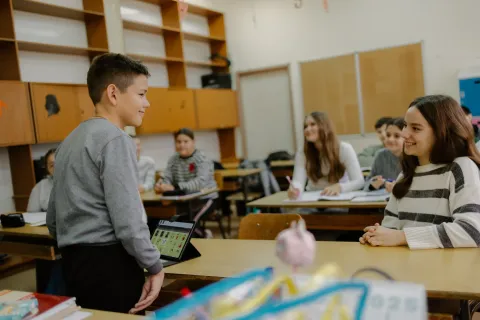
Different school clubs provide children with opportunities to develop their interests and discover new ones. The clubs foster a child-centered and inclusive learning environment where students can freely ask questions, make mistakes, and learn from one another, without fear of judgment or ridicule.
“We performed experiments. We studied the microclimate of the schoolyard and built models,” says Uros, now in his second year in the club. Alina fondly remembers an escape room challenge where they had to solve problems in one classroom, before earning the right to move to the next one. Beyond testing their knowledge, this activity was a way to put their resourcefulness to the test.
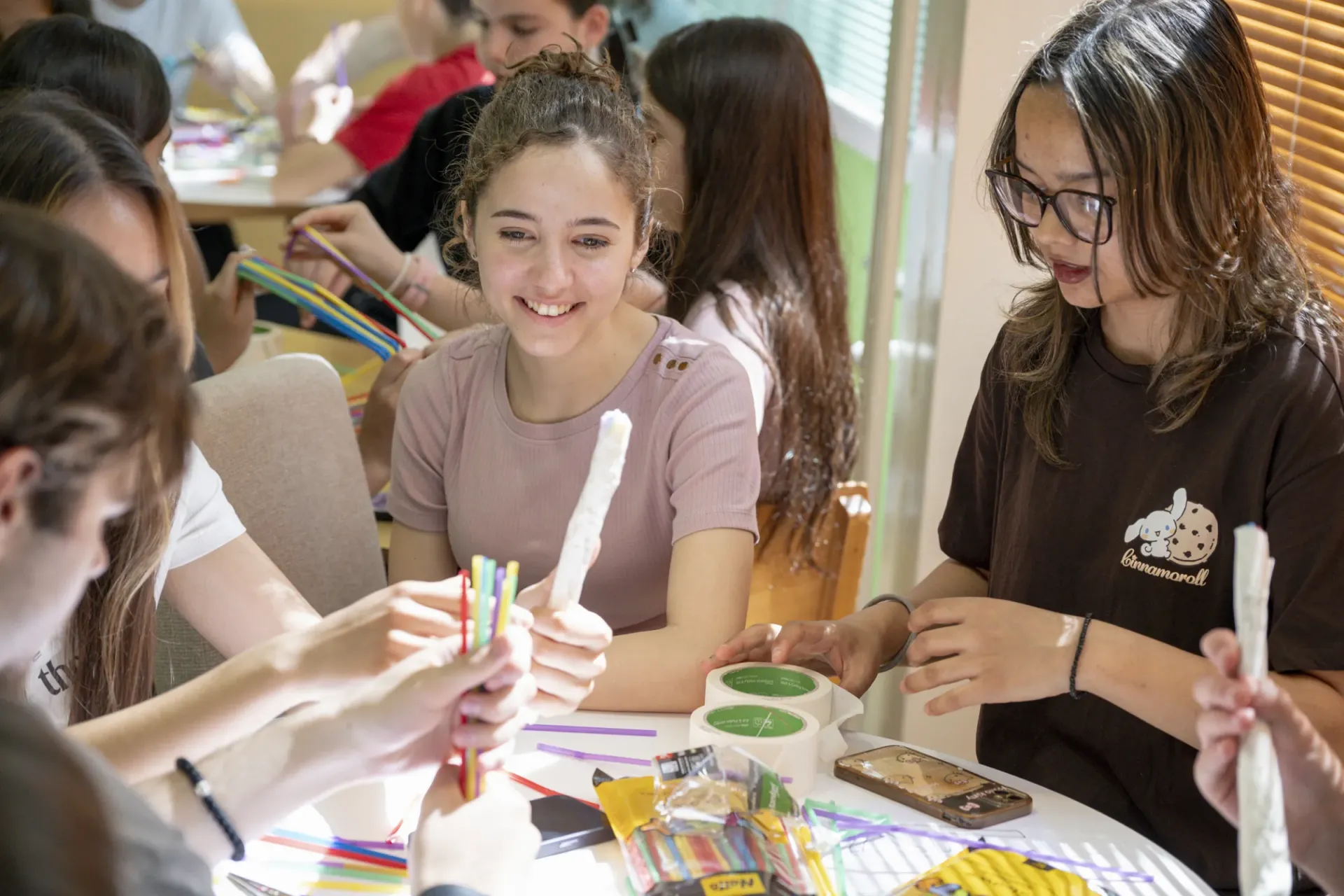
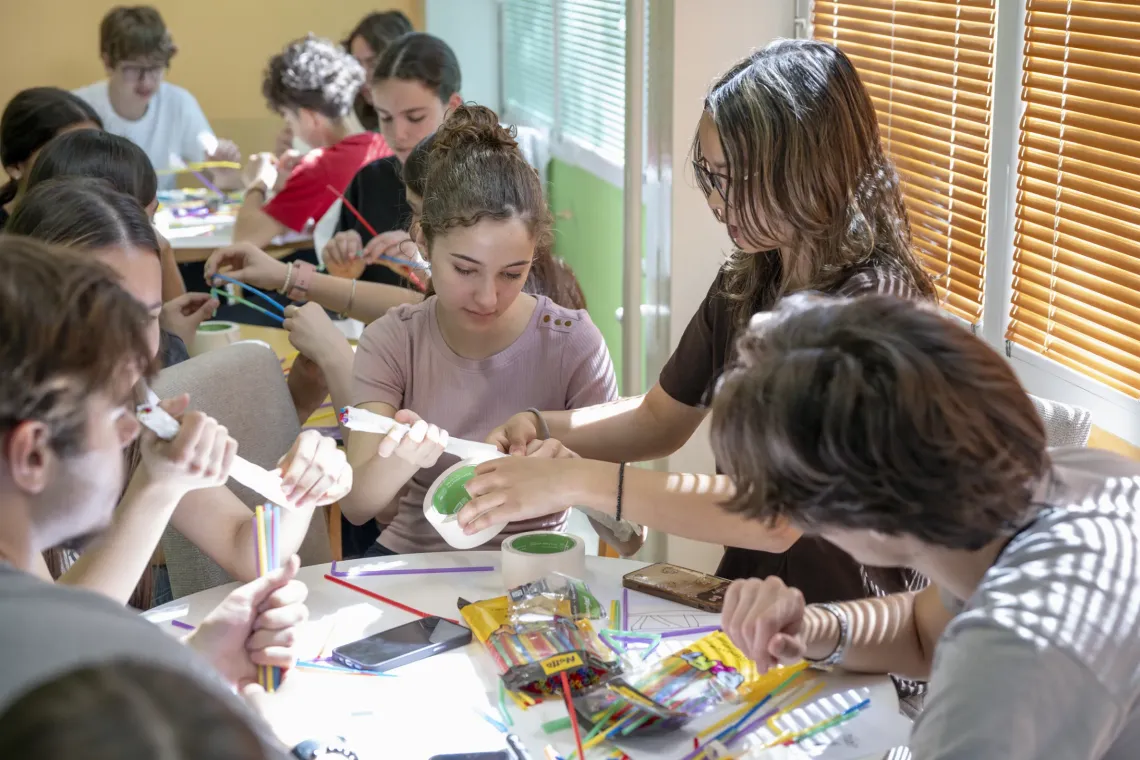
One of the STEM challenges was for the teams to build a bridge that would be as stable as possible, and withstand the heaviest possible load.
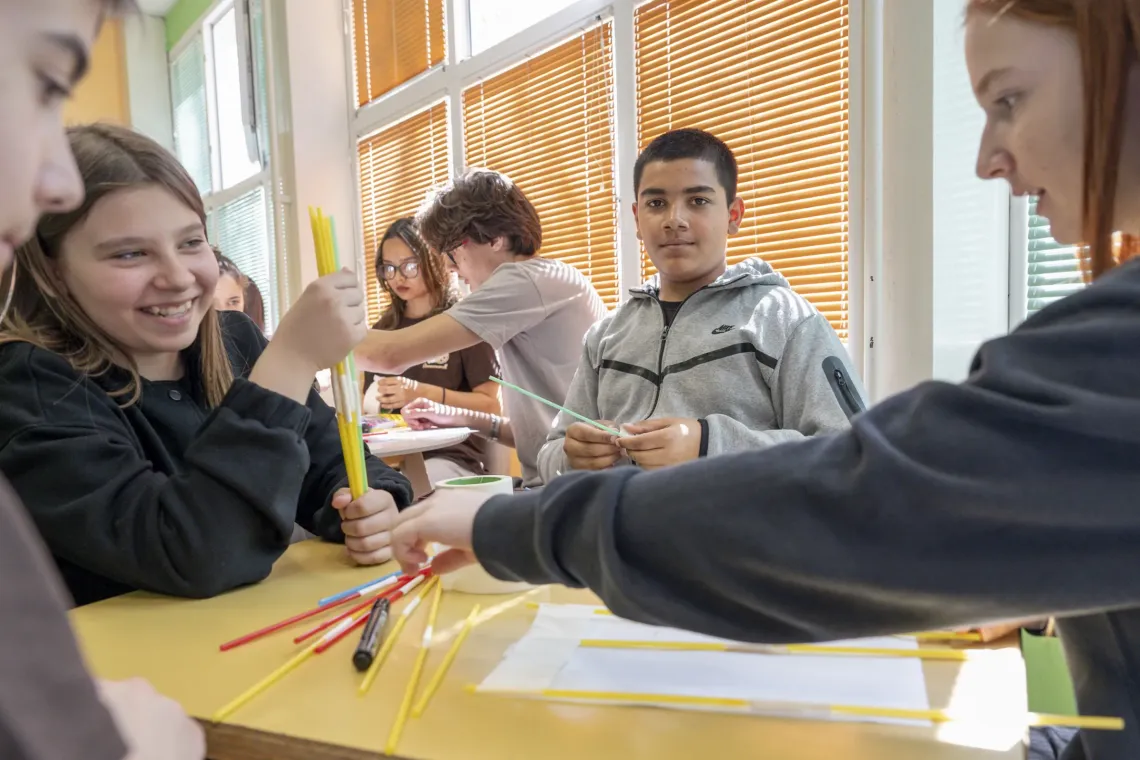
“We built bridges out of straws. Every time a problem arises, we look for a way to solve it. When we face a challenge, we gather and find a solution. The most important thing for us is that we work together. Even if someone isn’t interested at first, it becomes interesting when you’re working with friends and teachers,” explains Dusan, an eighth-grade student.
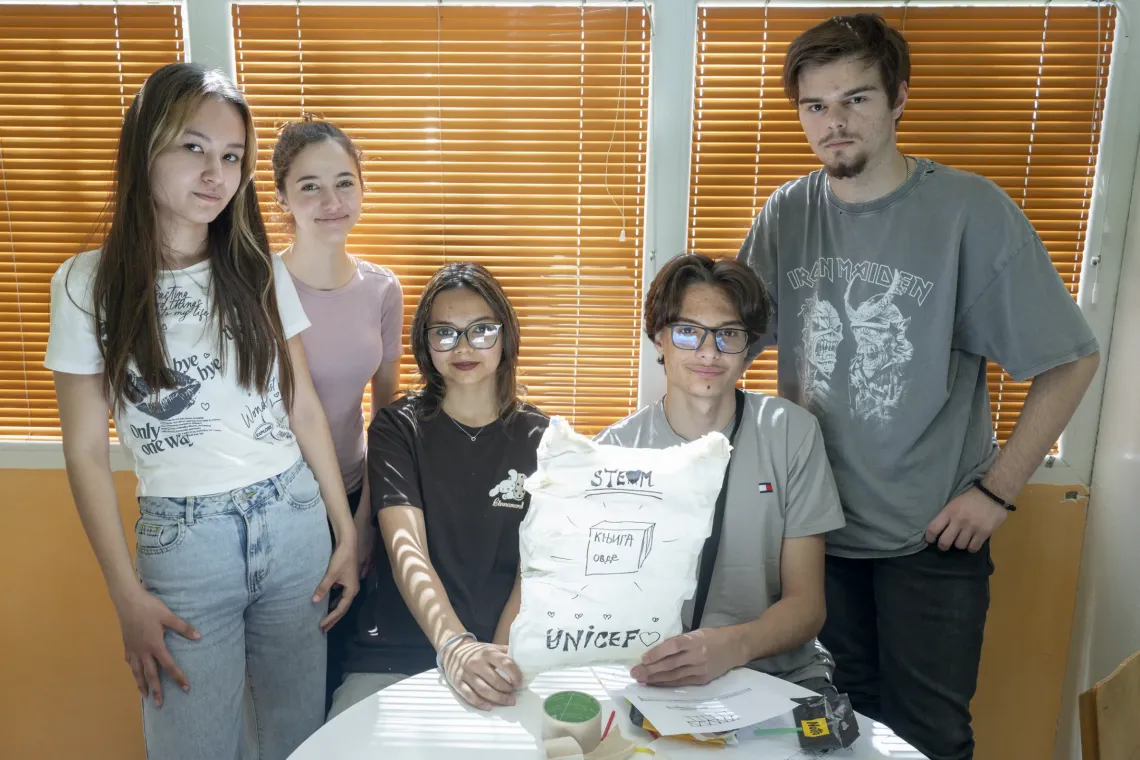
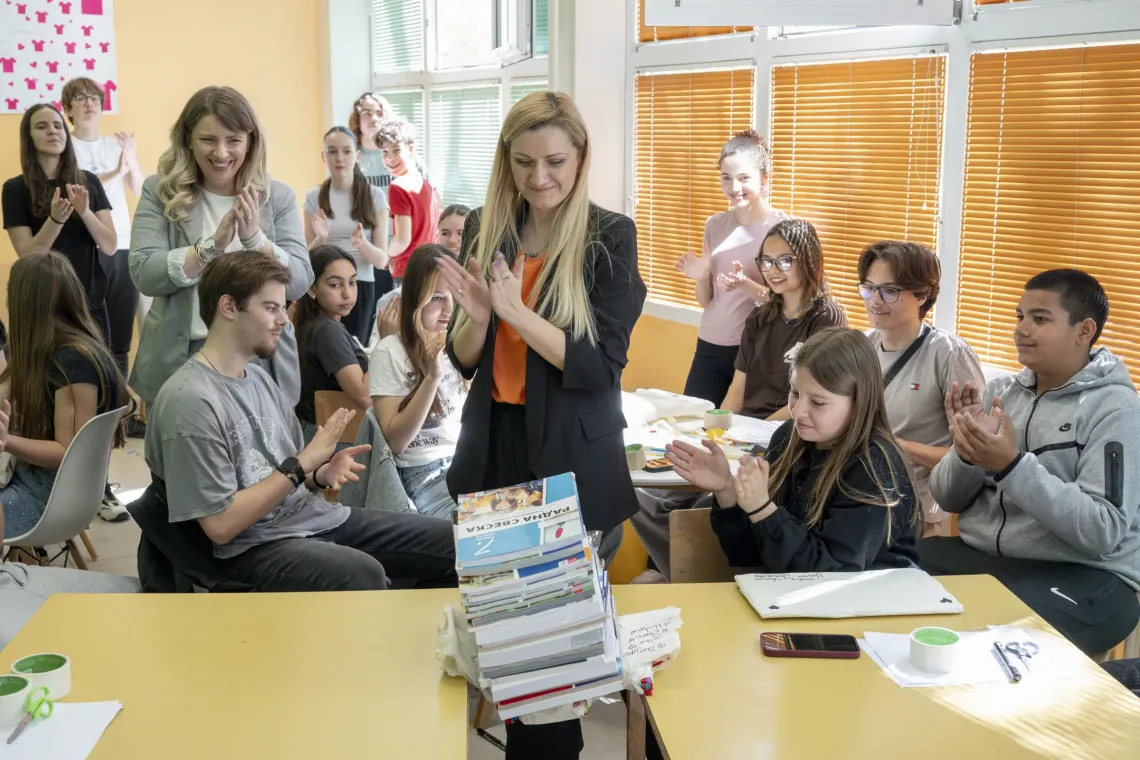
How do you make a bridge out of straws? At first glance, it seems simple — but that bridge also has to bear weight. How do you connect the straws? How many should you use? How wide and how long should the bridge be? During the workshop, everyone discussed, advised one another, helped, shared materials, and laughed together. The strength of the bridges was tested with books. Who had the strongest bridge was not the most important thing; what mattered most was what the children learned during the workshop.
Simple and easily accessible materials were used for this activity, such as straws, demonstrating that high‑quality learning does not always require expensive teaching tools.
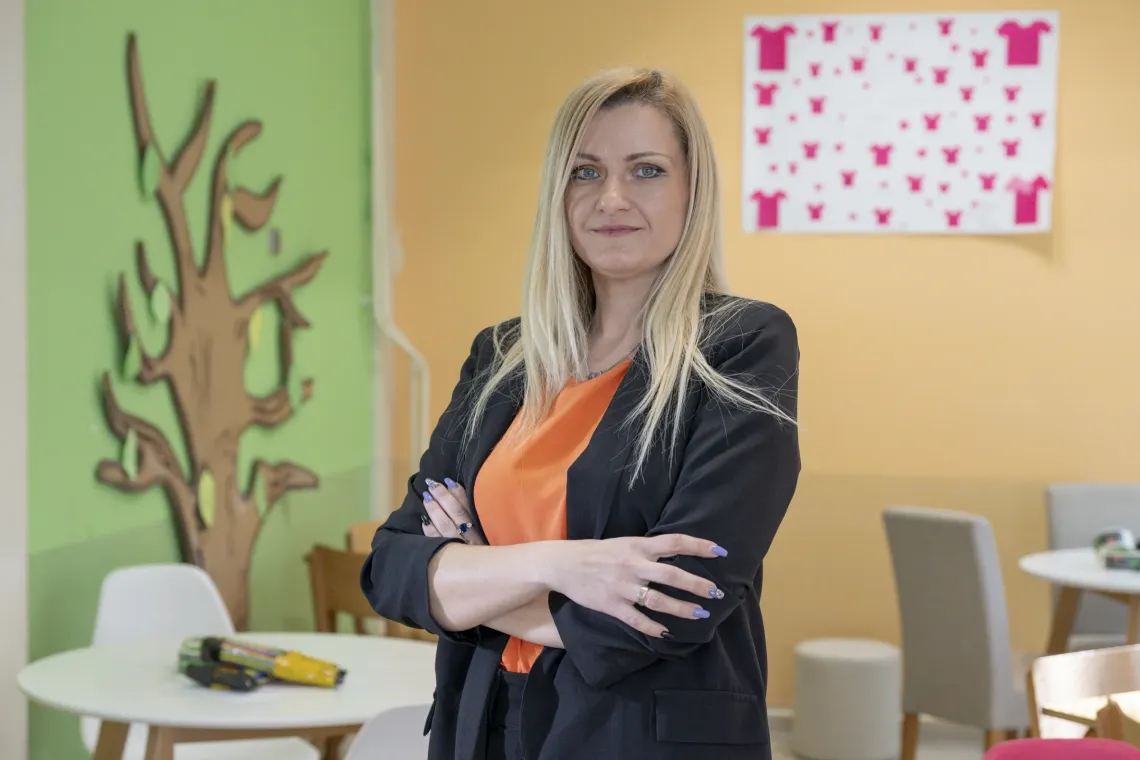
“The atmosphere is less formal, so everything we do here and everything they learn can be applied in their regular classes as well. In my opinion, the best skill the children develop is team spirit — I feel that is something that children lack nowadays. They also develop solidarity, self-confidence, critical thinking, logical reasoning, and resourcefulness,” says teacher Ivana.
She says that children who participate in STEM clubs show greater self-confidence and motivation in regular classes, and actively encourage one another to learn.
STEM encourages children to connect knowledge from different fields - science, technology, engineering, and mathematics, and apply it to solve concrete, real-world problems.
“I like that we can explore through tasks and play, and then apply that knowledge in everyday life,” says Alina.
“We don’t just sit and stare at the board and books; instead, we have fun here and learn in different ways,” says thirteen-year-old Danica with a smile. She became a member of the STEM club at the beginning of this school year. She recalls a ‘knowledge obstacle course’ where they integrated physical education with natural sciences.
Activities also showed that learning doesn’t have to consist of just sitting and listening; it can engage both the mind and the body at the same time. While students learned chemical symbols in their regular classes, in the STEM club they identified and explained them after performing somersaults. In a similar way, they solved mathematical equations through activities that ended with shooting hoops, combining physical movement with problem-solving.
“I’ve noticed that I’m doing better in math, biology, and physics,” says Uroš after two years of participating in the club. Danica has realized that she approaches problem-solving more creatively since joining the club. For Dušan, learning both in class and at home has become easier, as his work in the club has helped him develop better study habits.
“What I like most is that there are no differences here; we are all equal, we collaborate and hang out,” concludes thirteen-year-old Danica.
Just as they learned in the club that a bridge can only bear a load if it is well-designed and solidly built, the students simultaneously discovered that knowledge becomes more lasting and secure when it is built gradually, through understanding and experience.