Who Is More Important to You Than Me?
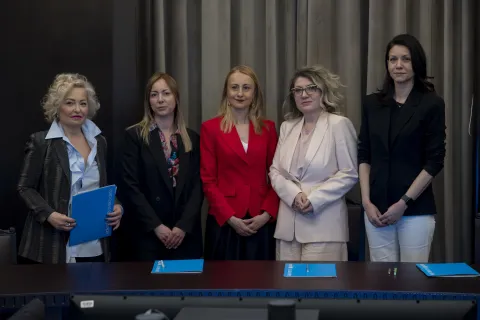
UNICEF Panel at the Kopaonik Business Forum 2025

- Srpski
- English
Kopaonik, March 5, 2025 – In Serbia, only one out of every 17 people is a child, and one in five children grows up at risk of poverty. Around 60,000 preschool-aged children have developmental delays or difficulties. Nearly every second child aged 1 to 14 experiences violent discipline within their family. Although 92% of Roma children enroll in elementary school, only 64% complete it. More than half of disadvantaged children are functionally illiterate, and every second girl from Roma settlements gets married before the age of 18.
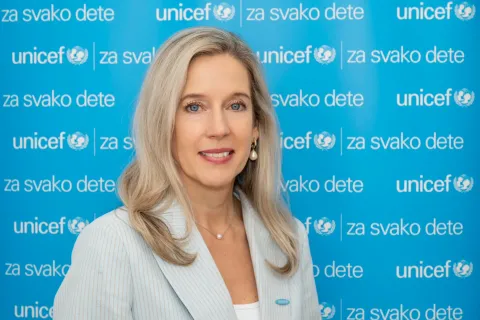
Despite significant progress made in Serbia regarding children’s rights, especially in areas such as early childhood development, inclusive education, and the improvement of mental health, these statistics highlight the urgent need for greater commitment and investment in the country’s most important human capital – its children. This was emphasized at UNICEF’s panel “Who is More Important to You than Me?”.
Kristina Miladinović, a third-year student at the Faculty of Philology and a member of UNICEF’s Youth Board, informed panel participants that the key topics that preoccupied young people throughout 2024 were inequality and lack of opportunities for the most vulnerable groups, the phenomenon of violence (including digital violence), and the lack of skills necessary for finding employment.
“The Youth Board particularly highlighted the deep social and educational inequalities affecting the most vulnerable groups, such as children and young people with developmental disabilities, Roma children, children from rural areas, and those living in poverty. The lack of opportunities for these groups leaves them marginalized and prevents them from reaching their full potential. Since they are often underrepresented in education systems or the labor market, they are at risk of long-term exclusion,” said Kristina.
She also reported that 90% of young people surveyed via UNICEF’s U-Report platform believe that practical work experience is crucial for their career development, and over 86% believe they will need additional training or education to progress in their careers. Kristina emphasized the significant role of the private sector in supporting young people’s career development.
“The message to educational institutions and the business community is clear: formal education is not enough. Young people want concrete learning opportunities through internships and mentorship, and they recognize the importance of continuous professional development,” said Kristina.

For companies and businesses, this is both a challenge and an opportunity. A challenge because it reveals a serious gap between education and the labor market, and an opportunity because internships, mentorships, and training programs directly contribute to talent development and ensuring a quality workforce for the future.
However, representatives of leading companies in Serbia emphasized that investing in children and youth is the most important investment on the path to a high-yield economy.
Petra Kanurić from Infostud Group spoke about factors influencing the labor market, including the rapid development of new technologies that are changing work dynamics and demographic changes affecting labor supply and demand globally.
She shared data that by 2050, 59% of the global workforce will come from low-income countries, while the number of working-age people in developed countries will decline. At the same time, by 2030, the number of jobs is expected to increase by about 170 million, while 92 million jobs will disappear due to rapid technological changes. “These changes require constant adaptability. Both candidates and employers must quickly acquire new skills, and the education system, government, and companies must work together to create effective solutions,” Petra stated.
“Through Infostud and projects like Startuj Infostud, we strive to connect young people with employers, help them gain necessary knowledge, and support their career development. We believe it’s crucial to enhance programs such as paid internships, mentorships, and retraining, because these play a key role in preparing young people for the new ways of working. We invite everyone who can contribute to this mission to join us, because only through joint efforts can we ensure a competitive and sustainable workforce ready for future challenges,” emphasized Petra.

Representatives from NELT, Comtrade, and MK Group, who also operate internationally, recognize that children and youth are sensitive to the influence of the business sector.
“Through a three-year partnership with UNICEF and an investment of 1.3 million euros, we are providing young people with opportunities to develop skills that will enable them to meet the demands of the 21st-century labor market. The goal is for 30,000 children and young people in Serbia, Bosnia and Herzegovina, North Macedonia, and Angola to acquire digital skills and knowledge about the green agenda, so they can successfully face the challenges ahead. Our initiatives are already bringing tangible changes, and we are proud to build the foundations for a sustainable future together with UNICEF on a global scale,” said Marko Milanković, Corporate Communications Manager at NELT Group.

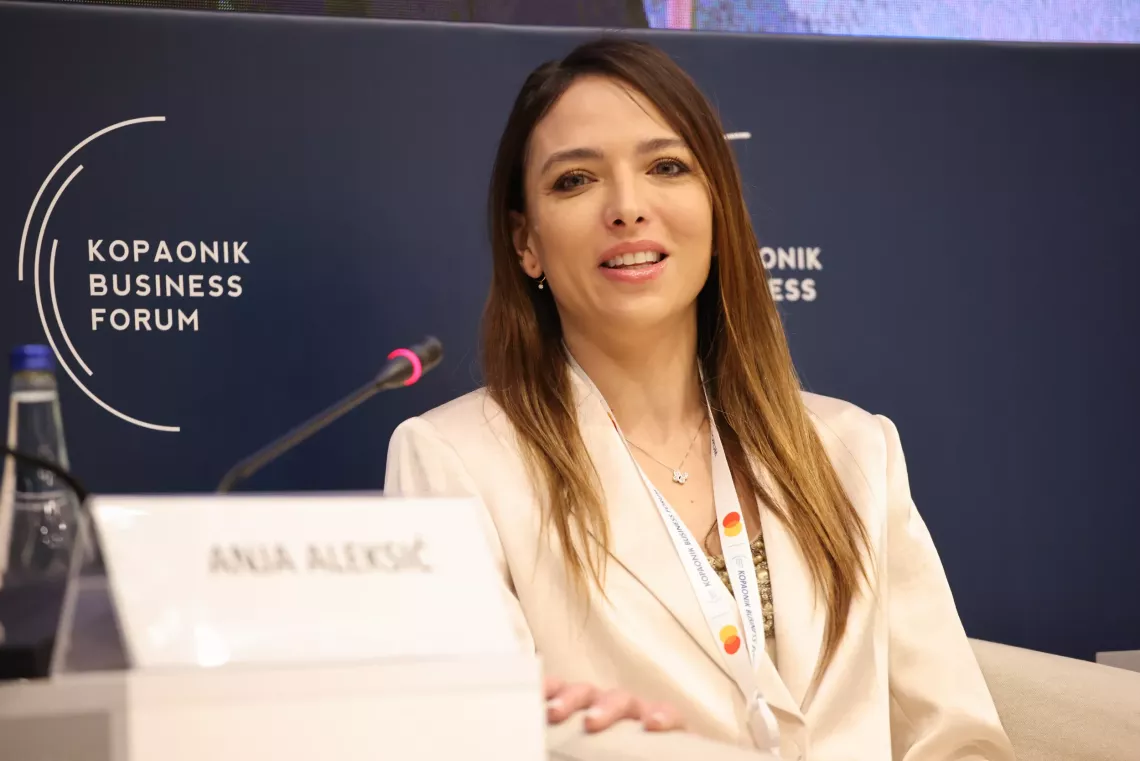
“The Digital Skills Improvement Project for young people in Serbia was born out of the desire to provide additional non-formal education to young people in our country, so they could better prepare for the highly challenging and dynamic labor market. Our focus was placed on marginalized and vulnerable groups, as we believe they need the most support. The group’s strategy involves continuous investment in education, and in the projects we launch, we invest our most valuable resources – knowledge, expertise, and experience,” said Anja Aleksić from Comtrade Group, also a member of UNICEF’s Business Council in Serbia.
She emphasized that for the sustainability and successful outcome of such projects, perseverance and creativity in solving problems are far more important than financial resources. She highlighted the importance of collaboration between government, civil society, and the private sector, saying, “Only together can we drive positive social change.”
“From its founding until today, and now even more intensely in cooperation with UNICEF, **Comtrade Group supports numerous programs and initiatives aimed at ensuring a more promising and safer future for our children and youth,” added Anja Aleksić.
“MK Group places a strong focus on social responsibility, especially towards children and young people, and so far we have donated more than 50 million euros. Our company is not solely profit-oriented, but also committed to contributing to the community, as we operate in Serbia, Montenegro, Croatia, and Slovenia. Our employees recognize the importance of working for a company that cares about human needs, and their opinions and feelings are especially important to us,” said Jovan Purar, Director of the Legal and General Affairs Department at MK Group.

The conclusion of the panel participants was that there is nothing more important for creating better, more inclusive, and more productive societies than public-private partnerships and consistent action. Therefore, it is essential to ensure fair and equal opportunities for every child and young person to receive full support, knowledge, and skills necessary to reach their full potential.
Responsible business policies focusing on children and youth should become an essential part of corporate success strategies.
Media contacts
O UNICEF-u
Prisutni smo u više od 190 zemalja i teritorija, a kroz sve što radimo promovišemo prava i dobrobit dece, posebno one koja su najugroženija i isključena. U potpunosti se finansiramo od dobrovoljnih priloga pojedinaca, država i vlada, fondacija i kompanija.
Pratite UNICEF Srbija na: Facebook-u, Twitter-u, YouTube-u, Instagram-u i LinkedIn-u.