Early support for young children: an investment in the region’s future
Countries from Europe and Central Asia gather in Serbia to advance early childhood intervention
- Srpski
- English
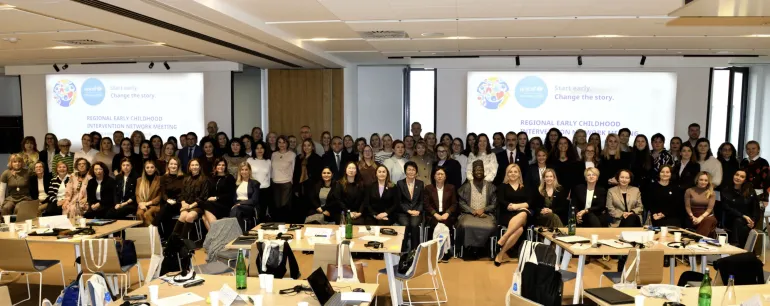
Belgrade, 9-10 November 2026 – Some 80 representatives of governments, UNICEF and experts from 12 countries across Europe and Central Asia gathered in Belgrade for a two-day meeting of the UNICEF Regional Technical Network on Early Childhood Intervention (ECI). Together, they shared experiences and worked on building national ECI systems, so that children with developmental risks, delays and disabilities and their families receive timely, family-centred support from the earliest years.
The earlier a child gets support, the bigger the difference. All countries in the Network agreed that early childhood intervention pays off, and that strong, sustainable systems are critical for the children and families who rely on them. They also agreed on the Network’s next step. From 2027, UNICEF Serbia and the Institute for Early Childhood Development and Inclusion will take over its facilitation from the UNICEF Regional Office for Europe and Central Asia. Launched in 2024, the Network now has more than 150 members in 24 countries and territories, and is helping decision-makers turn knowledge into policy.
Building on Serbia’s experience and long-term cooperation with academia and practitioners across the country, the Institute is becoming a regional hub, supporting neighbouring countries by spreading good practice, enabling peer learning and building the capacities of professionals who work with young children and their families.
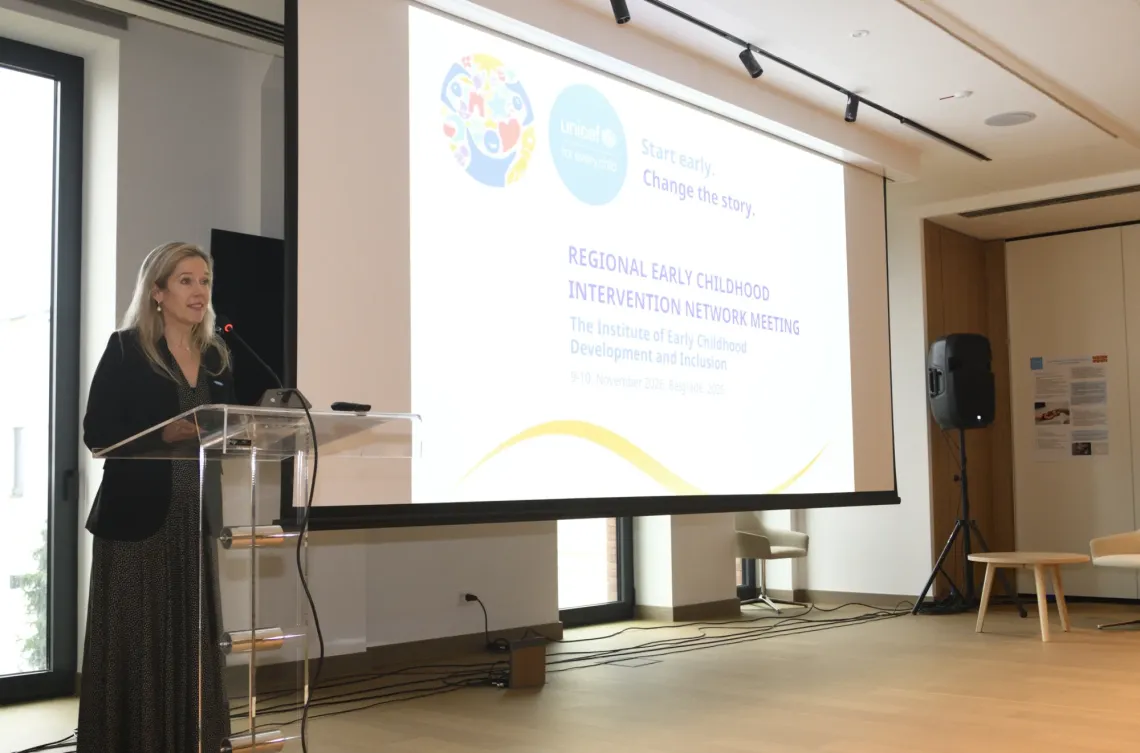
“Serbia’s progress shows what can be achieved when health, education and social protection systems work together. Yet too many children across the region are still not getting support early enough, when it can make the biggest difference. None of us can do this alone. Our real strength is in regional collaboration, so that every child with developmental difficulties and every family gets good-quality support as early as possible and as close to home as possible,” said Christina de Bruin, UNICEF Representative in Serbia.
Serbia’s model shows how services can grow. Developed in 2019 under the leadership of the Ministry of Health, with UNICEF support, in close collaboration with other relevant ministries, academia, professional associations, and international expert advisors, family-centred early childhood intervention is now available in 20 of the country’s 25 districts. In over 40 municipalities, 350 trained professionals from health, education and social protection support more than 9,000 children and their families.
“Early childhood development and timely early intervention are the foundation of equal opportunities for every child and family, and an investment in the future of every society. The Institute sees its role not only in supporting children and families in Serbia, but also in strengthening regional cooperation, connecting institutions and professionals, and supporting countries in the region to develop their services,” said Tatjana Subotić, Director of the Institute for Early Childhood Development and Inclusion.
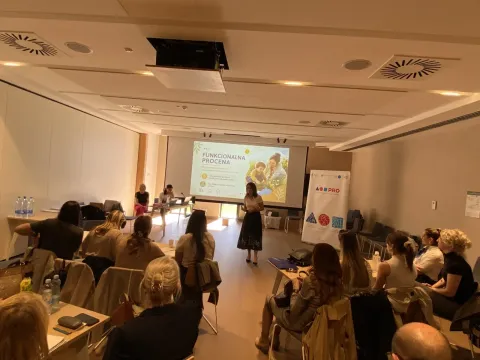
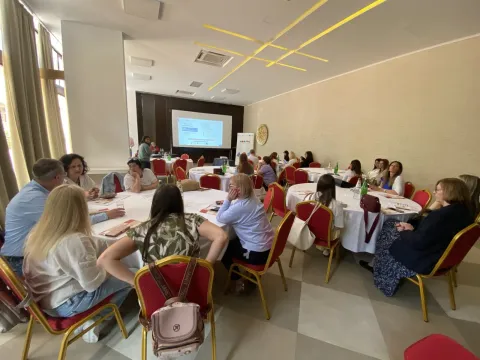
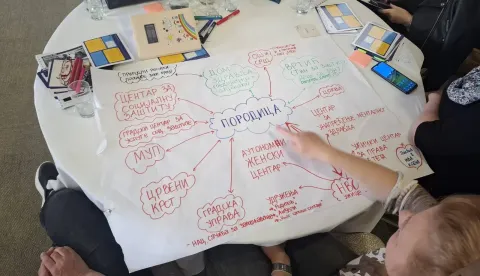
During the meeting, participants exchanged experiences on early identification of developmental difficulties, professional development, coordination across sectors and sustainable financing, and discussed the Network’s priorities for 2027. They also visited a primary health care centre with a developmental counselling unit, an inclusive preschool and the Institute to see how family-centred early childhood intervention works in practice.
“It is impressive to see the strong commitment of countries across the region, and particularly of Serbia, to developing high-quality, evidence-based early childhood intervention services. In many respects, these systems are advancing faster than in a number of EU countries,” said Professor Ana Maria Serrano, one of the key developers of Portugal’s early intervention system and President of the European Association on Early Childhood Intervention (Eurlyaid).
Across the region, countries are building early childhood interventions into law. Montenegro and North Macedonia are now working towards dedicated legislation, following Portugal, Slovenia, Spain and the United States. A law makes support last: it ties sectors together and secures the services, workforce and financing that families rely on. UNICEF has supported 17 countries in building these systems.
The meeting was organised by UNICEF in partnership with Serbia’s Ministry of Health and the Institute for Early Childhood Development and Inclusion.