Jagodina Strengthens Support for Children with Developmental Difficulties Through Family-Oriented Early Intervention
New equipment for professionals providing integrated support to children and their families

- Srpski
- English
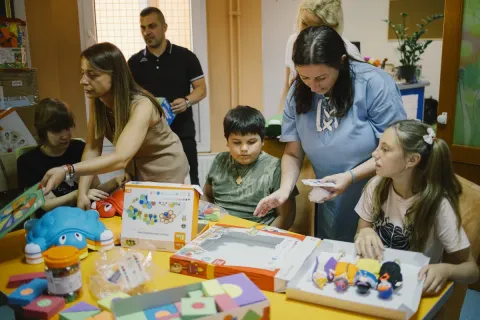
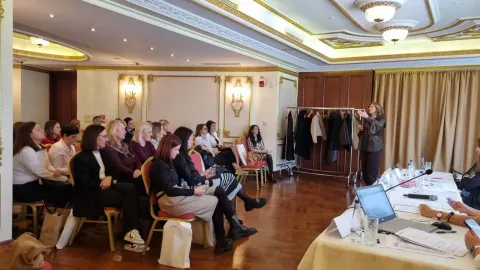
Jagodina, 1 July 2026 – Today, the City of Jagodina received IT and educational equipment to strengthen its integrated Family-Centred Early Childhood Intervention (FECI) service, designed for children up to six years of age with developmental delays and disabilities, as well as their families.
Family-Centred Early Childhood Intervention is a modern support model based on international and European standards that places the family at the centre of the child's support process. Its development in Serbia began in 2018, when the Ministry of Health, the Ministry of Education, the Ministry of Family Welfare and Demography, and the Ministry of Labour, Employment, Veteran and Social Affairs signed the Call to Action for Advancing Early Childhood Development in the Republic of Serbia, reaffirming their joint commitment to strengthening cross-sectoral support for children and families.
Through the FECI model, professionals from the health, education and social protection sectors work as a single multidisciplinary team to provide timely and coordinated support to families in their natural environments—at home, in preschool and within the community.
In Serbia, around 12 per cent of young children face developmental risks and difficulties, while approximately five per cent of children under the age of six require more intensive developmental support. Although around 4,000 children and their families currently receive Family-Centred Early Childhood Intervention services each year, the need for this type of support is estimated to be significantly greater. Expanding the network of FECI teams therefore remains one of the country's priorities in advancing early childhood development.
Nikola Tarbuk, Secretary General of the Standing Conference of Towns and Municipalities, emphasized the crucial role of local governments in developing integrated services for children and families.
"Local governments are uniquely positioned to connect and coordinate the work of the health, social protection and preschool education systems. Through cross-sectoral cooperation, we create the conditions for integrated, innovative and high-quality services that place people at the centre. This is why local governments are indispensable—they are the driving force that enables different systems to work as one," said Tarbuk.
Since the establishment of the Family-Centred Early Childhood Intervention network in Serbia, capacities for delivering this service have been strengthened across 20 administrative districts. Through the cooperation of UNICEF, the Standing Conference of Towns and Municipalities (SCTM) and the Belgrade Psychological Centre within the PRO – Local Governance for People and Nature programme, 25 cities and municipalities across Serbia have been supported, including nine district administrative centres and 16 smaller municipalities. Equipment has been provided to health, education and social protection institutions participating in the delivery of FECI services.
"It is encouraging to see so many partners working together to strengthen support for children and their families. I would like to thank the City of Jagodina, our partner SCTM, all the participating institutions, and especially the members of the FECI team for their dedication. As these services expand, we must ensure they reach the children who need them most—children with developmental difficulties, children at risk of poverty and children from the Roma community. Outreach services and sustained investment are essential to making sure no child is left behind," said Carole Vignaud, Deputy Representative of UNICEF in Serbia.

The FECI team in Jagodina completed its training at the end of 2025 and has been providing intensive support to families since the beginning of this year. The team consists of nine professionals from the primary healthcare centre, preschool institution, social welfare centre and resource centre. To date, 12 families have been enrolled in intensive support, while the Developmental Counselling Unit at the primary healthcare centre additionally monitors and supports approximately eight families each day.
"I first learned about this service at my child's preschool, where I was encouraged to contact the team. Since we joined the programme, I have noticed clear progress in my child's development, but it has also made a great difference for me as a parent because I always have support and know who I can turn to. I am very satisfied with the team's work and believe this service is extremely valuable. I would recommend it to every parent who needs additional support," said Jovana Novaković, a mother whose child is enrolled in the FECI service.
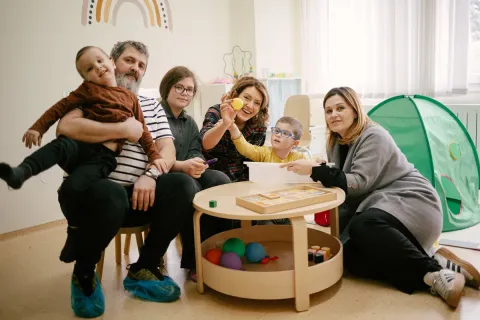
Family-Centred Early Childhood Intervention is built on a partnership between professionals and parents, who work together to identify priorities and tailor support to the specific needs of each child and family.
"Family-Centred Early Childhood Intervention means seeing every family as a partner and tailoring support to its individual needs. Thanks to the cooperation of the local government, institutions and our partners, we are now able to provide children and their families with timely, coordinated and high-quality support during the most important period of a child's development," said Katarina Mihajlović, Coordinator of the FECI Team in Jagodina.
In addition to the support of national institutions, local governments play a key role in the development of FECI services. To date, four local governments have signed protocols regulating the operation of FECI services, while more than 16 local governments have adopted measures this year and allocated a total of RSD 15.6 million to ensure their sustainability and further development.
The equipment was provided through the PRO – Local Governance for People and Nature programme, jointly implemented by UNOPS, UNICEF, UNFPA and UNEP with the support of the Government of the Republic of Serbia and financial assistance from the Government of Switzerland, in cooperation with the Standing Conference of Towns and Municipalities (SCTM) and the Belgrade Psychological Centre.