CSR Serbia Conference

Dame i gospodo, dobar dan!
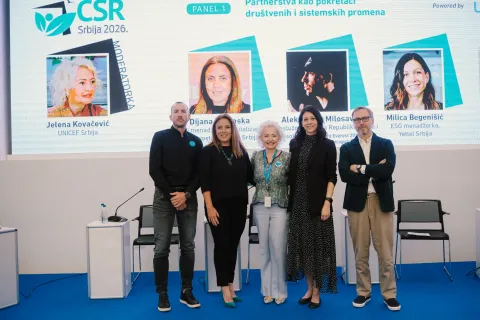
I feel so inspired to speak at the CSR Serbia network meeting. Robert, thank you for the inviting me to open the 8th CSR Serbia Conference.
This theme this year – All eyes on sustainability - is a good opportunity to engage leaders from the business community, the public sector and civil and international organizations on a long-term goal.
If we want to ‘future-proof’ our children, both public and private sectors need to invest in more resilient systems that help children cope, including health, nutrition, education, water and sanitation and social protection systems. Indeed, the business sector plays an important role in shaping the world in which we, and our children, live. Respect for human rights, including the rights of children, is a condition for true sustainability.
The Children’s Rights and Business Principles, which were developed 10 years ago, are a good roadmap that help the business sector play its part. The 10 Principles set out concrete actions for business to respect and support children’s rights. I’m sure that at least some of you participated in the discussion process around the development of the Business Principles and Children’s Rights, as Serbia was the front runner in the engagement of the business community in this process.
Over the past decade, these Principles, and the actions they have inspired, proved that the global business community can make an important difference in children’s lives.
In Serbia, companies, through their core business, knowledge, and skills, have achieved significant results for children. I have seen how Yettel’s support to reach the most marginalized children in Roma communities made a difference in their access to health services. It was wonderful to see that Besima from Pirot, thanks to this support, was able to connect to health services and have her daughter vaccinated. Real lives are being changed for the better thanks to the business sector!
Emerging companies are also seeing the benefits of integrating the Principles into their business. Nordeus, for example, is investing in early childhood development programmes and integrating family-friendly practices in their operation.
The business sector also affects child rights by ensuring that its conduct is not contributing to poor outcomes for children in the first place. When we walk into a store to buy a new dress, we may forget to think about what wages and working conditions that product has been produced under. And whether the person who has made that product is able to give his or her child 3 healthy meals a day or go to the doctor with the child during working hours.
I want to commend businesses that are ensuring that child rights are at the centre of their operations. They are leading the business world in making progress in this area.
These key stakeholders are taking three distinct, but complementary actions to ensure that children’s rights considerations are integrated into business practices:
- The first involves voluntary action by businesses to understand and address their impact on children. I’m glad to see that two business representatives from Serbia, with UNICEF’s support, will conduct a self-assessment of their businesses operation and assess their impact on children.
- The second is an action that creates an enabling environment for children and one that sets industry standards through the cooperation of the business sector, government regulators and policy makers. In Serbia, we have seen this through the cooperation of the Minister of Trade, Tourism and Telecommunications and internet providers, who expressed interest for jointly working to keep children safe in the digital space.
- The third focuses on holistic approaches to specific issues affecting children’s rights, which include action to prevent and mitigate business adverse impact. One example is developing business and government agendas on family-friendly workplace terms and conditions.
Children’s rights are an essential investment in our sustainable future. Safeguarding these rights helps build the strong, well-educated communities that are vital to creating a stable, inclusive and productive business environment. A business that integrates respect and support for children into its strategy and operations generates benefits for children, society; and can generate real benefits for itself as well.
This is a time, like no other in history, when businesses need to show the courage to adopt strategies that create long-term value for their companies and for the societies they serve. Investing in children and youth, especially in those who are vulnerable and marginalized, can help promote an equitable, inclusive society, allowing more people to effectively participate in economic development. We must rebuild our economies, so they provide opportunities for all!
This is a time to create a brighter future for all!
Hvala!
Media contacts
About UNICEF
UNICEF promotes the rights and wellbeing of every child, in everything we do. Together with our partners, we work in 190 countries and territories to translate that commitment into practical action, focusing special effort on reaching the most vulnerable and excluded children, to the benefit of all children, everywhere.
For more information about UNICEF and its work for children, visit www.unicef.org/serbia
Follow UNICEF on Facebook, Twitter, YouTube, Instagram and LinkedIn.