A tent full of dreams
Maryam is reclaiming her right to learn and looking towards the future by continuing her education at a UNICEF Accelerated Learning Centre in Afghanistan
“When lessons begin, I drop whatever I am busy with and come to class.”
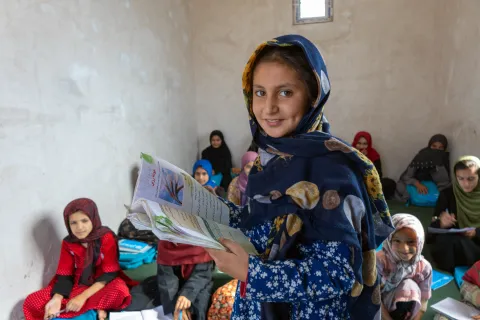
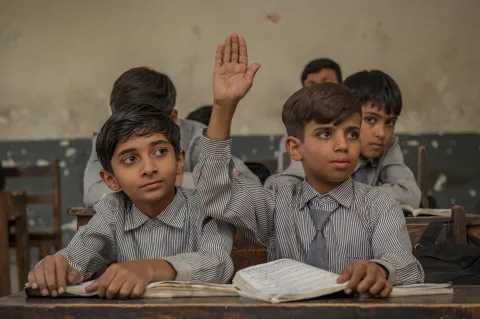
After a two-hour, early morning drive down a dusty road, Maryam arrives at her classroom in a tent. With her 34 other classmates, Maryam smooths her uniform and sits in one of seven neat rows, surrounded by tent walls adorned with colorful educational posters. She listens raptly to her teacher as class begins for the day.
But this classroom offers more than just lessons – it shelters hope for a brighter future for Maryam and other girls. It is where their dreams are protected from the challenges that have long kept them from school.
This is an Accelerating Learning Centre, based in the heart of a rural community in western Afghanistan.
For millions of girls like Maryam, this September marks three years since they have been barred from attending secondary school, denying nearly 1.5 million girls their right to further their studies and reach their full potential.
Even Maryam’s primary education faced barriers. Although she learned some basic literacy and numeracy at home, she had never been to school before this Accelerated Learning Centre was established in her village.
“Since my childhood, I have never been to school because there has never been one near my home,” she says. “However, this class is a second chance for me not to give up on myself.”
“I wish to become a doctor one day,” she says, taking swift notes from her teacher’s writing on the whiteboard.
In Afghanistan, Accelerated Learning Centres are a form of community-based education, enrolling children in primary education who may be behind, missed a year of studies or need to catch up. Accelerated Learning Centres allow students to complete two grade levels in one calendar year, up through primary Grade 6.
UNICEF aims specifically to enroll girls, who experience higher barriers to entering the public school system and may not have any other opportunity for a formal education.
“My students are very interested in learning and love coming to class,” says Fakhriah, Maryam’s teacher. “There are even more girls in the community who want to come, but we could not formally enroll them due to lack of space. So we know the demand is there.”
With support from partners like the German Committee for UNICEF and the Asian Development Bank, UNICEF supports nearly 200 Accelerated Learning Centres in and around Maryam's community, educating 6,000 children otherwise left out of the formal system.
Throughout Afghanistan, UNICEF supports 3,500 of these centres, providing an education to 107,000 children – 85,000 or 79 per cent of whom are girls.
UNICEF also supports salaries and in-service training for teachers in Accelerated Learning Centres, and provides backpacks, notebooks, pens, pencils and other materials to the students.
Besides learning reading and writing, the girls in Maryam’s class participate in recreational materials, creating arts and crafts as a means of entertainment. They relish the chance to laugh and make friends, while learning life skills like teamwork and building confidence.
“If this class was not in our community, I would have been a tired and distressed girl, sitting at home and doing nothing,” says Maryam.
“This class is a beacon of hope for me.”
As her school day comes to an end, Maryam packs her books, notebooks and pens into her blue backpack.
She reflects with happiness, “Time passes so quickly here because we love being in class. We learn, we laugh, and we keep our dreams of a bright future alive.”