

Safe Water, Bright Future
How access to safe water is quietly transforming childhoods across South Asia’s most fragile places.
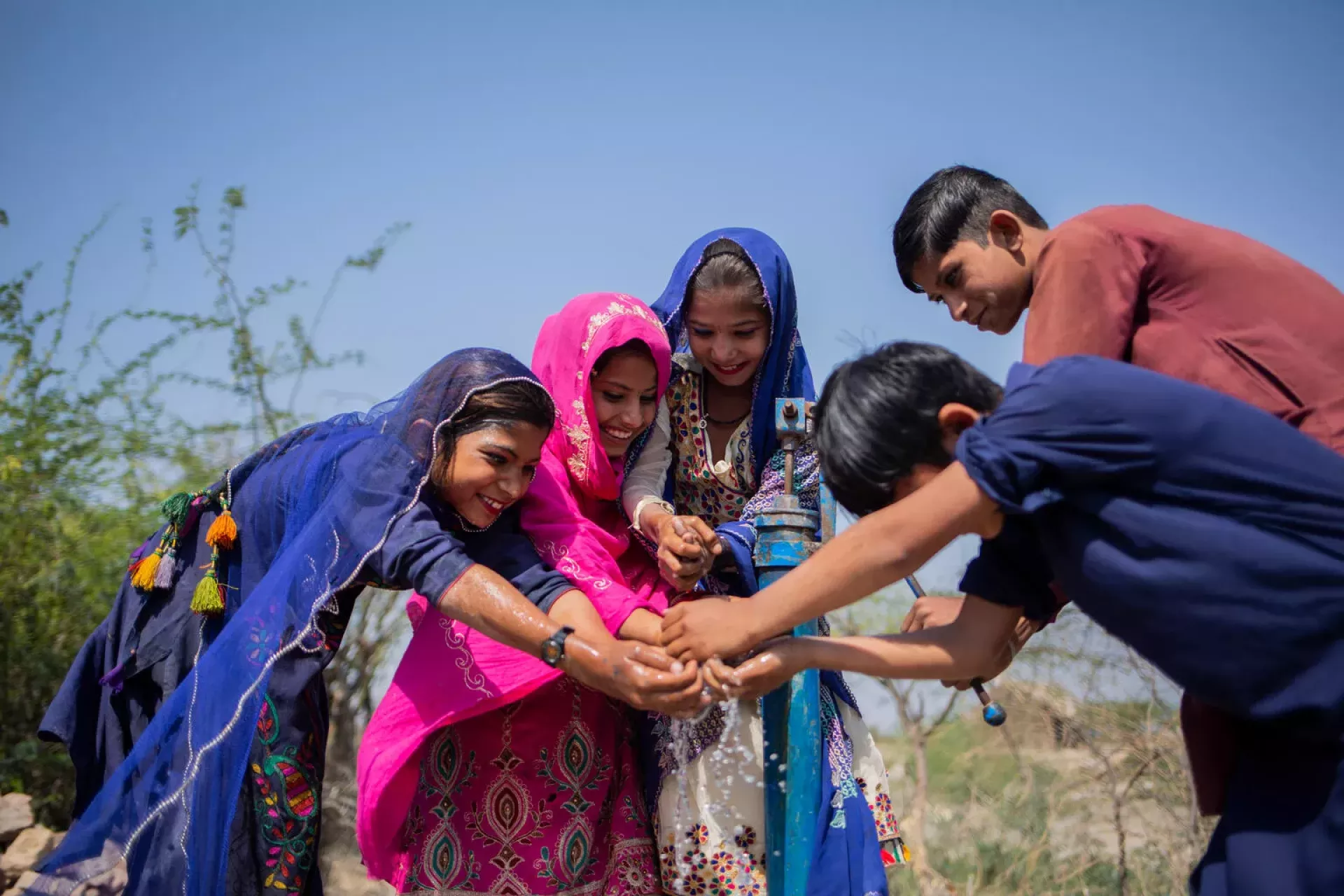
Safe water is a basic need, but for children, access to it can be life-changing. It means they are less sick, have fewer absences from school, and have a better chance to thrive.
Yet, in South Asia, climate change is putting these basic rights out of reach and putting children’s well-being at risk. Floods, droughts, and heatwaves are making clean water more difficult to find and more complex to keep. Children living in different terrains and diverse settings are facing the growing challenge of water scarcity.
A staggering 347 million children in South Asia lack access to safe water. That’s the highest figure in the world. Behind this number are children who are going hungry, becoming ill, missing school, facing danger when they fetch water, and who are being denied their right to a carefree and safe childhood.
UNICEF is working with governments, communities and partners to change this. Through climate-resilient solutions, ever more children across South Asia are gaining access to safe water and with it, the health, nutrition and dignity they need to grow and succeed.

Four years ago, 11-year-old Asiya’s family depended on a river four kilometres away for water.
"The water was not good to drink, even for animals, but this is all we had," says Asiya.
For children like Asiya, unsafe water means a constant risk of illnesses like diarrhoea and malnutrition.
As climate change caused recurring drought, the river near her village in western Afghanistan began to dry up. Even drilling deep underground proved futile. The need for a new solution became urgent.
So, in 2022, with support from USAID, UNICEF installed a solar-powered water system in her village. The system now brings safe water from 26 kilometres away, reaching Asiya and 7,000 others in her village.
To ensure the new system could serve the community for years to come, UNICEF trained local leaders, including Asiya’s father, to manage daily operations and maintenance. He helps collect water usage tariffs and works with local mechanics to keep the system running smoothly. When needed, the tariffs are used to cover repair costs.
To date, UNICEF has constructed 157 water systems across Afghanistan. These benefit over 633,000 people who previously had limited or no access to safe water.
In Asiya’s village, where once water was unpredictable and a source of stress, now everyday life is easier. With clean water whenever they need it, the community shares a collective sigh of relief.

In the crowded Rohingya camps of Cox’s Bazaar, 17-year-old Noor Ayesha dreams of becoming a teacher. She also helps care for her sister, 21-year-old Noor Hasina, who lives with a severe disability and has not spoken or moved in nearly two decades.
Until recently, daily life was marked by physical strain and quiet struggle. Water was 300 feet away, and accessing sanitation was a risky ordeal, especially during Hasina’s menstrual cycles.
Their mother, Shahjan, carried the weight of the care. “I have to wash her clothes again and again,” she says. “And taking her outside to use the toilet hurts us both.”
With support from the Government of Germany, UNICEF installed a disability-inclusive latrine inside their shelter, set up a nearby tap and provided hygiene kits.
Today, Hasina rests more comfortably. Ayesha fetches water without fear of falling. And for their mother, Shahjan, the constant worry has eased. Safe water and inclusive sanitation have brought more than health; they’ve restored ease, dignity, and the reassurance that even in crisis, care is possible.

In eastern Bhutan, 15-year-old Sonam Dorji lives in a monastery far from his yak-herding family. Here, summers are cool while winters are extremely cold and tough. Sonam and other young monks used to walk long distances to fetch firewood to heat water for bathing and washing clothes. Children in the area found it hard to stay clean and hygienic because of a lack of warm water. Heating water also took time off from the monks’ studies.
To help, UNICEF installed eco-friendly heat pumps for hot water. The 300-litre heat pump now supplies hot water around the clock.
“We don’t have to fetch firewood anymore and can easily access hot water to stay clean,” says Sonam. “Hygiene and sanitation conditions at the monastic school have significantly improved since then," he added.
For children like Sonam, the absence of parental support often takes a toll on mental well-being. Warm water, albeit in small amounts, provides comfort, a sense of care and community, easing the challenges of separation and helping them better focus on education and hope for their future.

Year after year, Pakistan faces severe floods that reshape childhood for millions of children. The 2022 floods alone devastated over 30 million people, half of them were girls and boys.
Unsafe water worsened malnutrition, and poor sanitation made everyday health a risk, affecting more than 1.5 million children.
To protect children from further climate shocks, UNICEF began constructing solar-powered water systems across the country to deliver safe, reliable water to schools, homes and health centres. These resilient water systems were life-saving during the devastating floods in 2022 and through droughts and heatwaves.
Since then, more than 500 such solar-powered systems have been installed, benefitting nearly a million people.
Amid constant disasters and repeated loss, safe water has become one steady part of life, helping children to learn, grow and stay safe.
Looking ahead
From dignity in displacement to care in the cold, access to safe water is quietly transforming children’s lives across South Asia. But as water scarcity deepens and climate threats accelerate, continued efforts and innovations are urgently needed to expand climate-resilient water systems and protect water sources. With collective efforts from donors and partners, every child in South Asia can have access to safe water, enabling them to learn, play, and thrive.


