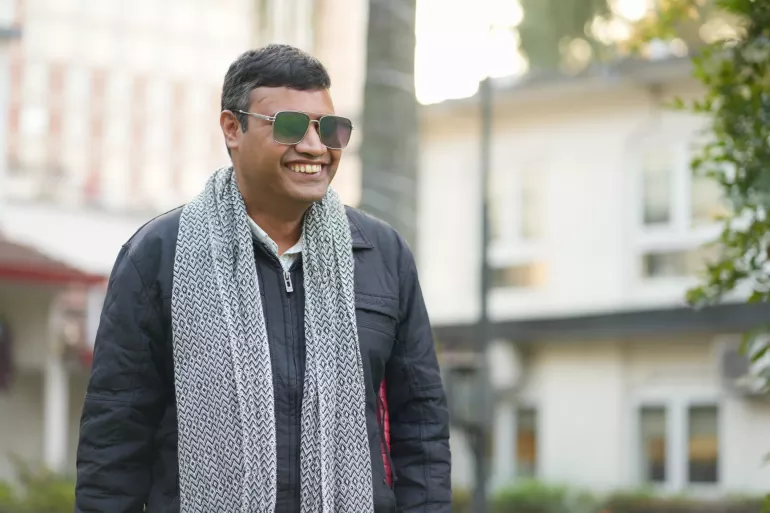
In a world that often overlooks the voices of those with disabilities, I’ve made it my mission to ensure our stories are heard and our needs addressed.
Losing my sight
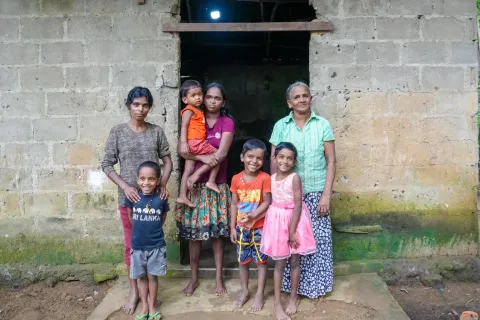
I was born in Boudha, Simaltar, a rural area in Kathmandu, where farming was a big part of life. My father worked at the Post Office, and I grew up with two older sisters and an older brother, who is also blind. When I was born, they hoped I would be a "thulo manche"—the successful one, the “son of hope” for the family.
I was not born blind. What began as blurred vision gradually led to blindness at eight years old due to Retinitis Pigmentosa. In our community, people believed my mother’s “sins” were to blame for our blindness. My father struggled with the idea that my brother and I would never be able to live independently.
He feared we would be his burdens for life.
Education as liberation
Starting school opened a door I didn’t know existed. My brother and I joined Sanjiwani Secondary School in Dhulikhel, an integrated school where visually impaired children studied alongside those with sight. It wasn’t easy at first. I had to learn Braille, which meant moving from reading with my eyes to reading with my fingers—a difficult adjustment. Teachers doubted us, reinforcing the belief that we wouldn’t amount to much. One teacher even said, “You won’t be able to do it, so why try?” Words like that were painful. But education gave me confidence.
Overcoming barriers
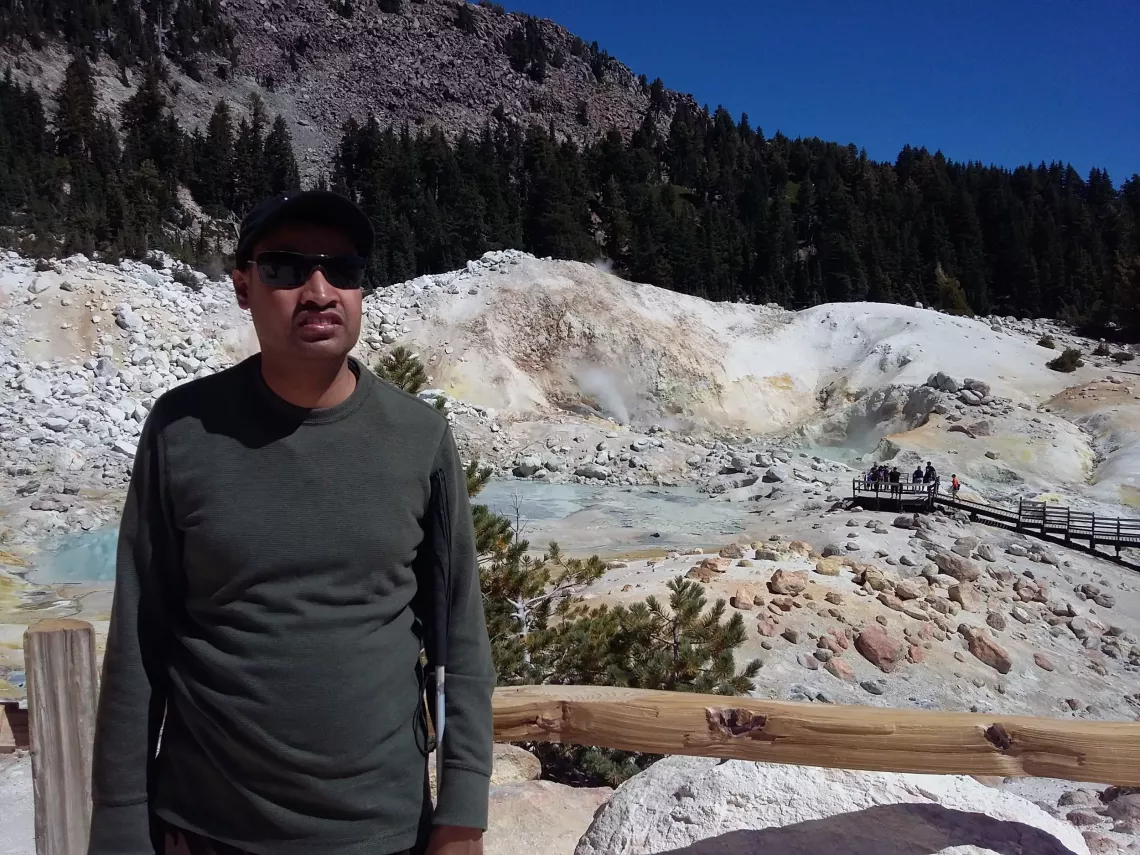
The most challenging obstacles weren’t physical—but attitudinal. People in our community pitied or judged us, and me and my brother were often isolated at family gatherings. Reflecting on those moments now, I realise how deep that kind of isolation can cut. But it also drove me to prove that my blindness does not define me. In fact, it’s what fuels me.
As I began working, I quickly realized how pervasive the bias against hiring people with disabilities is. Despite qualifications, many visually impaired individuals struggle to secure jobs in the private sector. The government sector, while reserving quotas for people with disabilities, often offers tokenistic roles with little responsibility. My brother, for instance, secured a government job but wasn’t given any meaningful tasks. When he applied to radio stations, they dismissed his abilities saying they didn’t have any “disability-related programs,” as if his skills couldn’t extend beyond that narrow box. This cycle of underestimation limits our potential and perpetuates the barriers I am fighting to break. Even today, many see us as objects of pity, rather than equals.
Building a more inclusive society
As my career progressed, I explored various opportunities, including accessible book publishing and founding LEAD (Leadership, Entrepreneurship, and Development), an IT company focused on digital accessibility. Today, I’m proud to serve as the Disability Inclusion and Engagement Officer with UNICEF ROSA, my first role in the United Nations.
One of my key responsibilities is promoting inclusion in our offices and in programmes for children and young people. In August, we launched a regional action plan to enhance disability inclusion throughout all of UNICEF South Asia’s initiatives.
One initiative I'm particularly proud of is "Guide Me," an exercise to help colleagues better understand the challenges of navigating a world not designed for disabilities. With one person blindfolded and the other guiding him/her, UNICEF ROSA colleagues walked around their offices and the garden. The exercise built empathy and awareness about the daily hurdles people like me face.
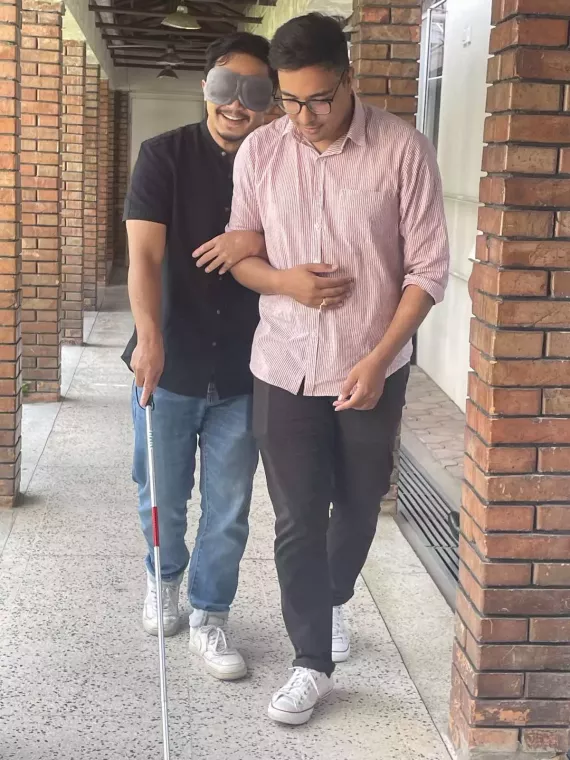
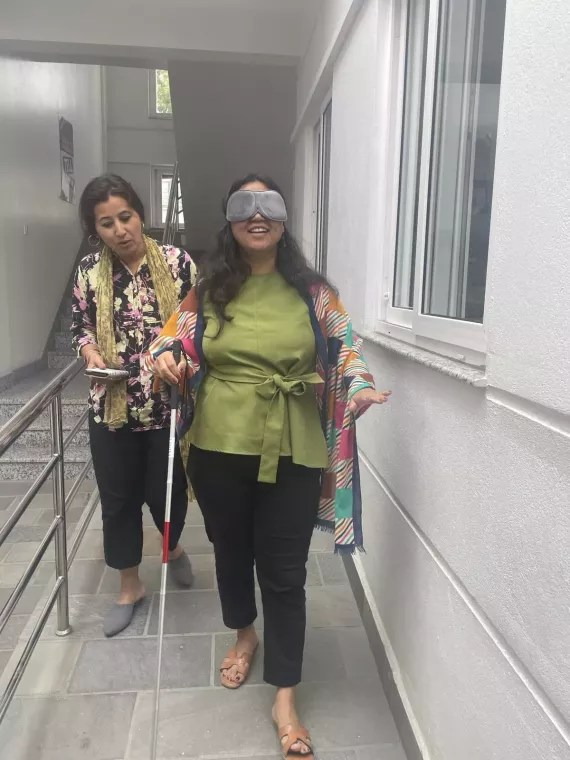
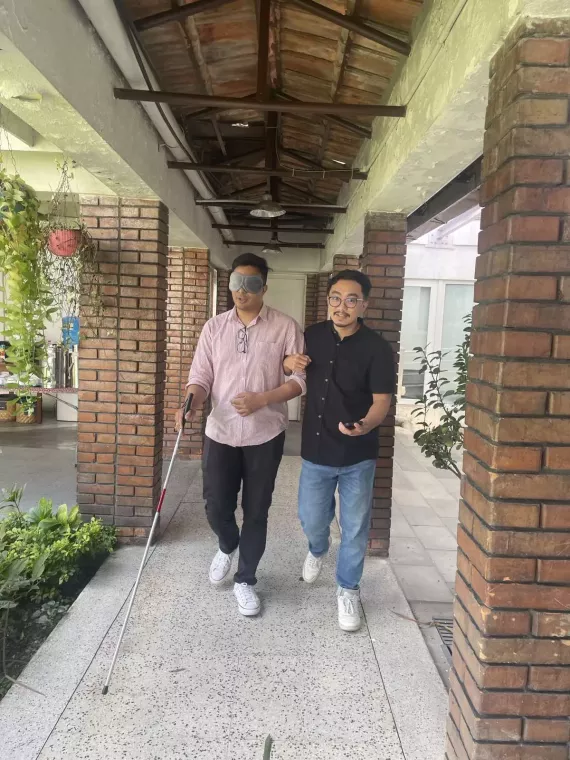
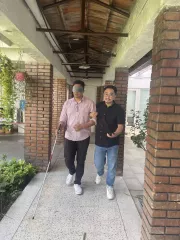
“This walk really hit home how much I take for granted in my life, especially being able to get about without having to depend on anyone or anything. being blind folded took away my perception of depth and distance which made it very difficult to manoeuvre my surroundings. I have a renewed sense of empathy for those who are visually impaired.”
I’ve also worked closely with our HR department to integrate disability inclusion into the onboarding process for new staff. This ensures that every new team member is equipped to address the needs of people with disabilities in their work. I’m also focused on ensuring that at least 1,000 UNICEF South Asia staff members complete the Disability Inclusion Strategy course by December 3, 2024.
Empowering adolescents with disability
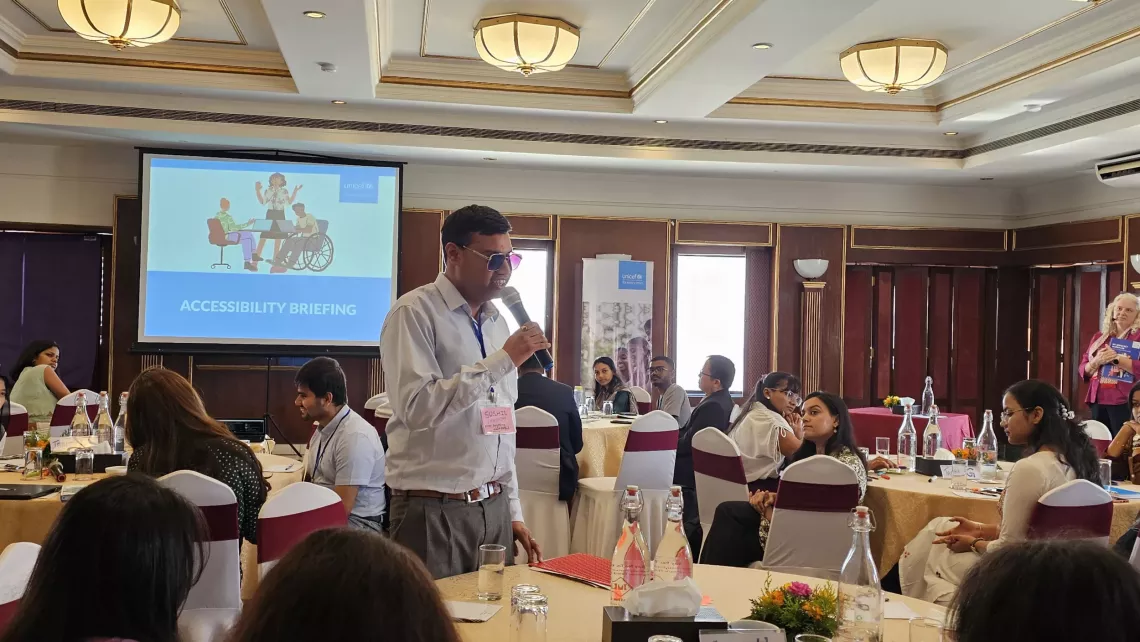
A major part of my role is empowering adolescents with disabilities to take control of their futures. Recently, I helped make UNICEF’s Youth Advocacy Guide (YAG) training fully accessible, enabling two young participants with disabilities to contribute meaningfully.
What was especially rewarding was seeing how this inclusivity helped foster a broader understanding of disability among all participants. We didn’t just create an accessible training space—we equipped these young individuals with the confidence to return to their communities and lead initiatives. Some are now planning to conduct training sessions on disability inclusion, spreading the knowledge they gained.
A vision for the future
On this International Day of Persons with Disabilities, I envision a future where disability inclusion is second nature. Where everyone - from local taxi drivers to policymakers - understands what it means to create inclusive spaces. This is the world I strive to build through my work at UNICEF, one where inclusion isn't tokenistic, but woven into everyday life.
Through my work with UNICEF, I will continue to push for more inclusive policies and practices, especially in education for children and young people. I know, firsthand, that when children and young people with disabilities are given the right opportunities, they thrive. My journey- from being seen as a potential burden by my father to working at the UN and supporting my family - proves how access to the right opportunities can transform lives.
Today, my family is proud of my achievements, especially my father. Living with dignity and independence is a right, not a privilege. By creating an inclusive society, we empower people with disabilities to contribute meaningfully, breaking down the barriers that have held them back for far too long.