


In 2023, not long after the worst of Sri Lanka’s economic crisis, I visited Ratnapura where I met Indralatha, a grandmother who was not only the sole breadwinner in her family but was raising her daughter and granddaughters alone. They survived on just one meal a day.
Hers was not an isolated story. I spoke with several other families who had been pushed into poverty; many adults told me they chose hunger so that their children could eat. These were ordinary families, showing extraordinary resilience – but it shouldn’t have come to that.
As inflation rose and jobs became harder to find, many were pushed into poverty. One in five households borrowed money just to afford food. Rates of child malnutrition, stunting, and even mortality rose – and remain high today, even as the worst of the crisis has passed.
Building momentum to implement global commitments
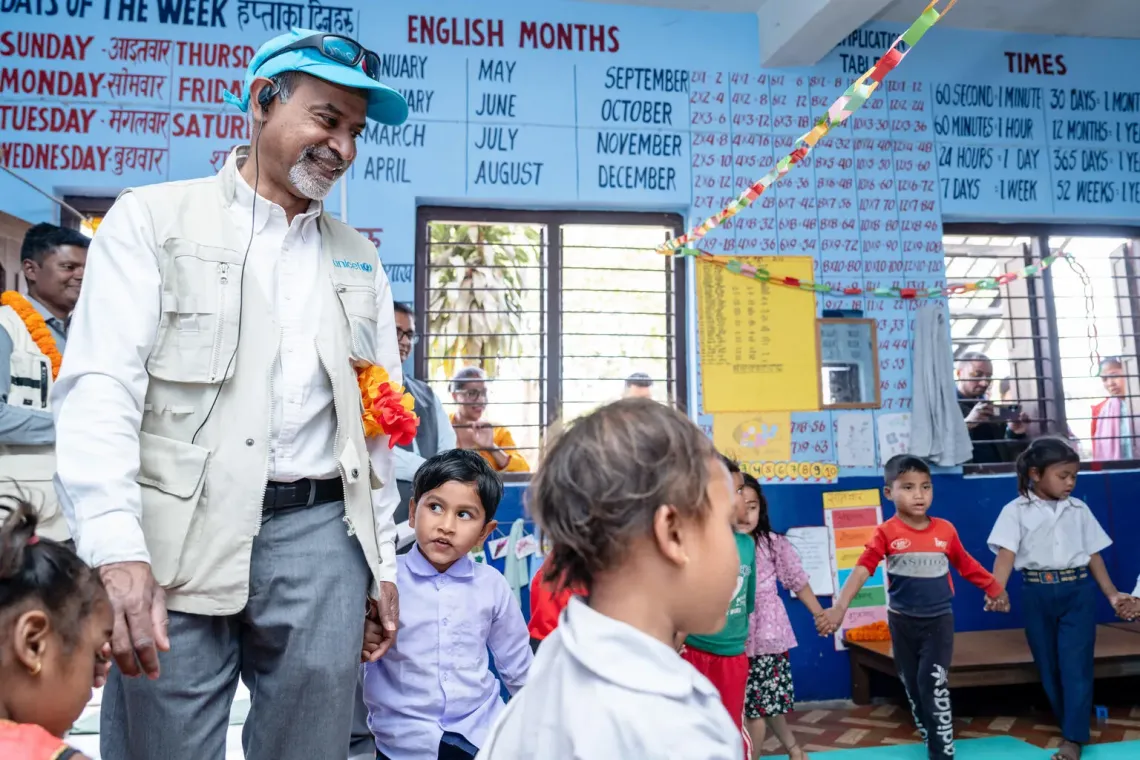
UNICEF’s new report, Financing a Fair Future: Why Human Development must be at the Heart of Global Recovery assesses debt dynamics, child outcomes, and government policies in South Asia. It sets out a clear set of recommendations and actions for governments and international financial institutions to better support our children in times of crisis, and to promote long-term, inclusive economic development.
Many of these recommendations are aligned with the Compromiso de Sevilla agreed at this summer’s global Financing for Development (FfD4) Conference. The Compromiso sets out concrete steps to boost investment in sustainable development; to address the debt crisis facing many countries across the world; and to reform our international financial architecture.
At a time of rising debt, declining investment and shrinking aid, it is essential that we deliver on these commitments.
When crises hit, children and families feel it first. Social spending can protect them.
During crises, budget cuts often hit health, education, and social protection first. These are the very services that help families weather hardship and give children the stability they need to grow and thrive.
In Sri Lanka, public spending on health and education still hasn’t returned to pre-crisis levels. The pressure to cut quickly – combined with high debt repayments – left little room to protect these essential sectors.
Part of the issue lies in how some financial support packages are structured. International Monetary Fund (IMF) programmes, for instance, often include targets to preserve social spending. But these targets have sometimes been too narrow, focusing only on social protection – and in many cases, social spending targets were not met.
Some positive changes are emerging. In Bangladesh and Pakistan, IMF programmes now include binding commitments to raise social spending. These are steps in the right direction, showing what is possible with the right leadership and prioritisation.
Lending helps – but only if it’s affordable
Institutions, such as the IMF, World Bank, and Asian Development Bank are vital partners in our collective efforts to build schools, strengthen health systems, and provide families with a safety net during difficult times.
But that support must remain affordable. UNICEF’s analysis shows that low-cost loans are becoming less common, while debt service payments owed to multilateral lenders are rising. In Sri Lanka last year, multilateral lenders held only 28% of external government debt but accounted for over 75% of interest payments.
Multilateral lenders are essential partners and their lending is often a lifeline. But their loan terms must be designed in ways that don’t push countries into deeper financial distress or force them to cut vital services for children.
Rethink how we measure sustainability and equity
One of the most powerful tools shaping how much support countries receive are the IMF-World Bank’s Debt Sustainability Analysis Frameworks. These frameworks assess how much debt a country can carry without running into trouble.
However, they tend to focus more on short-term fiscal balances rather than long-term investments. This approach discourages governments from allocating funds to children’s health, nutrition, and education, which represent some of the most effective investments a country can make for its future prosperity.
It is essential that we adjust our frameworks to catalyse investments in children’s survival, learning, and protection. They are the essential building blocks to build human capital – the key driver for long-term sustainable economic growth. Furthermore, I encourage our partners to evaluate economic progress with metrics beyond Gross Domestic Product, which fails to capture so much of our development progress.
We should also consider the equity of the financing system. South Asia, home to nearly two billion people, is consistently battered by disasters and crises. Yet, it received only 3.6% of the IMF’s Special Drawing Rights (SDRs) allocation in 2021.
Redirecting unused SDRs or issuing new ones specifically targeted at countries with high child poverty rates could provide crucial fiscal resources, enabling governments to avoid choosing between protecting critical services and rebuilding their financial cushions.
Five ways forward
As we reflect on the Financing for Development Conference, I see five clear actions international financial institutions can take to put children at the centre of decision-making:
- Expand access to finance for social sectors—health, education, protection, and nutrition
- Improve lending terms by offering more grants and low-cost loans
- Reform debt sustainability frameworks to value long-term investments in children
- Ensure stronger and broader safeguards for social spending in IMF programmes
- Re-channel and issue SDRs in ways that prioritise children
A call to action
Investing in children is not charity; it is the most reliable way to achieve sustainable growth. Every dollar spent on children now yields far greater returns in the future by fostering stronger economies and creating healthier and educated citizens.
So, here’s the bottom line: when the world is balancing budgets, let’s make sure it’s not children whose futures are sacrificed. Let’s change the rules of the game so that the children of South Asia come first. UNICEF will accompany them every step of the way.


