

Italy and Romania share practices in the childcare system
- English
- Română
BUCHAREST, 31 October 2024 – Italy and Romania shared experiences and practices on Thursday regarding alternative care for children in both countries, as well as on the continued efforts to prevent separation of children from their families and to complete the deinstitutionalization processes.
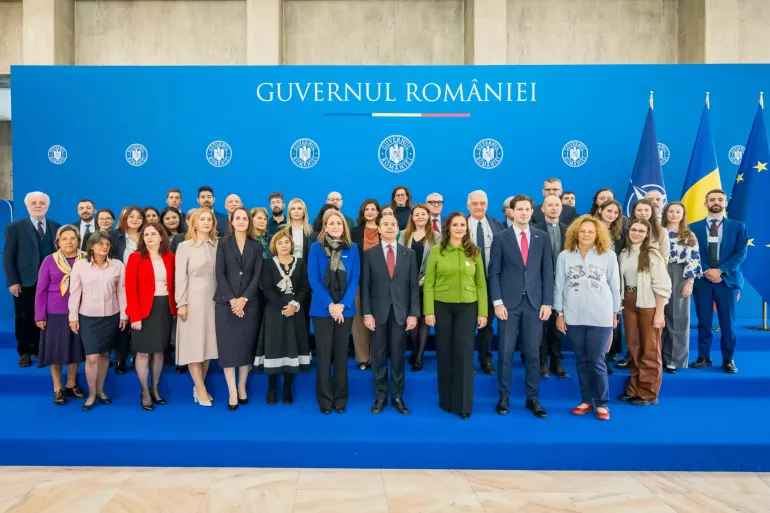
Recognizing the centrality of supporting children out of family care in both countries’ National Action Plans for the implementation of the EU Child Guarantee Recommendation as well as Child Rights EU and National Strategies, the event organized in Bucharest at the Government headquarters provided the opportunity of an inter-country knowledge sharing.
It also initiated the establishment of inter-country networks of practitioners for the exchange of positive practices and the continuous improvement of standards of care.
“Romania has made a lot of progress in preventing family separation and providing quality family-based care for children in the special protection system and has many practices to share. At the same time, learning from other countries, like Italy, is a key opportunity, as we are making constant efforts to improve children’s and families’ lives. This Conference is an important starting point for a strengthened collaboration between authorities and practitioners in this field. It is an initiative centered around the child and the different crucial phases of the alternative care process. We hope that today is a step towards a broader collaboration framework between Italy and Romania,” said Natalia Intotero, Minister of Family, Youth and Equal Opportunities.
“Considering the bond between our countries and our people, and the strong collaboration in so many diverse areas, in line with the bilateral strategic partnership renewed last February, today’s conference is bringing us even closer, gathered around the joint effort to make children’s lives better and to support families. Italy has gathered a lot of positive practices to share in the area of alternative care, including in the recent years, as part of piloting the Child Guarantee. As we will be soon marking 35 years since the adoption of the Convention on the Rights of the Child, today’s conference and the strengthen collaboration for the benefit of children has great importance for both our countries,” said H. E. Mr. Alfredo Durante Mangoni, the Ambassador of Italy to Romania.
Adopted in 2021, the European Child Guarantee is a recommendation of the Council of the European Union, that aims to ensure that all Member States take the necessary action to guarantee access to quality and free or affordable services to all children in the European Union (EU), especially to the most vulnerable ones, in order to counter poverty and social exclusion.
UNICEF has played an important role at EU level in the process of development and testing of the Child Guarantee, including through its partnership with the European Commission to support pilot countries. It also provided technical assistance in both the development of the National Strategy for the Protection and Promotion of Children Rights 2022-2027 and in the development of the National Action Plan for the Child Guarantee.
Together with experts and professionals working in the areas of child protection and alternative care, authorities at national and local level, academia, civil society organizations, representative of youth explored in depth topics like the role of primary and secondary services to prevent family separation, the perspective of judges in cases related to a potential separation of children from family of origin as well as the solutions for care leavers. Experts and officials from Italy brought an added-value to the discussion: Mr Renato Sampogna, Ministry of Labour and Social Policies; Mr Giovanni Fulvi, National Coordination of Family-based care centers for children; Mr Claudio Cottatellucci, National Association of Juvenile and Family Judges.
“It is crucial for children and youth to be involved in designing policies and services that concern them, to be a constant interlocutor when it comes to designing the future. It is important to listen to our shared lived experiences and to our needs, as well as to our suggestions to improve the alternative care system, including solid and adapted solutions for care leavers. This in an important stage in the care cycle and when done right, the whole society can benefit from it, not just the adolescents who turn 18 and leave the care system,” said Alexandru Bratu, President of the Council of Institutionalized Youth.
The National Child Rights Strategies in both countries, as well as the National Action Plans for the Child Guarantee, focus on vulnerable children, and highlight children who are out of family care as one of the groups of children who should be prioritized in receiving services.
"This exchange of experience between the two countries brings many advantages for both parties, but especially for children. Both Romania and Italy implement the Child Guarantee, programs to prevent the separation of children from their families, as well as different models of family-type care. The bilateral exchange of initiatives and solutions helps us to identify the best models to implement at the national and local level, so that all children grow up in a family environment and reach their maximum potential", said Rareș Achiriloaie, the president National Authority for the Protection of Children's Rights and Adoptions.
“Given their efforts in the childcare reform processes, both countries have a lot of experience to share on the topic. The importance of growing up in a family environment is a key principle enshrined in the UN Convention of the Rights of the Child, and to support this, States play a crucial role , from identifying risks and early intervening to support families and prevent separations, to providing protective and nurturing alternative care to support the full and harmonious development of children who are not in the care of their families,” said Anna Riatti, the UNICEF Representative in Romania.
Over the past three decades, Romania has been working on a continued process of deinstitutionalization of children without parental care, achieving important progress. The current legal framework (law on the promotion and protection of child rights) ensures a strong protective environment with a general prohibition of institutionalization of children under 7 years of age (though with the significant exception of children with disability, for whom the minimum age limit is set at 3).
All these efforts, as well as strengthened efforts to prevent separation of children from families through programmes like the Minimum Package of Services, brought to a slow but continuous decrease of the number of children in institutional care.
Nonetheless, recent data shows that in mid-2024, 25 per cent of all children in the special protection system (9,954 children), were still hosted in the 1,240 public and private residential care facilities. Additionally, data shows that almost 1 in every 4 children in residential care are children living with disability, who are continuously at risk of being left behind by the processes of transition to family-based care, due to the lack of specialized care and services.
Similarly, in Italy, and in particular starting with the 1983 reform, the alternative care system shifted towards family-based care, including through secondary legislation, the development of specific Guidelines on Foster Care, and models of interventions such as the PIPPI programme and the Care Leavers project.
Media contacts
About UNICEF
UNICEF works in Romania and 190 other countries and territories to promote the survival and development of children from early childhood through adolescence.
In Romania, UNICEF works with key stakeholders such as the Government, Parliament, local authorities, civil society, the private sector, national and international partners and the media to ensure access to quality early childhood education and to school for all children, to protect adolescents and monitor children's rights, to provide social protection and to mobilize resources for the benefit of children.
Follow UNICEF in Romania on Facebook, Instagram, TikTok, X și WhatsApp.


