Malnutrition - a silent emergency in Papua New Guinea
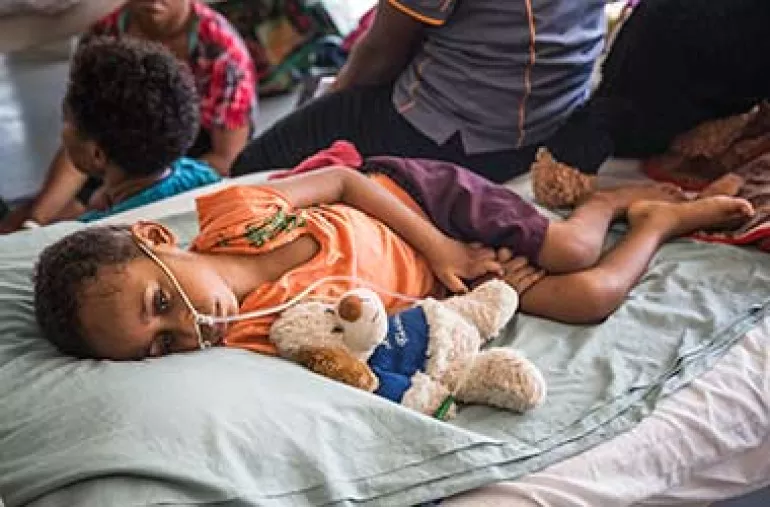
Port Moresby, 20 June 2014 – Malnutrition is a silent emergency in Papua New Guinea and the underlying cause for the majority of deaths of children under the age of 5.
This situation is seriously limiting not only children’s growth outcomes but also their future learning and income earning potential which further perpetuates the inter-generational cycle of malnutrition and poverty. Malnutrition contributes up to 50 per cent of all hospital admissions.
“Malnutrition cannot be addressed only by the health sector. This is an obligation for all concerned sectors to allocate resources to their respective nutrition sector interventions. It is essential to put in place the necessary conditions to detect and treat severe malnutrition cases as quickly as possible,” said the Assistant Secretary to the United Nations and UNICEF Deputy Executive Director, Ms. Yoka Brandt who is currently visiting Papua New Guinea and who visited the Paediatric Ward at the Port Moresby General Hospital today to hand over nutrition supplies for malnourished children.
There has been no real decline in the under-five mortality rate over the last ten years in PNG. One child in 13 dies before reaching the age of 5. National statistics show that close to half the children of PNG are stunted (45 per cent), 24 per cent are under weight and 14 per cent are suffering from moderate and severe forms of wasting which is a potentially life-threatening condition for young children.
Ms. Brandt appealed to relevant authorities to address the malnutrition situation in the country through a comprehensive management system as it is a serious and often life threatening condition with terrible consequences.
Children who suffer from malnutrition are likely to die of treatable diseases like diarrhea and chest infections. A child’s physical growth and mental development can become permanently impaired and in severe cases, the child can die if malnutrition if not treated.
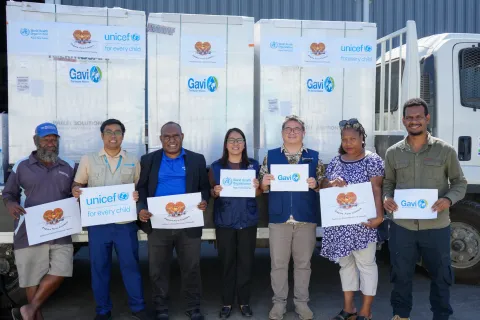
As part of interventions to address severe malnutrition, UNICEF is supporting the Government to develop a multi-sectorial national nutrition policy and revise the National Protocol for Managing Severe Acute Malnutrition. UNICEF is also providing close to 3,000 cartons of therapeutic food to 10 provincial hospitals located in high malnutrition burden areas in the country. Port Moresby General Hospital is among the first batch of hospitals to receive the therapeutic food that will help health workers manage severe malnutrition.
“Malnutrition is more than just hunger or lack of food. Babies and young children are particularly vulnerable to malnutrition., Everyone concerned, including the Government should take action during the 1,000 days window of opportunity which covers the start of pregnancy up to 2 years of a child’s life to make sure that they are fed properly to get the essential protein, fats, vitamins and minerals they need for their physical growth and mental development,” Ms. Brandt said.
Media contacts
About UNICEF
UNICEF promotes the rights and wellbeing of every child, in everything we do. Together with our partners, we work in 190 countries and territories to translate that commitment into practical action, focusing special effort on reaching the most vulnerable and excluded children, to the benefit of all children, everywhere.
For more information about UNICEF and its work for children in Papua New Guinea, visit https://www.unicef.org/png/