Privacy and protection for children affected by Typhoon Odette
Children who lost their homes face risks to their safety in the typhoon’s aftermath
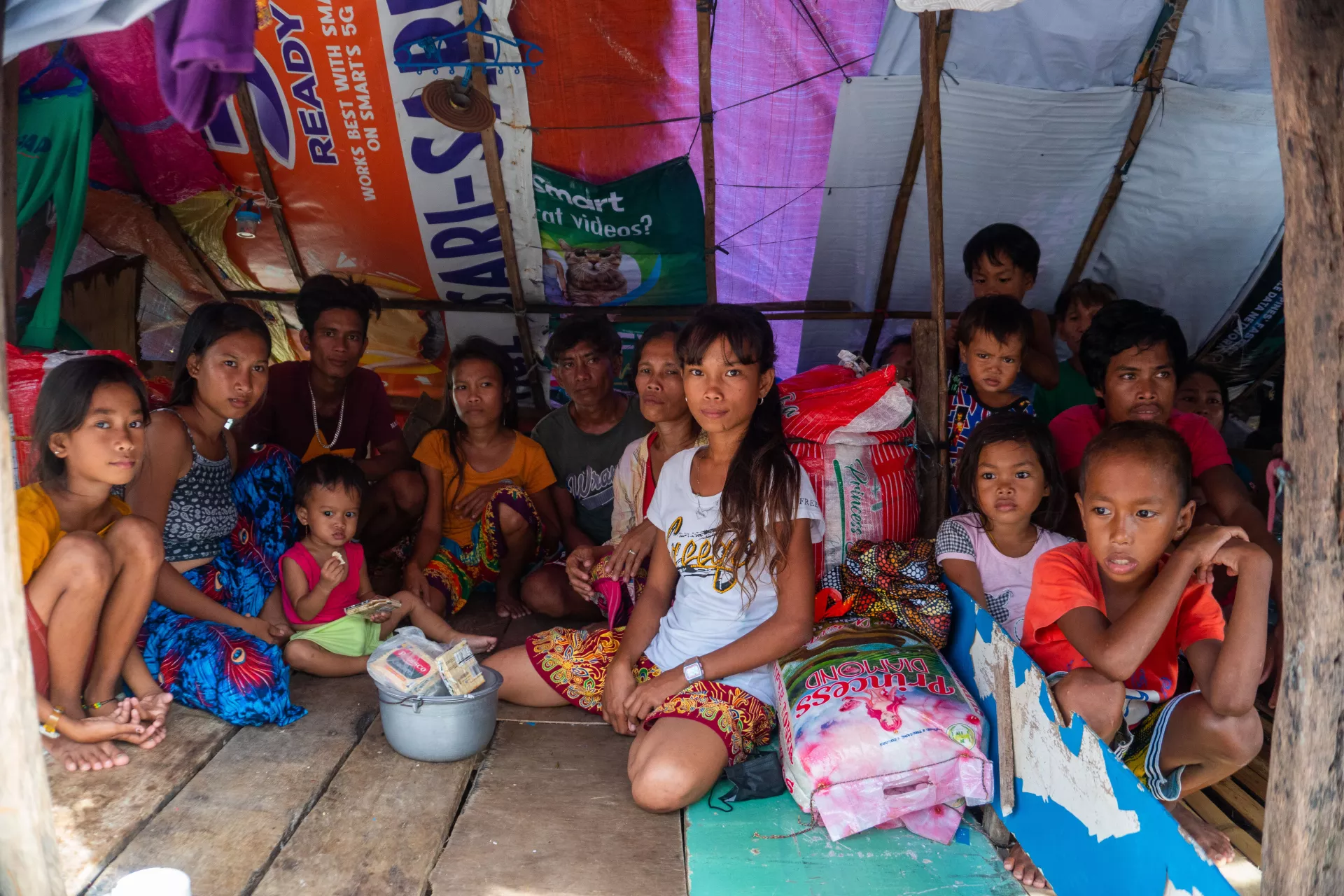
“We sit when we sleep at night,” says 13-year-old Didang Alibasi, a Badjao child who lives with 22 persons in a shanty. She pulls her knees to her chest to demonstrate her position. “We can’t even stretch our legs.”
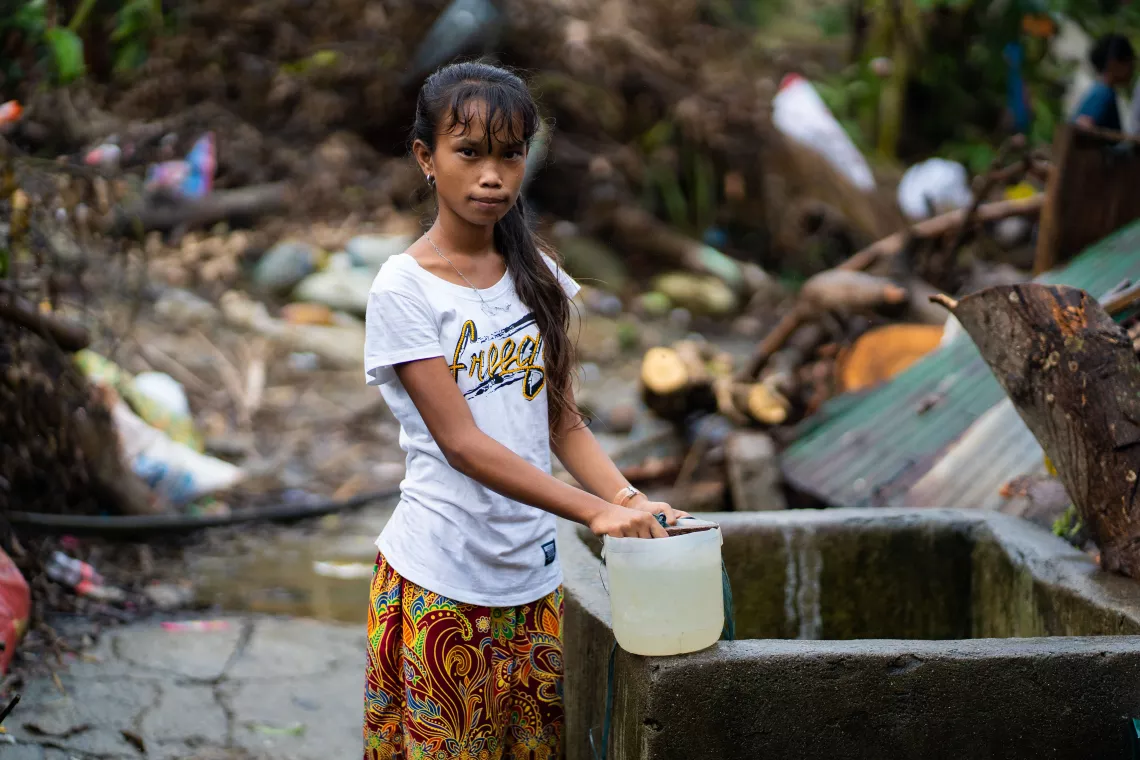
Didang’s family lost their home when Typhoon Odette (international name: Rai) hit Surigao City on 16 December 2021. Since the Badjao people lived in stilt houses on the sea, almost everything that they owned was washed away. The community, comprising 168 families, built temporary shelters between a busy road and a canal where people anchor their boats.
“Passers-by can see us,” says Didang. “It’s difficult to change clothes.” The shanties, made of debris from the typhoon, are open on the side facing the road and closed on the side facing the canal and the sea.
Without toilets, the families have to urinate and defecate on the sloping breakwater behind their shanties. At daytime, the breakwater is in full view of people in the canal and in the nearby port. Only the darkness at night affords the families some privacy.
“Living here is difficult, but we have to bear with it because our house is gone,” says Didang.
In close quarters
After disasters such as typhoons, children face threats to their protection. Those who lost their homes lose the safe spaces they need to have privacy. Children who live in evacuation centers are mixed in with adults or strangers. Those whose parents or guardians are having a difficult time coping can subject them to violence, abuse, exploitation or neglect. Children who have had to witness the fury of the typhoon may experience profound stress.
The Badjao community in Surigao City have had to evacuate by the side of a busy road, putting children in danger.
Didang’s family lives in a shanty shared by three households. The shanty is about 2.5 meters wide and 5 meters long. A thin piece of wood serves as a partition between households. “They are all my relatives,” says Didang.
When it rains, which happens still often after the typhoon, the space for the occupants becomes even smaller. “Water drips from the roof,” says Didang. The roof is made of tarpaulins. “We are pressed against one another.”
Bathing in public
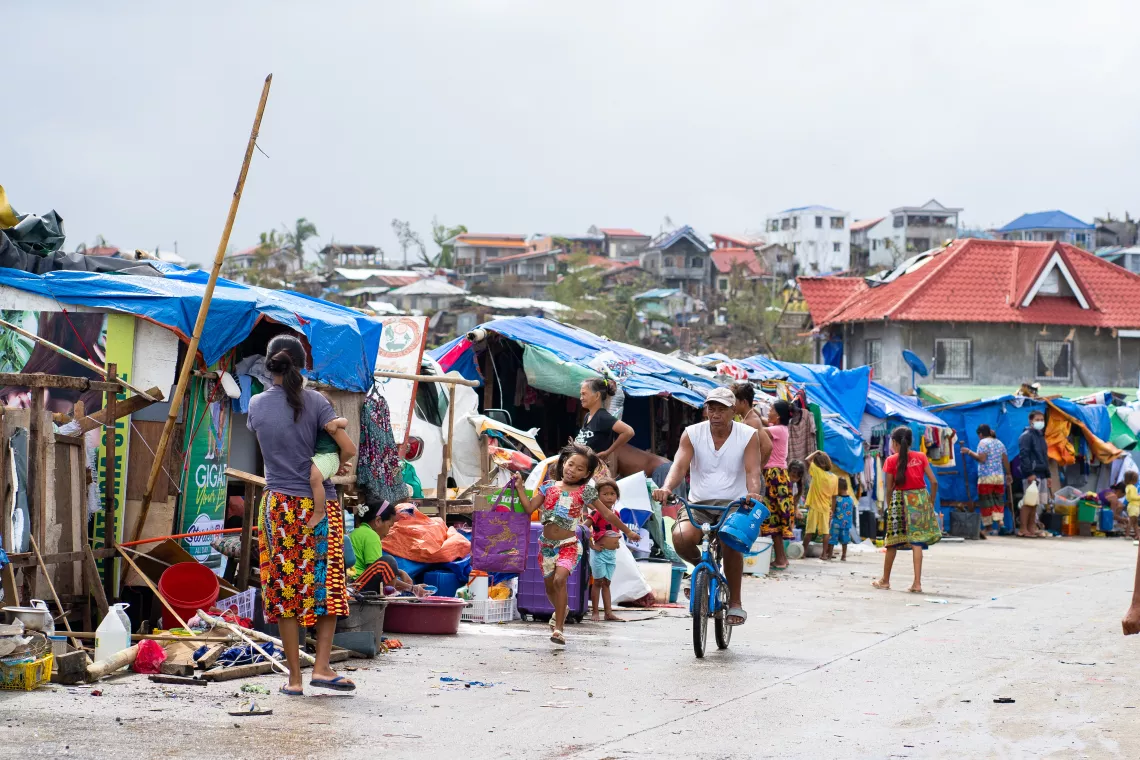
Didang takes a bath at a well near the shanties. She used to take a bath there even before the typhoon, but she has less privacy now. “People who had faucets at home also lost their water supply,” she says. “So much more people use the well now.”
The well is between an alley and a billiards hall where men hang out, so many women who bathe at the well are not comfortable. Wearing her wet clothes, Didang walks home to change.
Constant danger
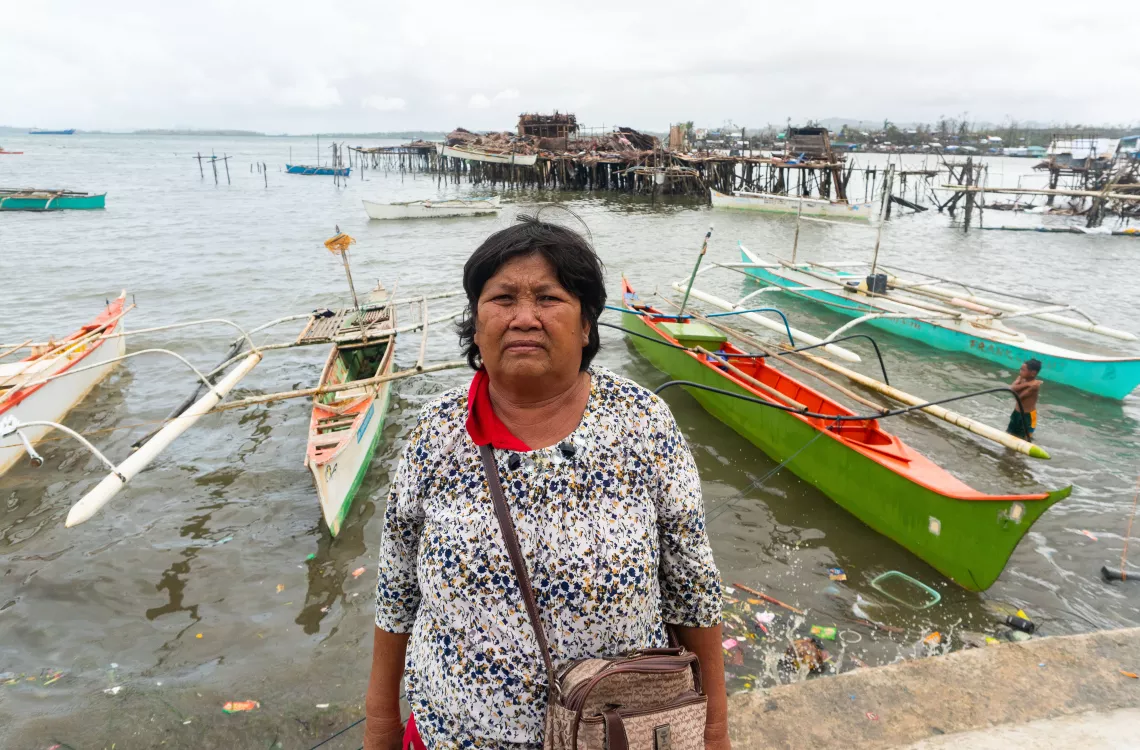
So far, the community has not recorded any abuse against children. “But I’m so worried about safety,” says Dahila Araman, 56, a Badjao leader. “The children could be hit by a vehicle anytime.”
Different types of vehicles, from motorcycles to trucks, ply the road in front of the shanties. Horns blare the whole day to warn people. Because the road serves as a yard of the shanties, the children run about.
“It’s an added problem,” says Araman. “I lost my house, belongings, and boat in the typhoon. I worry about how to have those again. And I think about these children. I get nervous every day.”
So far, the only help the Sama community has received are tarpaulins for their roof and rations. They have to stay in their shanties for some time.
Despite the danger, Araman opted to build her shanty where her house had been. She has to walk carefully. Her walkway is a web of planks, some of which are not nailed to the stilts.
“I want all of us to come back here,” she says. “I want us to have a normal life again.”
Help us reach more children and families affected by Typhoon Odette. Donate now: https://bit.ly/UNICEFEmergencies