When hope knocks on the door...
Sometimes a society's indifference can be transformed into hope
- Español
- English
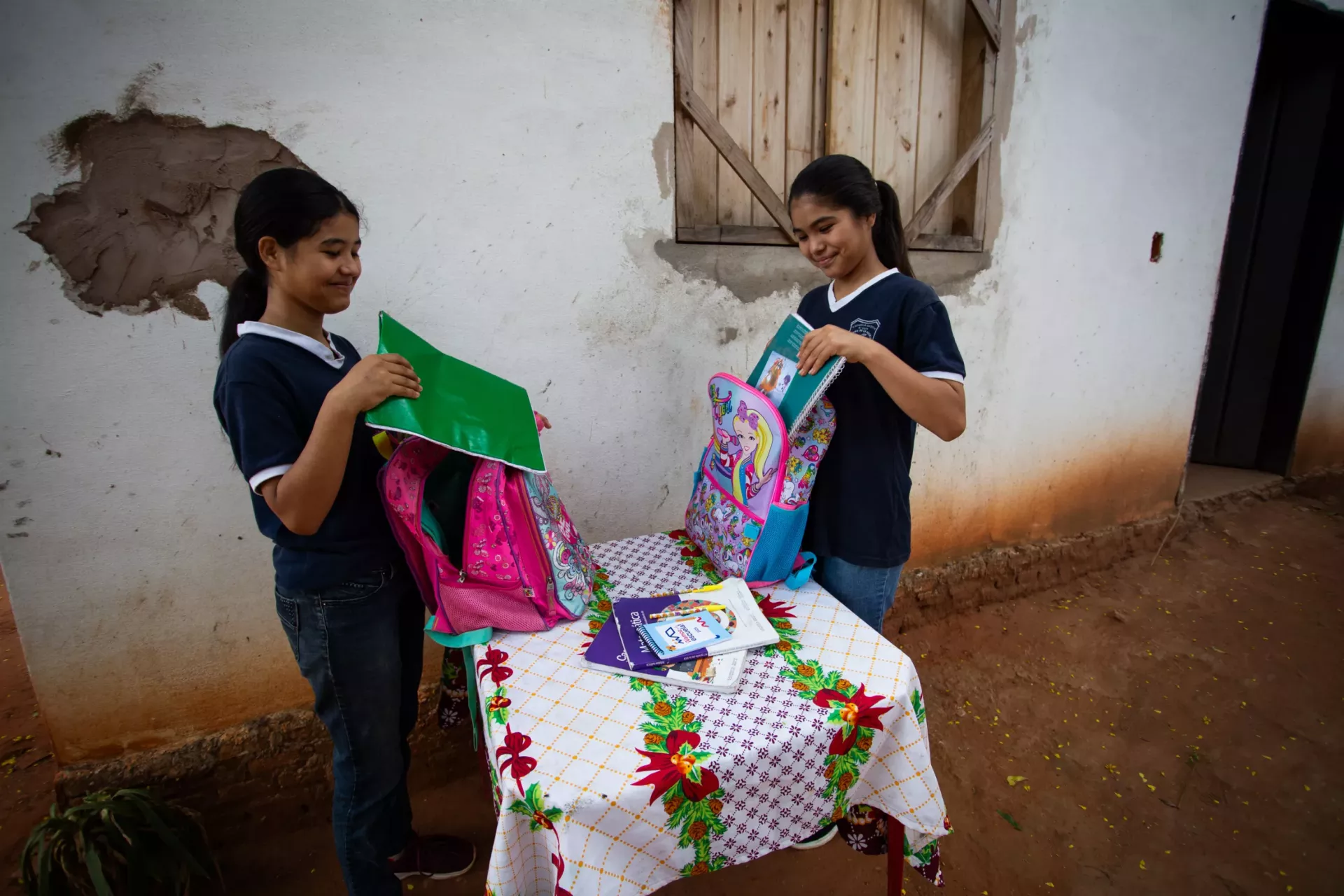
Sometimes a society's indifference can be transformed into hope. It all depends on who we can count on to overcome the barriers to education. In this case, the articulated work of public services and state institutions has made it possible to respond to a situation of educational exclusion that particularly affects migrant children within the country. This is the story of Faustina (13) and Milena (14) Velázquez, two sisters from Caazapá who migrated with their family from the countryside to the city of Ypané, near Asunción (the capital of Paraguay), in search of better opportunities. As a result, they stopped going to school.
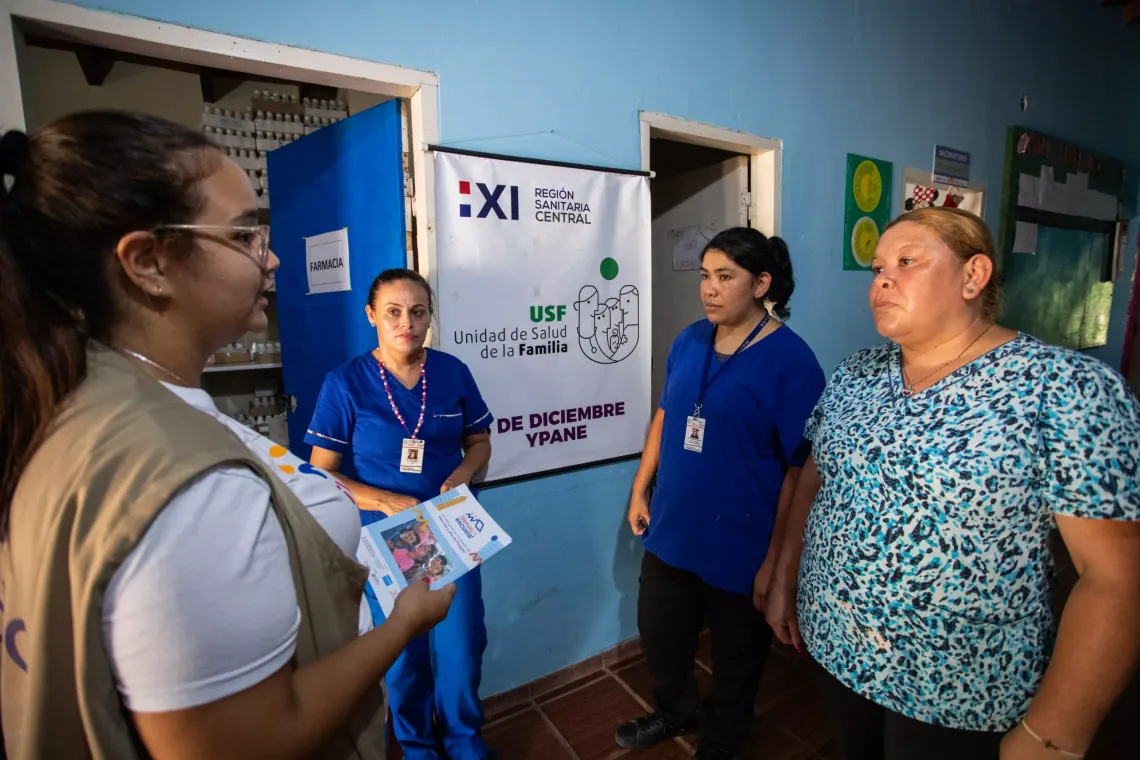
One day, community health workers from the Family Health Unit (USF, acronym in Spanish) "8 de diciembre" visited the household and, as well as asking about the family's health, asked if the girls were attending school regularly. They found out that the two sisters were not attending school.
Andrea García, social facilitator of the Let's Go to School! project, explained that due to the family moving and the lack of available places in the school closest to their home, Faustina and Milena had not attended classes for six months.
"The health workers helped us to identify the cases, which was crucial for the project staff in the field to better understand and follow up the situation. García concluded: "Education opens doors, it is a tool for the girls to develop their full potential and have a better future, so I believe that what we are doing together has a positive impact".
Natalia Rodríguez, a community health worker who works in the Family Health Unit, said that "working together as health workers has been very important, because through this coordinated effort it is possible to reach many children who are out of school".
"Thanks to the participation and direct support of the project, Milena and Faustina are back in school today," she said.
Although going back to school is a milestone in their lives, moving from the countryside to the city remains a major challenge for the two sisters. Both speak Guarani (their mother tongue) and very little Spanish. They are shy, observant and walk together for about 25 minutes every day to go to school, as they have no access to public transport. This is their new life, with their backpacks full of hope and enthusiasm to overcome obstacles and succeed in life.
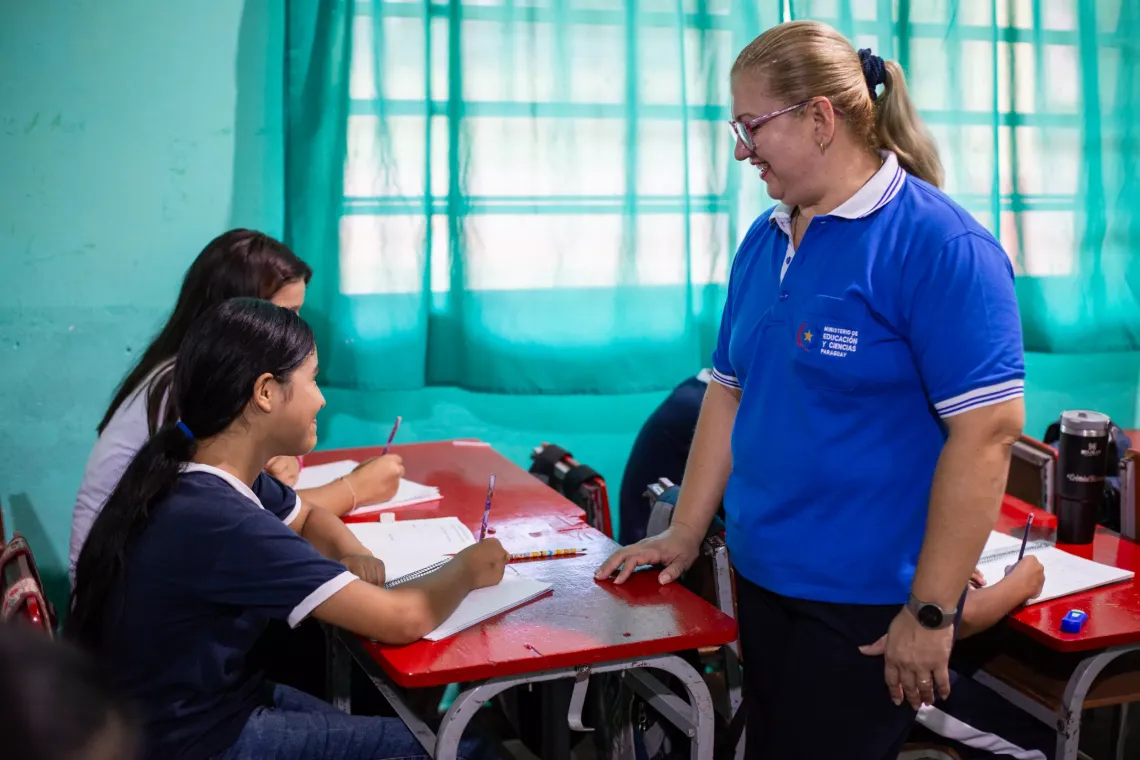
The Let's go to school! project, an initiative led by the Ministry of Education, in partnership with UNICEF and Education Above All Foundation, encourages and reinforces the commitment and engagement of the educational community along with other social services present in the territory. This collaborative work is something that should not be disregarded nor discontinued, according to Blásida Benítez, principal at the Futuro de la Patria school.
"Our school is part of the initiative and, in addition to Milena and Faustina, we have identified and enrolled 30 other children who were out of school. We have opened the doors of our school to them, welcoming each child and motivating them to move forward. Thanks to the support of our teachers and the continuous follow-up of the project's social workers, we have been able to support and retain these children. There are still many challenges ahead, but I urge my fellow teachers to continue to support these children and care for their future, because we can make it better for all of them," the director concluded.
About the Let's go to school! project
The Let's go to school! project is an initiative led by the Paraguayan Ministry of Education, in partnership with UNICEF and the Education Above All Foundation. As implementing partners, Fundación Alda and Global Infancia are carrying out a series of activities to promote the identification, enrolment, retention and learning of children and adolescents who have been deprived of their right to education.
Through a multi-sectoral approach, social services and public institutions, such as the Family Health Units of the Ministry of Public Health, communicate with project staff in the field and work together to ensure children's access to education and other rights.
Thanks to the project, between February 2023 and December 2024, over 23,000 children in Paraguay have been granted the right to access school and learn.