School Rebuilt, A Future Reimagined: Ume Hani’s Journey Back to School
With support from the GPE-funded Balochistan Student Learning Improvement Programme, UNICEF is working with communities in Lasbela to make schools safer and more inclusive, particularly for girls.

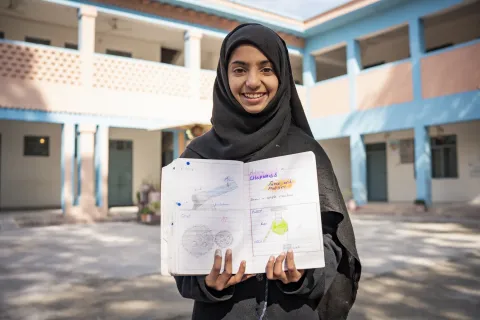
Lasbela District, Balochistan: For Ume Hani, school is where she learns, plays with friends and dreams about her future.
But in 2022, floods disrupted that future. Her school was damaged, and she and other children were forced to study in a temporary learning space without basic facilities. For a while, Ume Hani stopped attending school.
“I felt suffocated when I saw my school affected by the floods. Our education was disrupted, and we were at home doing nothing. I felt useless,” she recalls.
When safety and privacy shape a girl’s education
For girls, being able to enter school is only part of the journey. Privacy, safety, and basic facilities can determine whether they attend regularly and continue their education.
The need is particularly pressing in Balochistan, where only 43 per cent of primary-school-age children are enrolled at the appropriate level, compared with 68 per cent nationally. In Lasbela, girls accounted for 8,114 of 23,917 primary-school enrolments in 2022–23, underscoring the need to expand and sustain girls’ participation in education.
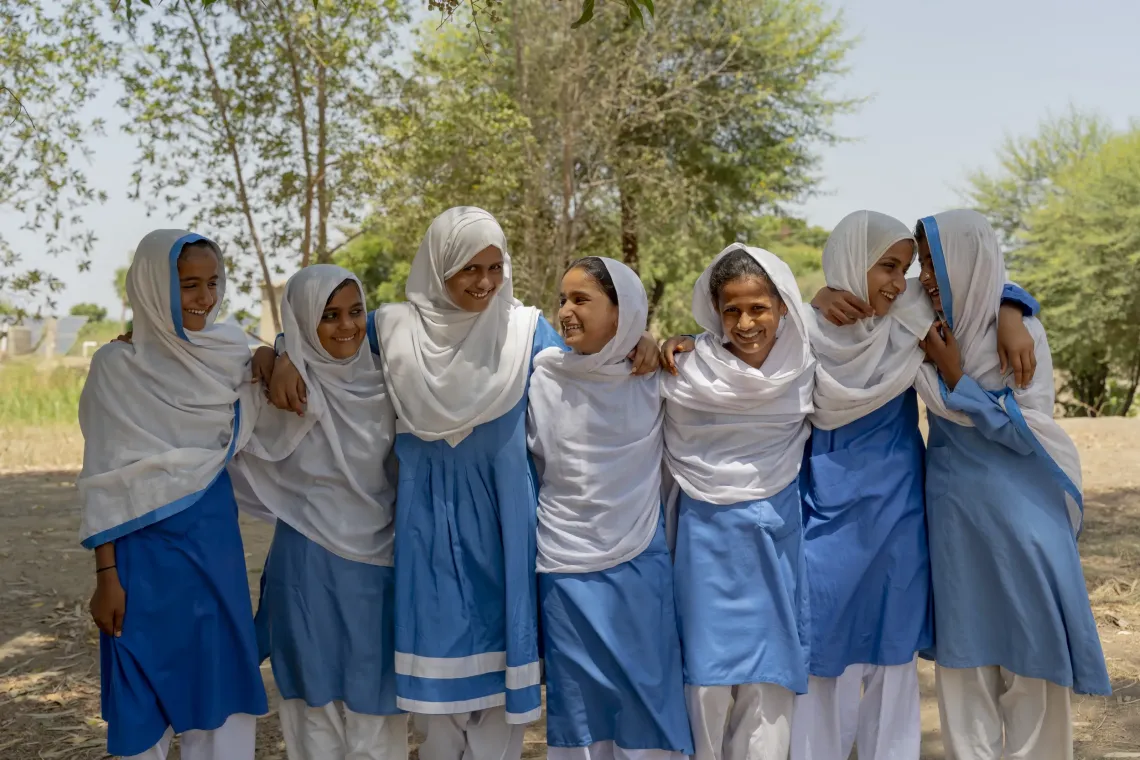
At Ume Hani’s school, Government Girls Primary School (GGPS) Allah Bakhsh Doda, two sides of the premises opened onto a busy public road, compromising privacy. During summers, classes were sometimes held in the veranda, while the school also lacked adequate water and sanitation facilities.
Then things began to change.
Through the Balochistan Student Learning Improvement Programme (BSLP), the school received a School Development Plan grant that supported restoration of the water supply system, repair of the water tank, rehabilitation of the solar-powered water motor, repairs to the school building, and partial construction of the boundary wall.
“I would often see our daughters trying to focus on their lessons while people passed by the school,” recalls Ghulam Mustafa, Chairman of the Parent-Teacher School Management Committee (PTSMC). “It was painful to think that something as basic as privacy was preventing them from learning comfortably.”
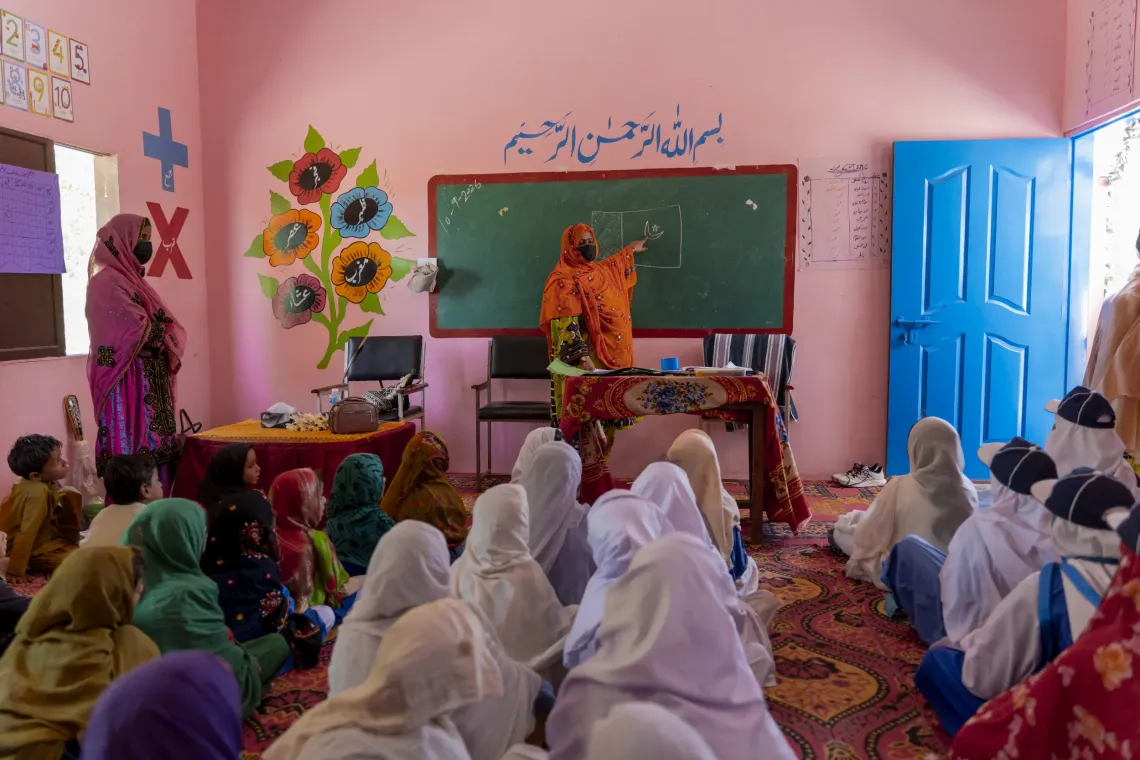
When the available funds were insufficient to complete the boundary wall, Mustafa contributed his own resources to cover the remaining cost.
Girls can now study within a secure and private space. Morning assemblies are held in a dedicated area, and the school is cleaner and greener. Enrolment has increased from 30 to 70 students, while teachers and community members report improved attendance and greater confidence among girls.
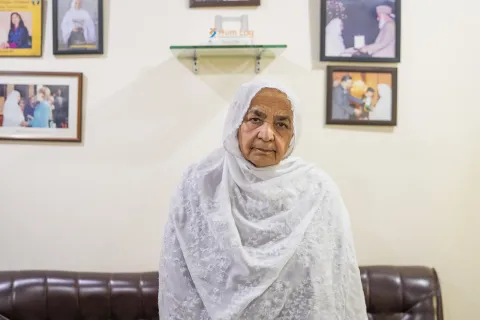
For Azra Bibi, a teacher and active member of the PTSMC, the difference is clear.
“After the floods, children studied in a temporary learning space and would ask us, ‘Is this really a school?’ There were no proper boundaries, electricity, or basic facilities, and parents were reluctant to send their children. When we put up a blackboard, the rain would damage it. We felt frustrated. Today, the children have a proper school, and the change is clear. Students like Ume Hani are progressing well, and the girls are more confident.”
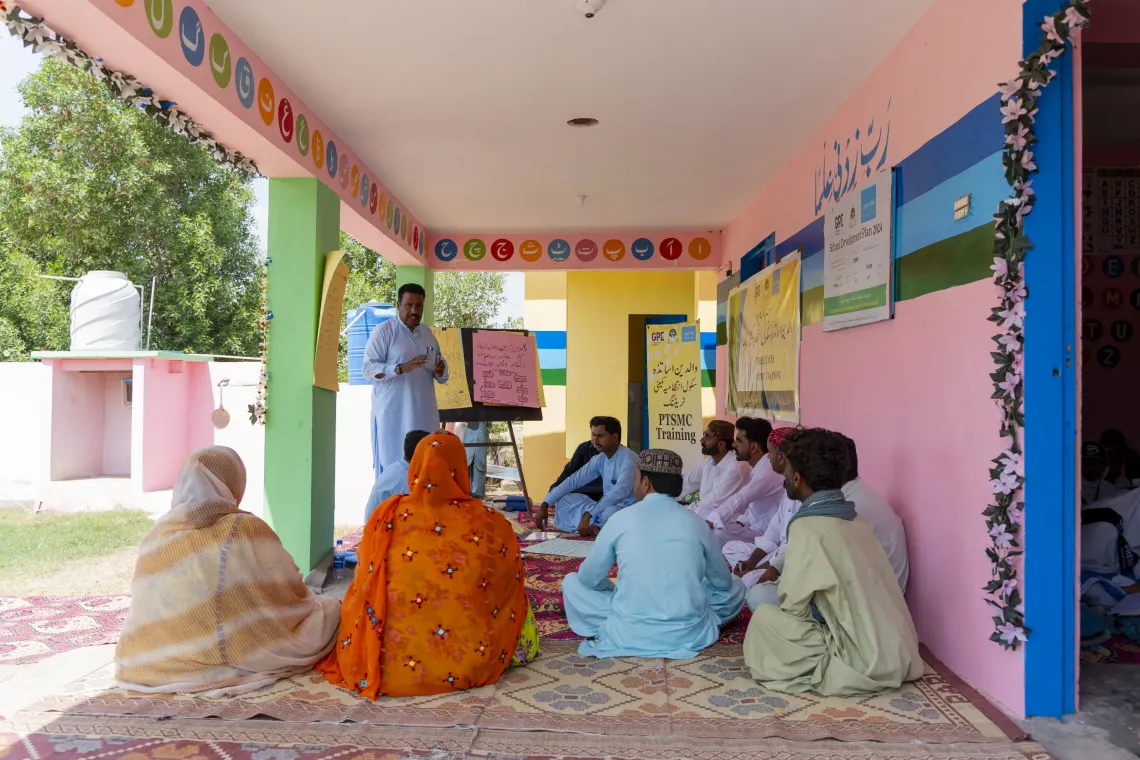
When Sadia Rashid, a counsellor and PTSMC member, began mobilizing families, some questioned why their daughters should attend a school where privacy was not assured. Continued engagement gradually helped change those perceptions.
“Now our daughters are inside a safe boundary and they are more confident. I wanted to get an education myself since childhood, and I want the children of our area to grow,” Sadia Rashid, Counsellor PTSMC.
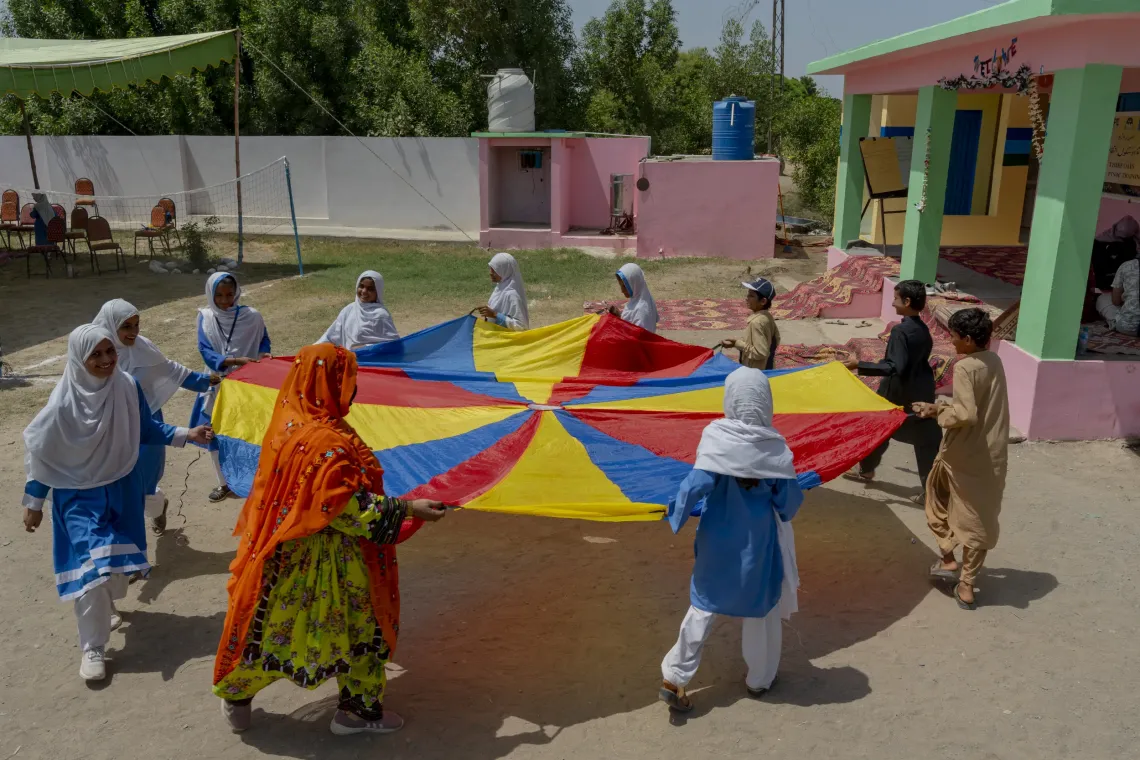
When communities take ownership, change can last
That sustained engagement is central to BSLP. Since 2023, GPE funding has supported 140 PTSMCs in Lasbela, enabling parents, teachers and community members to take a more active role in improving schools, engaging families, and supporting children to stay in education.
Across Balochistan, the programme has established PTSMCs in 1,500 primary schools across 20 districts and trained more than 11,000 PTSMC members and teachers. In Lasbela, five school clusters covering 75 targeted schools are included in the programme.
The focus is not simply on improving schools, but to strengthen the community systems around them.
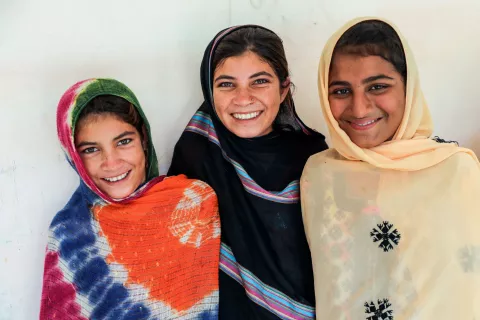
For Ume Hani, that effort has opened the door back to learning. After studying in a temporary learning space following the floods, she is now back in Grade 3, learning alongside her friends in a school with electricity, a washroom, a boundary wall and space to play.
“My school has a better building now, with electricity, a washroom and a boundary wall, along with supplies for games and sports. When I saw our school under construction, I was confident that I would become a lawyer and that my wish to fight for justice would be fulfilled.”
Her guardian, Zohra, says the improvements made it possible for Ume Hani to return to the school she wanted to attend. For the family, privacy and safety are essential to keeping girls in education.
The floods interrupted her education; it did not have to determine its ending.