Saving our Smallest 🩵
With funding from Korea, investment in Sick and Small Newborn Care is saving precious lives in Charsadda, Khyber Pakhtunkhwa

Charsadda District, Khyber Pakhtunkhwa: Pakistan has made strides in improving child health, significantly reducing under-five mortality rates in recent decade. However, many newborns and mothers are still at risk. Neonatal mortality remains a critical challenge, with a disproportionate number of deaths occurring within the first week of life, often due to preventable causes.
Every day, more than 700 newborns die, over 500 are stillborn, and two mothers lose their lives every hour due to complications during pregnancy or childbirth. These numbers are among the highest in the region and the second highest in the world. In places like Charsadda, advanced neonatal services were out of reach for families who often had no choice but to travel long distances for help. To enhance the quality of Small and Sick Newborn Care (SSNC), UNICEF with funding from Korea provided equipment and training to health care providers at the Women & Children Hospital Rajjar in Charsadda District. This intervention is part of a larger effort to support COVID-19 recovery and improve essential maternal and newborn health services.
Empowering Healthcare Heroes
Health care providers were trained on practical skills to manage high-risk newborns, including techniques for thermal regulation, safe oxygen administration, and infection control, while strengthening collaborative care, improved communication and teamwork. These efforts are helping ensure that the most vulnerable newborns receive timely and appropriate treatment in a safer, more supportive environment.
“One of the most impactful lessons was learning how to identify early danger signs in newborn babies and apply immediate, evidence-based interventions. The training didn’t just stay with us, we have passed it on to our nurses, students, and even mothers, who are now part of the care process,” shares Dr. Sidra Irshad, Woman Medical Officer, Pediatrics at the Women & Children’s Hospital, following her SSNC training.
“We always cared deeply for our newborn patients, but we didn’t have a standardized system or steps to follow. That is what the Sick and Small Newborn Care (SSNC) training gave us, a structure. We now follow proven methods to ensure each newborn gets the right care at the right time,” says Dr. Fida Hussain, Medical Officer, Pediatrics at Women & Children Hospital Rajjar in Charsadda.

In early June, a 40-day-old baby (unnamed) was admitted to the hospital in critical condition, weak, underweight, and struggling to breathe, but thanks to the timely application of oxygen therapy and feeding support guided by the SSNC protocols, the baby’s condition gradually stabilized. Within days, he started showing signs of recovery, a major achievement supported by the specialized training the staff received.
“Before the training, we relied mostly on experience and instinct, especially in emergencies. Now, we are confident. We know exactly what to do in the first minute, the first hour, and the first 24 hours of a newborn’s life."
Dr. Fida Hussain
In May and June 2025, healthcare providers at the hospital received further training on Small and Sick Newborn Care, Pregnancy, Childbirth, Postpartum and Newborn Care, and Kangaroo Mother Care.
Cleaner environments, stronger results
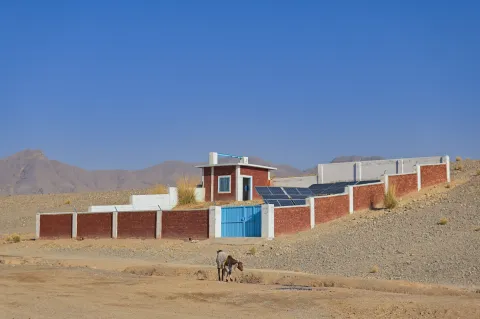
The hospital also received support for improving water, sanitation and hygiene (WASH) infrastructure and infection prevention practices. During the SSNC training, the healthcare providers were trained in proper handwashing, equipment hygiene, and how to maintain a sterile environment in high-risk neonatal spaces.
WASH infrastructure was upgraded through the WASHFIT (Water, Sanitation, and Hygiene Facility Improvement Tool) approach, with training, improvement plans, and hygiene supplies provided to ensure safer, cleaner healthcare environments. Essential WASH supplies and consumables were also provided to help health facilities maintain cleanliness and reduce infection risks.

The change was both immediate and visible. Within just a few months, staff reported real improvements. Resuscitation rooms were equipped with clear protocols, nurses received hands-on mentoring, and mothers were guided on how to care for their newborns. The most important change; more babies began to survive. Neonatal mortality rate has dropped from 12 per cent to 7.5 per cent.
The improved health services have also resulted in higher demand. At the Women & Children Hospital Rajjar in Charsadda, maternity ward admissions have increased from 160 to over 200 per month. The Kangaroo Mother Care (KMC) unit, which used to care for 15 to 16 babies per month, treated 33 patients in May 2025.
Between December 2024 and June 2025, trained staff have cared for over 5,600 pregnant women, helped 164 women with high-risk pregnancies, and safely delivered 726 babies.They also provided improved postnatal care to 170 mothers and treated 1,170 newborns in the Small and Sick Newborn Care Unit.
The progress at Women & Children Hospital Rajjar shows what’s possible when doctors are trained and supported to care for newborns using the right methods. The hospital has become a place where more babies are surviving, and more mothers are finding hope.
“We’re truly grateful to the Republic of Korea and UNICEF. Their support has helped us save precious young lives. With the skills and tools we’ve gained, we can now give newborns a real chance to survive and thrive,” says Dr. Sidra Irshad.