Ensuring child survival through oxygen therapy
With funding from the Republic of Korea, UNICEF is empowering healthcare providers to deliver lifesaving oxygen therapy to vulnerable children

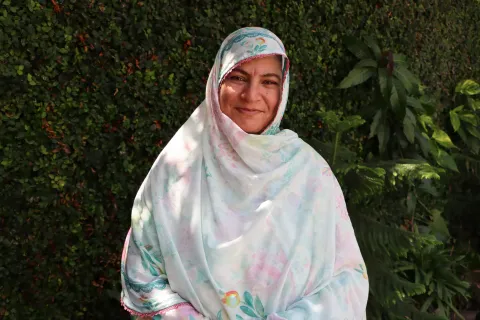
Islamabad, Pakistan: “Respiratory issues, particularly pneumonia, are among the leading causes of death for children under five,” states Dr. Samia Tul Rasool, the Head of Maternal and Child Health at the Rural Health Centre situated in Barakahu, on the outskirts of Islamabad. This is the only government-run primary health facility serving the neighborhood's estimated 180,000 residents.
“In many cases, it’s not the disease itself but the lack of timely oxygen therapy that turns a treatable condition into a fatal one,” she adds.
Administering supplemental oxygen is a life-saving intervention for children with severe pneumonia and other respiratory illnesses. It ensures that vital organs receive sufficient oxygen, preventing complications and significantly improving the survival rate.
“Ensuring that healthcare providers are equipped to manage oxygen therapy effectively is crucial for saving precious young lives. The training we received earlier this year was both necessary and impactful,” says Dr. Samia.
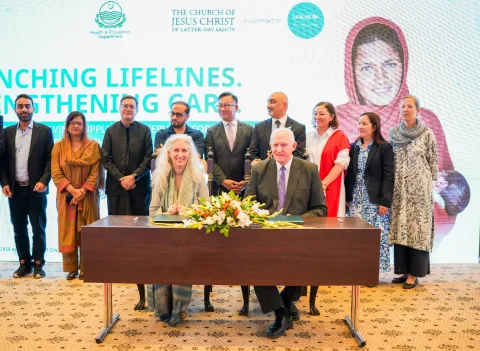
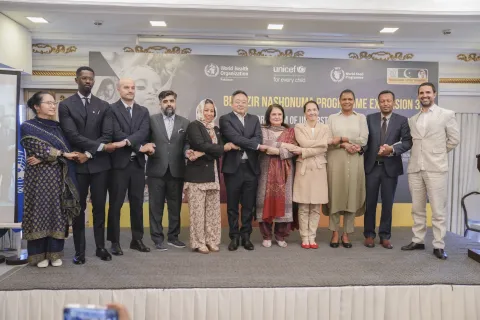
Dr. Samia is referring to the training on “National Guidelines for Oxygen Management,” funded by the Republic of Korea and organized by UNICEF, with support from the Ministry of National Health Services, Regulations and Coordination, Government of Pakistan.
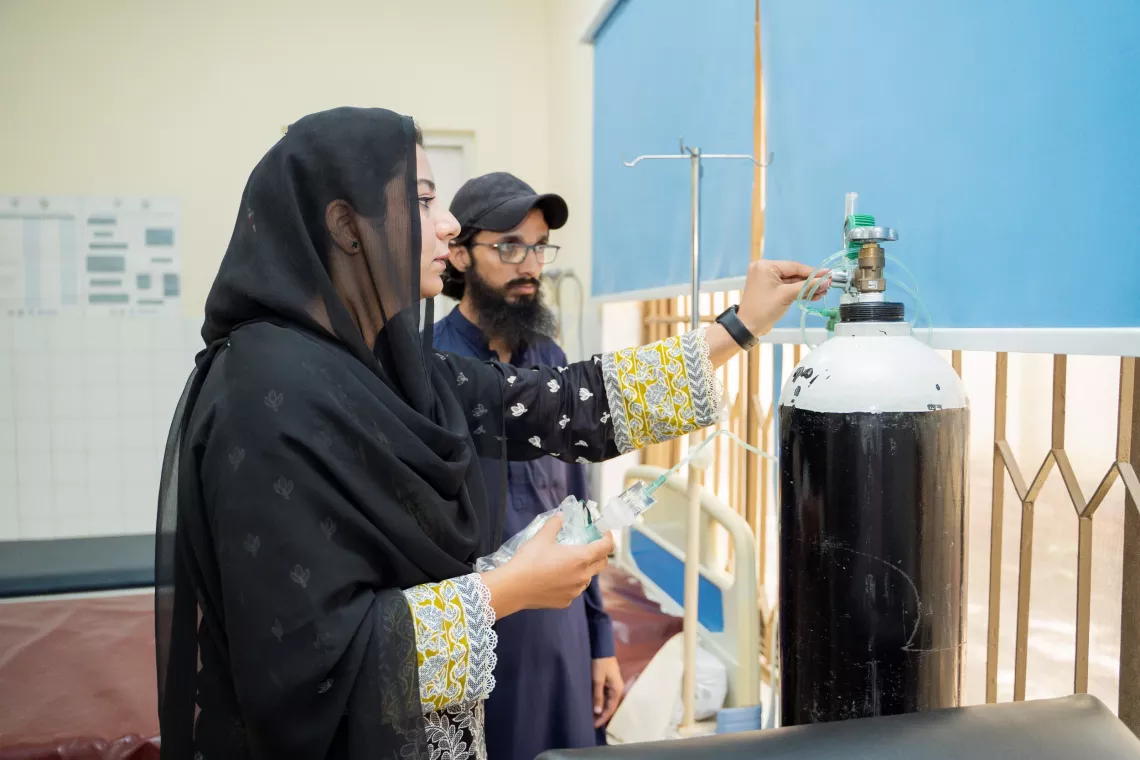
This two-day training, held in May 2024, aimed to enhance the capacity of healthcare professionals like Dr. Samia to effectively administer oxygen therapy to vulnerable children and women. Over 145 medical staff from 13 government health facilities across Islamabad, Gilgit-Baltistan, Pakistan Administered Kashmir and Khyber Pakhtunkhwa participated.
The participants were trained using real-life case studies, which provided them with practical hands-on experience in managing oxygen therapy. This approach allowed them to apply theoretical knowledge to actual scenarios.
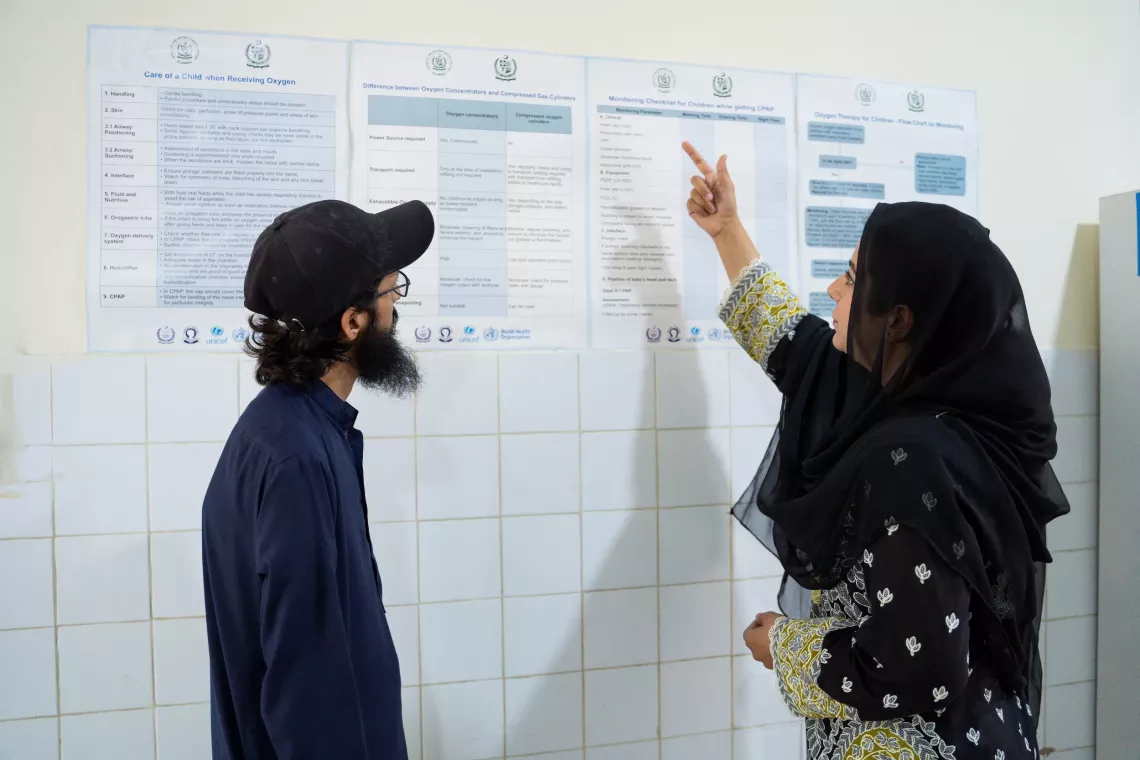
During the training, participants were introduced to the national guidelines for oxygen provision in children, alongside a carefully developed checklist. The guidelines and checklist serve as a standardized, step-by-step protocol for the safe and effective administration of oxygen, ensuring that every child receives consistent, high-quality care. Additionally, the training emphasized the importance of early and accurate assessment of respiratory issues in children.
Before these guidelines were introduced, doctors at the Rural Health Centre, including Dr. Samia, often had to rely on personal experience and online resources to administer oxygen therapy. "We did our best with the knowledge we had," Dr. Samia explains “but there was always a lingering uncertainty, especially in critical cases.”
“The training has equipped us to better assess the severity of respiratory issues as soon as a child comes for checkup, allowing us to act quickly and effectively. The new SOPs and checklist have given us a structured approach, allowing us to provide every child with the same high standard of care, based on best practices," she states.
Dr. Samia highlights that while pneumonia and asthma are common respiratory issues among children which require oxygen therapy, especially during winters, the use of oxygen is also critical during complicated deliveries at the health centre.
She explains that when a delivery becomes problematic, the newborn may suffer from hypoxemia—a condition where the body or a region of the body is deprived of adequate oxygen supply. This necessitates immediate oxygen support to stabilize the infant. Similarly, the mother can experience severe exhaustion from the prolonged or difficult labour and require supplemental oxygen to ensure her safety and recovery.
“The COVID-19 pandemic had a profound impact on our understanding of oxygen's critical role in healthcare. During the pandemic, the urgency of oxygen therapy became obvious, highlighting its essential role in saving lives. This experience reinforced our commitment to emphasizing oxygen management in hospitals. Training healthcare staff in oxygen therapy is crucial because it equips them with the skills to provide life-saving care to children. We will continue to provide training and resources to healthcare providers to help children suffering from respiratory diseases survive and thrive,” says Dr. Humaira Irshad, UNICEF Health Officer.