Ibrahim dives through deep waves for the better health of i-Kiribati children
The man that fronts boats, trucks, motorbikes, and travels long distance on foot on ensure i-Kiribati children receive the best vaccination support

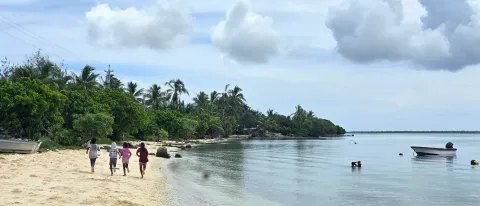
As you travel down the streets of Tarawa in Kiribati, you will have many wonderful sights to capture. You will see children running along playing and having some laughs, you will see older people sitting in the Maneaba, a traditional Kiribati meeting house central to the island’s way of life, and discussing community issues, you will see shopkeepers trying to sell bananas, and handicrafts.
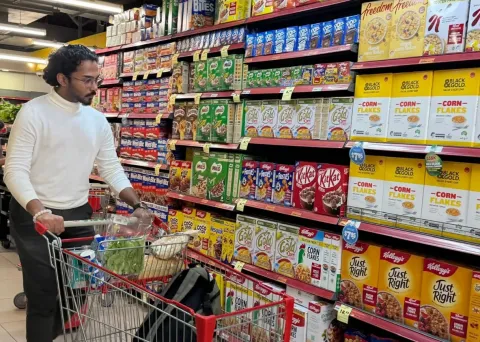
But you will also see a familiar face, walking down to communities and health facilities braving the scorching heat with a black backpack. This is Ibrahim Ngoshe, UNICEF Pacific’s Immunization Specialist for the Kiribati Field Office.
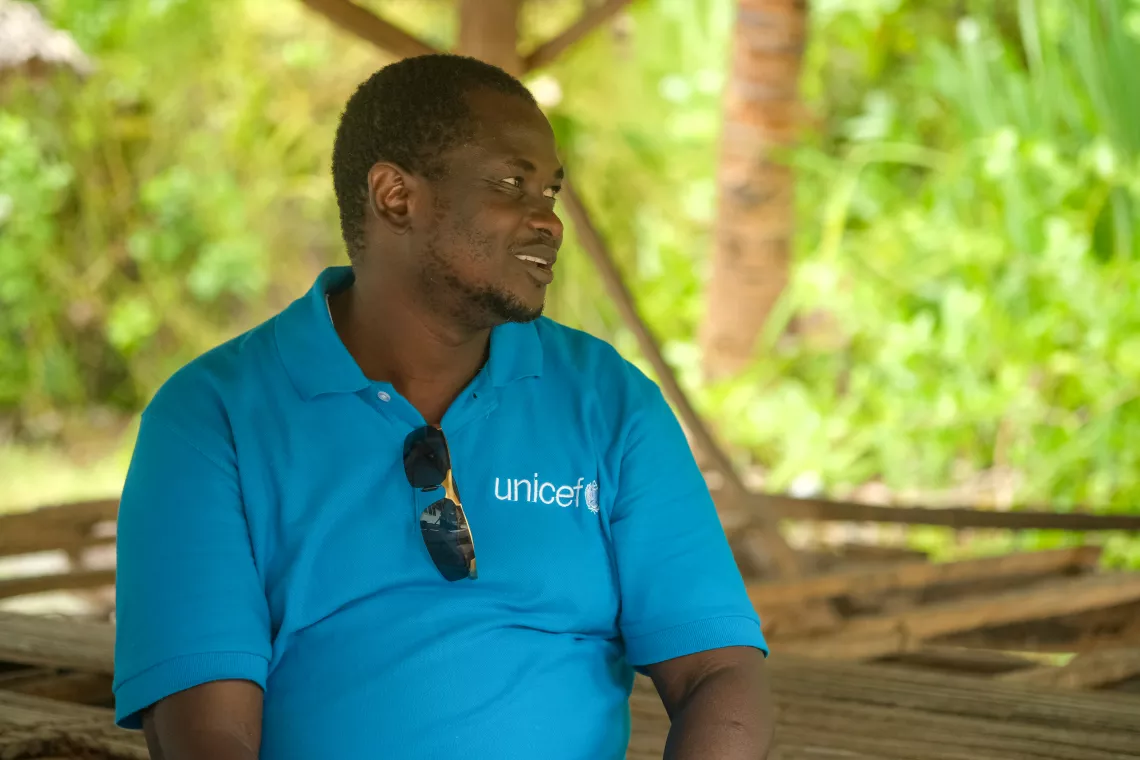
Everyone knows Ibrahim on this little island in the Pacific. As he walks past restaurants, you can hear people say, ‘Mauri Ibrahim!’, which means ‘Hello’, with a big smile. He is even greeted by doctors and nurses in health facilities as one of their own, eager to learn more from the expertise he brings to the field.
Ibrahim joined UNICEF Pacific in 2021, but due to COVID-19, only made it to Kiribati physically in 2022. In such a short period of time, he has already made a place for himself in the local community and is well respected amongst peers.
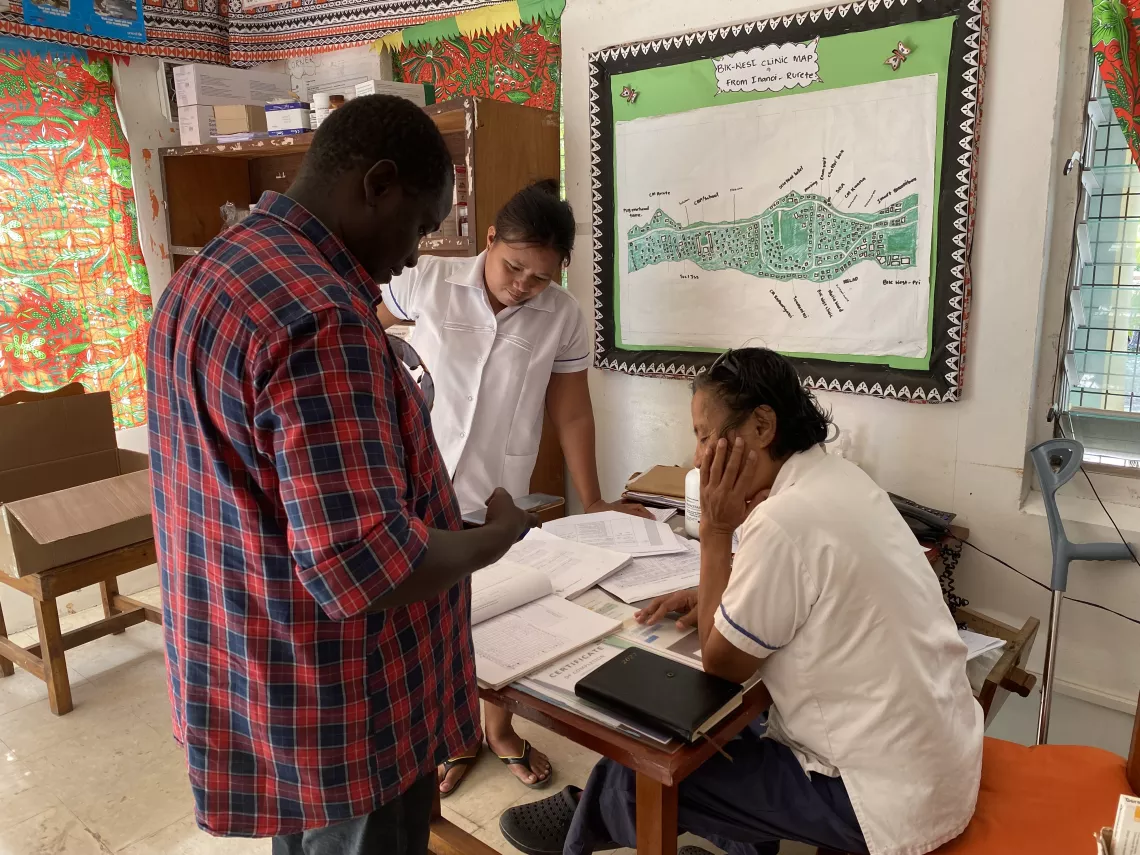
“My work is not easy. Coming all the way from Nigeria where I have my family, my three beautiful children and my wife, and flying all the way to the other side of the world where I needed to start again and get to know people, their culture, policies and vaccination rates has been a challenge,” said Ibrahim.
“But what keeps me going? It’s the i-Kiribati people! They are always happy and trying to do the best they can with the limited resources they have. The health workers are very committed to their work and very eager to learn new things that can help with ensuring better health for their children and communities.”
Ibrahim travels on the main island, as well as to the remote outer islands to provide support to healthcare facilities with the vaccination activities. Some of these outer islands do not have access to regular reliable electricity or transportation.
“I need to go to healthcare facilities to provide supportive supervision and replenish vaccines as well as other medical devices,” he says. “To reach the remote outer islands, I need to travel by boat across sometimes choppy seas for at least an hour. During low tide, we walk for more than an hour before getting onto the boat and walk for more than three hours to the island.”
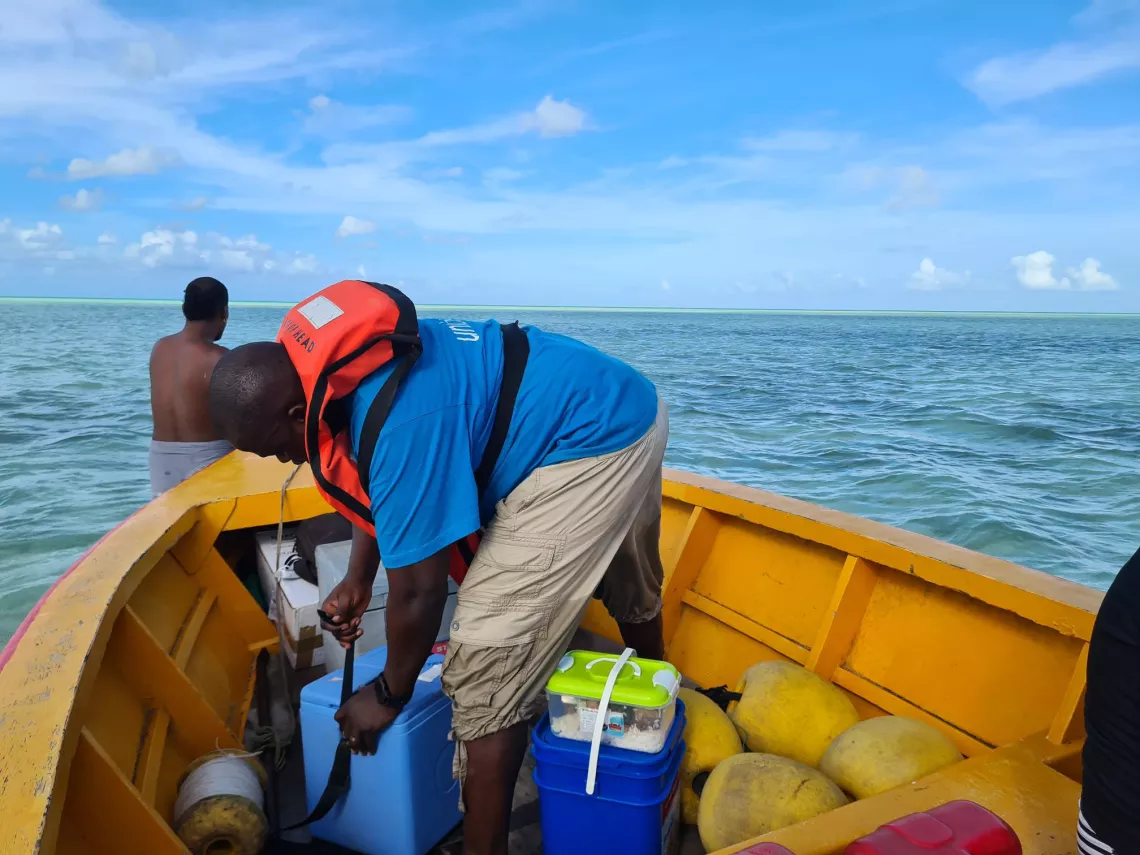
“From the boat stop, we usually use a truck to transport us to the communities. In places where there are no trucks available or they cannot enter the community, we use a motorbike. Now, where the motorbikes are not available or cannot enter the community, we need to walk,” he added.
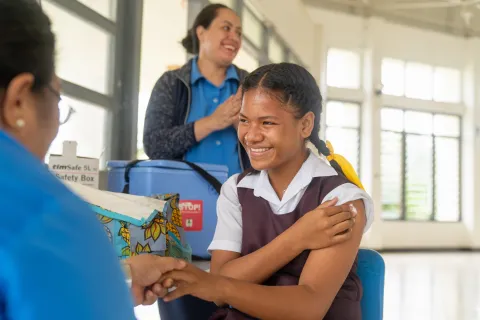
With 15 years of experience in the public health sector, out of which 11 years have been in maternal, newborn and child health, immunization, surveillance, health system strengthening, nutrition, HIV, as well as cold chain/vaccine management, Ibrahim highlights that it is so important to ensure children receive their vaccination on time to avoid any health risk.
“We travel long distance, we brave the heat and the rain – but at the end of the day, it is worth it as it is so important. Vaccination reduces the risk of getting a disease by working with the body’s natural defenses to build protection. When a child receives vaccines, his or her immune system strengthens and responds,” said Ibrahim.
He sits down on a chair and stares out the window.
“During a session of supportive supervision, I was emotionally hit when I saw a mother with her five-month-old baby with severe malnutrition. There was no exclusive breastfeeding, and the baby was feeding on other foods other than breast milk. The baby had lost weight because of this and became abnormally thin as well as weak because of malnutrition," said Ibrahim. "That day, I remember it so clearly, the nurse was unable to vaccinate the baby because of thin and weak muscles of the thigh."
In Kiribati, the healthcare field vaccinates children with nine different vaccines and one vaccine for women of childbearing age. Looking at the population of live births, which is 3,375, and surviving infants, 3,333, Ibrahim feels it is important to protect them from all vaccine-preventable diseases.
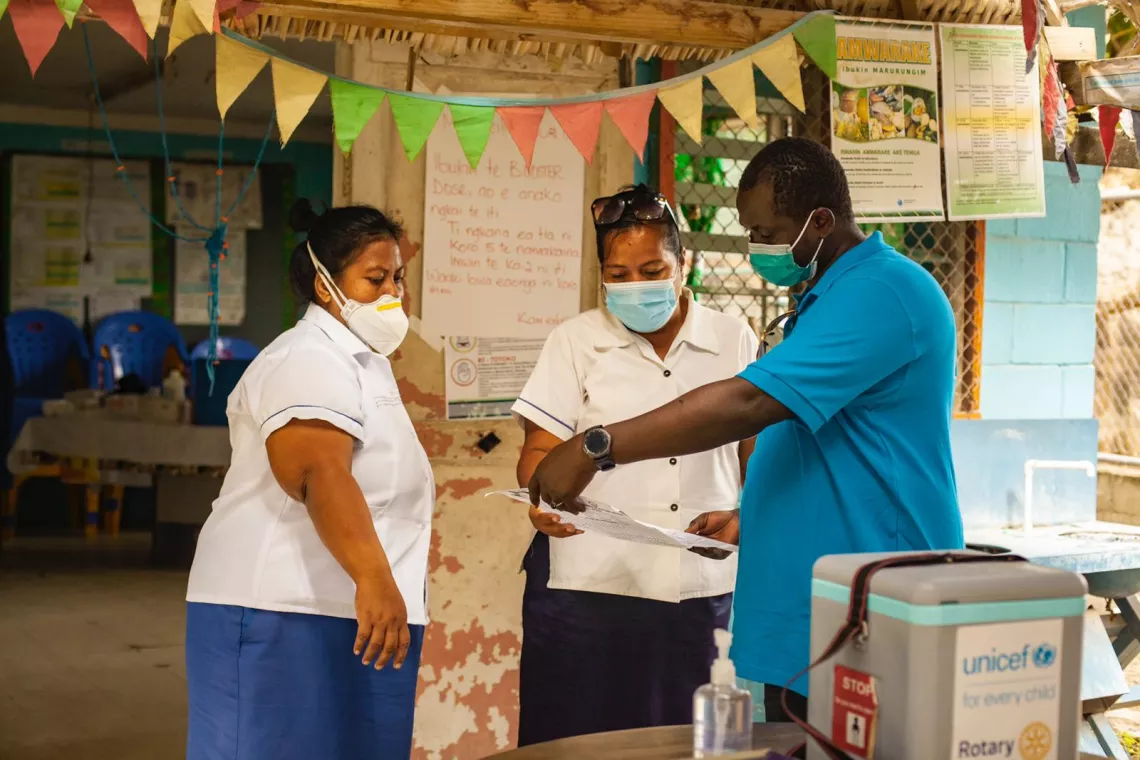
Next time you’re in Kiribati, be sure to wave and say ‘Mauri’ to Ibrahim as you see him walk past with his black backpack ready with enthusiasm to continue supporting i-Kiribati children to lead a happy and healthy life.