A cleaner future for three generations on Kiritimati Island
Sanitation for all
"This is our home," says Kianteroro. "We worked hard for many years and raised our family here."
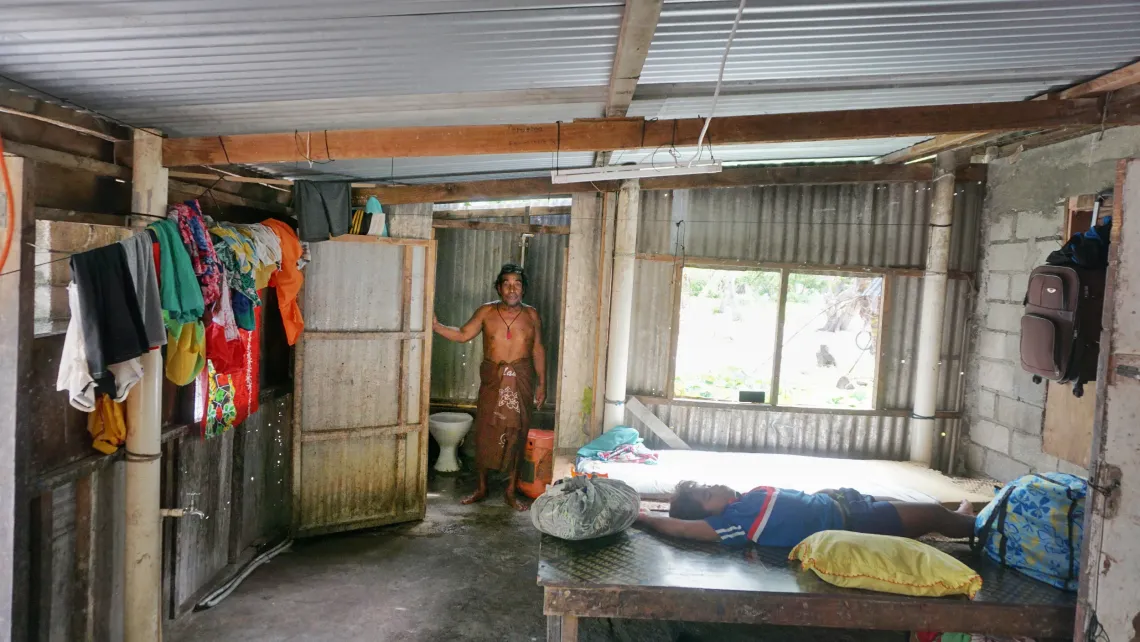
By the time Kianteroro returns from a day of fishing, his family compound is often full of activity. Children move between the two households, relatives gather together and three generations share the home he and his wife Rita have built on Kiritimati Island over more than 30 years. But behind this picture of family life was a challenge that affected everyone who lived there: access to safe sanitation.
For Rita, who uses a wheelchair, that challenge was especially difficult.
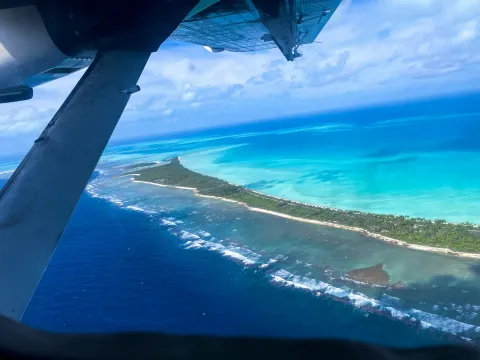
When Kianteroro and Rita left Makin in the Gilbert Islands in 1989, they were searching for a better future. The young couple embarked on a long journey to Tabuaeran Island before making another long journey to Kiritimati Island in 1994. Like many families who settled on the island, they arrived with little more than determination and a willingness to work hard.
Over the following decades, they built a life from the ocean and the land. Kianteroro fished while the family also raised pigs to earn an income. Little by little, they saved enough money to build a modest family home in London (Ronton).
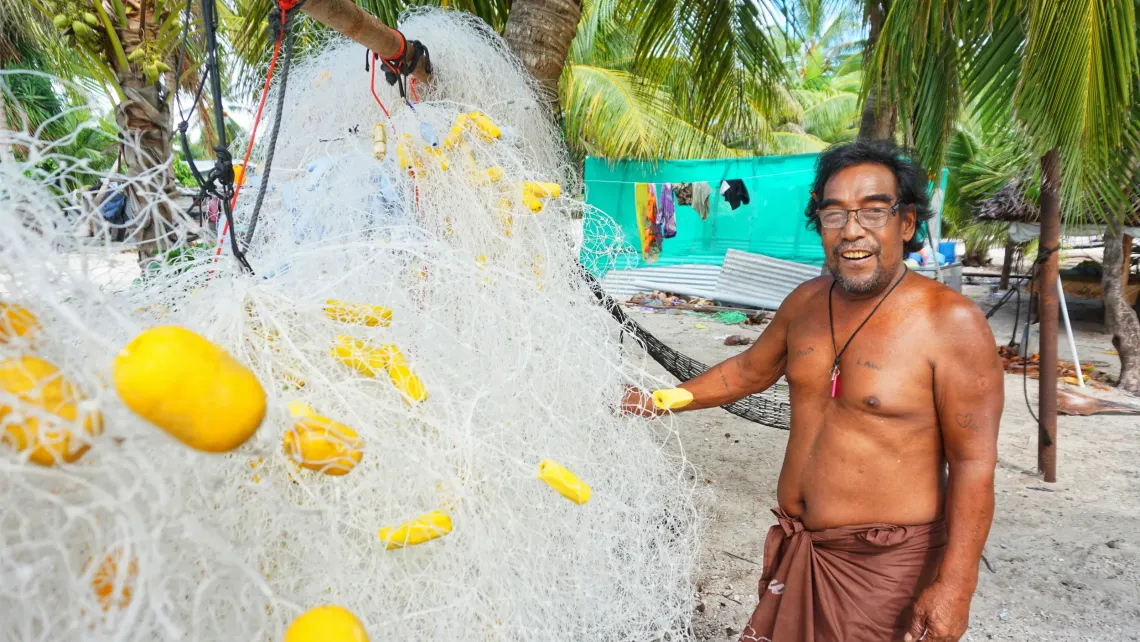
Today, the 62-year-old fisherman and his wife Rita, 61, are surrounded by three generations of family. Two of their sons now live in Tarawa, the capital of Kiribati, but the rest of the family remains on Kiritimati.
The family compound is home to two households. In one house lives Kianteroro, Rita, his younger sister and her young son. Nearby, his daughter, son-in-law and their five children live in a second household. Together, the two households are home to five adults and six children.
Several times each week, Kianteroro heads out to sea with his son-in-law, often returning with catches of 50 to 70 fish. Fishing remains the family's primary source of livelihood and their connection to the ocean that surrounds Kiritimati. Yet despite the progress they had made over the years, one challenge remained unresolved: sanitation.
For many years, the family relied on a small pit toilet that struggled to cope with the island's conditions.
"It was very old," Kianteroro recalled. "When the groundwater came up, we could not use it. Sometimes the pit filled up quickly. The smell was bad."
When the toilet became unusable, family members often had little choice but to use the beach across the road or the bush behind their home.
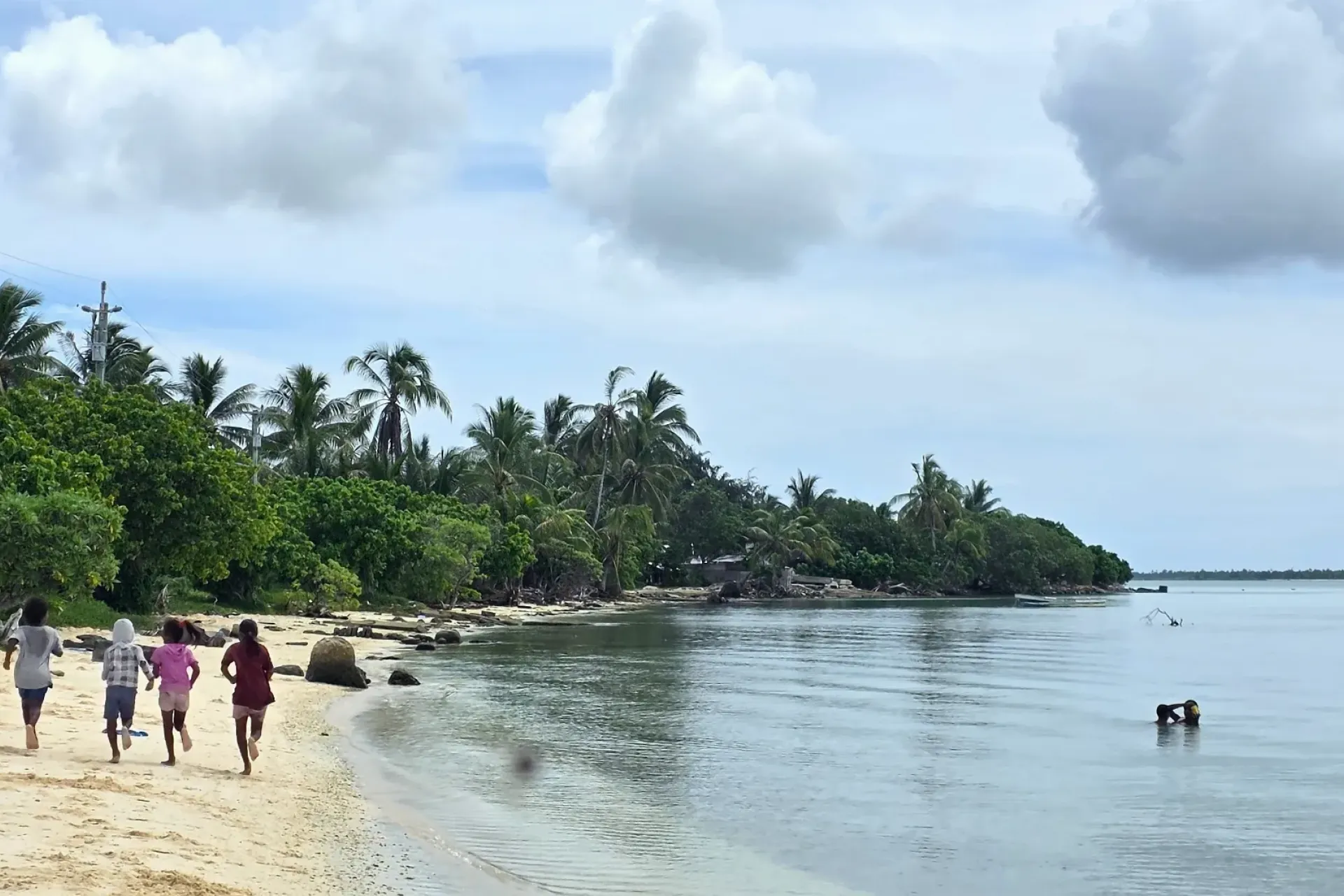
The challenge was not unique to Kianteroro's family. Open defecation was common in parts of the community, including along the beachfront.
"Many people used the beach," he said. "People walked across our place at all times. It was not clean and it was not safe. And the smell from the beach was very very bad."
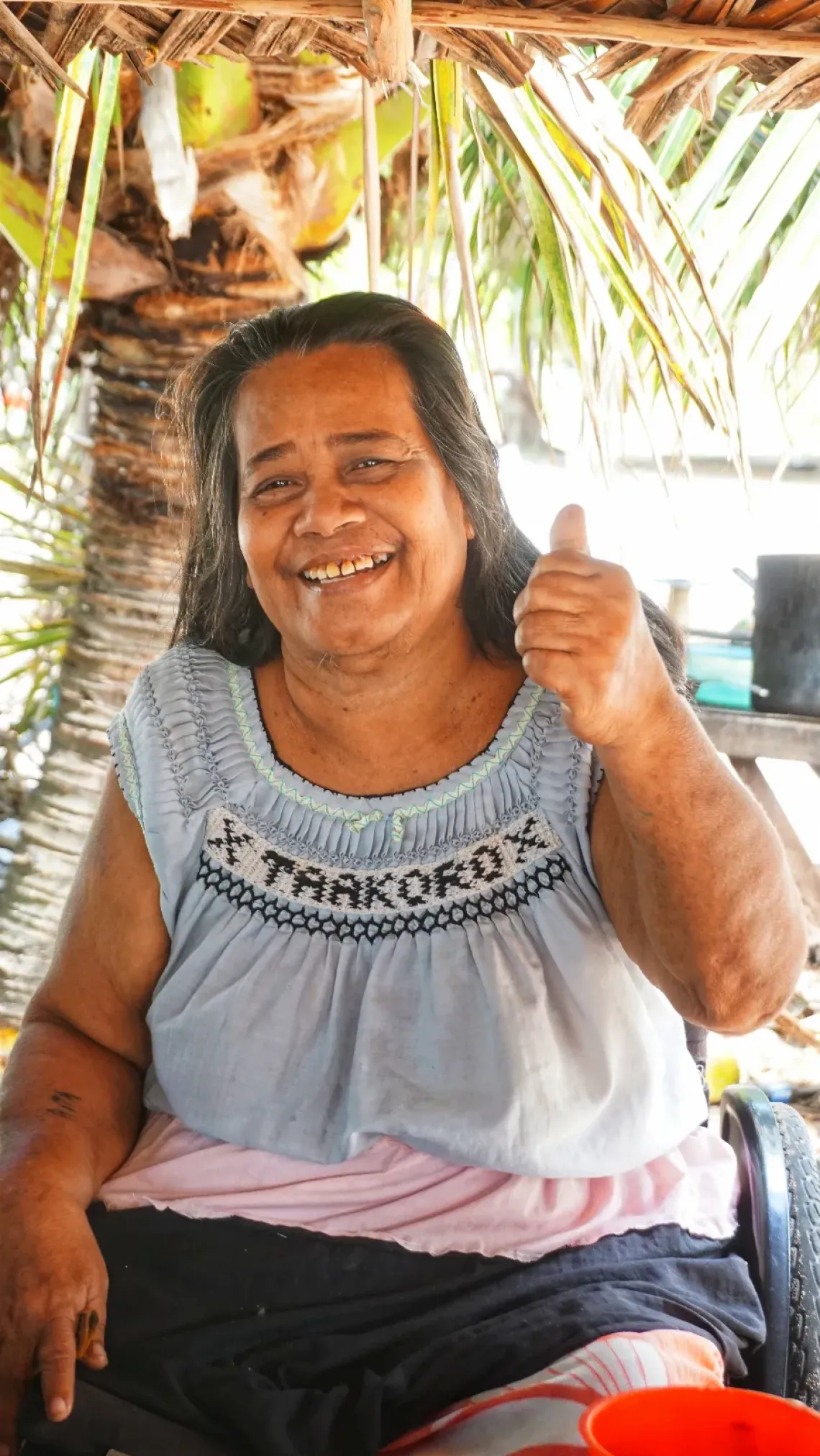
For a community whose lives depend on the sea, the situation affected more than comfort. Waste ended up all along the beach, impacting the environment and the cleanliness of shared community spaces. For anyone struggling with mobility issues, like Rita who uses a wheelchair, the situation was especially difficult.
That has since changed with two new toilets constructed for the family through the Building Resilience through Improved Sanitation and Hygiene (BRIS-H) initiative, funded by the European Union.
One toilet serves Kianteroro's household, while the second serves his daughter's family next door. The benefits were immediate.
For Rita, the indoor flush toilet has brought greater independence and dignity.
"It helps me very much," she said. "It is safe. It is private. It is clean."
The new facilities have also created a healthier and more accessible environment for everyone living on the family compound, particularly young children and older family members.
For Kianteroro, the improvements extend beyond his own household.
"We are very thankful," he said. "Now everybody has a toilet."
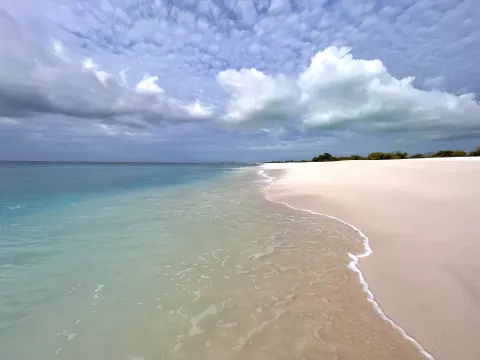
The changes can be seen across the community. The beach in front of their home is now clean again.
"Nobody uses the beach for their business now," he said. "It is very clean."
Cleaner surroundings have helped make the area more pleasant for families and visitors alike. Kianteroro says he regularly sees visitors walking along the shoreline, enjoying the beauty of the island.
By improving access to safe sanitation, the BRIS-H initiative is helping families live healthier lives while protecting the fragile coastal environment on which communities depend. For households such as Kianteroro's, the benefits extend beyond the toilet itself. It is about supporting dignity, inclusion, environmental stewardship and a better quality of life for future generations.
Looking around his home, Kianteroro reflects on how far his family has come since arriving on Kiritimati more than 30 years ago.
"We worked hard to build our life here," he said. "Now we have a good toilet and a clean place for our family. It is good for us and good for the community," he said before again thanking for the toilets.