Keeping Paradise a Paradise
Community-led total sanitation in Kiritimati
Keeping Paradise a Paradise
Dawn is barely breaking in Poland, a small and remote village of Kiritimati (pronounced “Christmas”), but Beeta is already up and running, making sure that her husband Rabeua and two children have everything they need to start their day. Soon she sets off for her 15-minute walk to the beach, where she will find the privacy she needs to relieve herself.
Like 24 per cent of the households living in Kiritimati, the largest coral atoll but also one of the most remote islands in the world, Beeta and her family do not have a toilet, and therefore defecate in the bush or on the beach. The situation is even more dire in Kiritimati’s two neighbouring islands of the Line Group, Tabuaeran and Teraina, where open defecation rates are 57 per cent and 70 per cent, respectively. As these Kiribati island populations continue to grow, open defecation threatens the health of children and vulnerable individuals by contaminating scarce and shallow groundwater resources and spreading water-borne diseases.
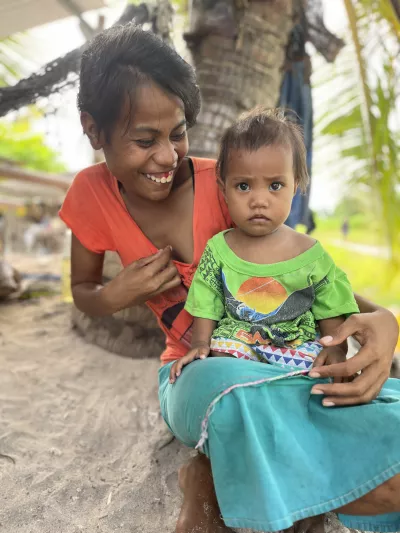
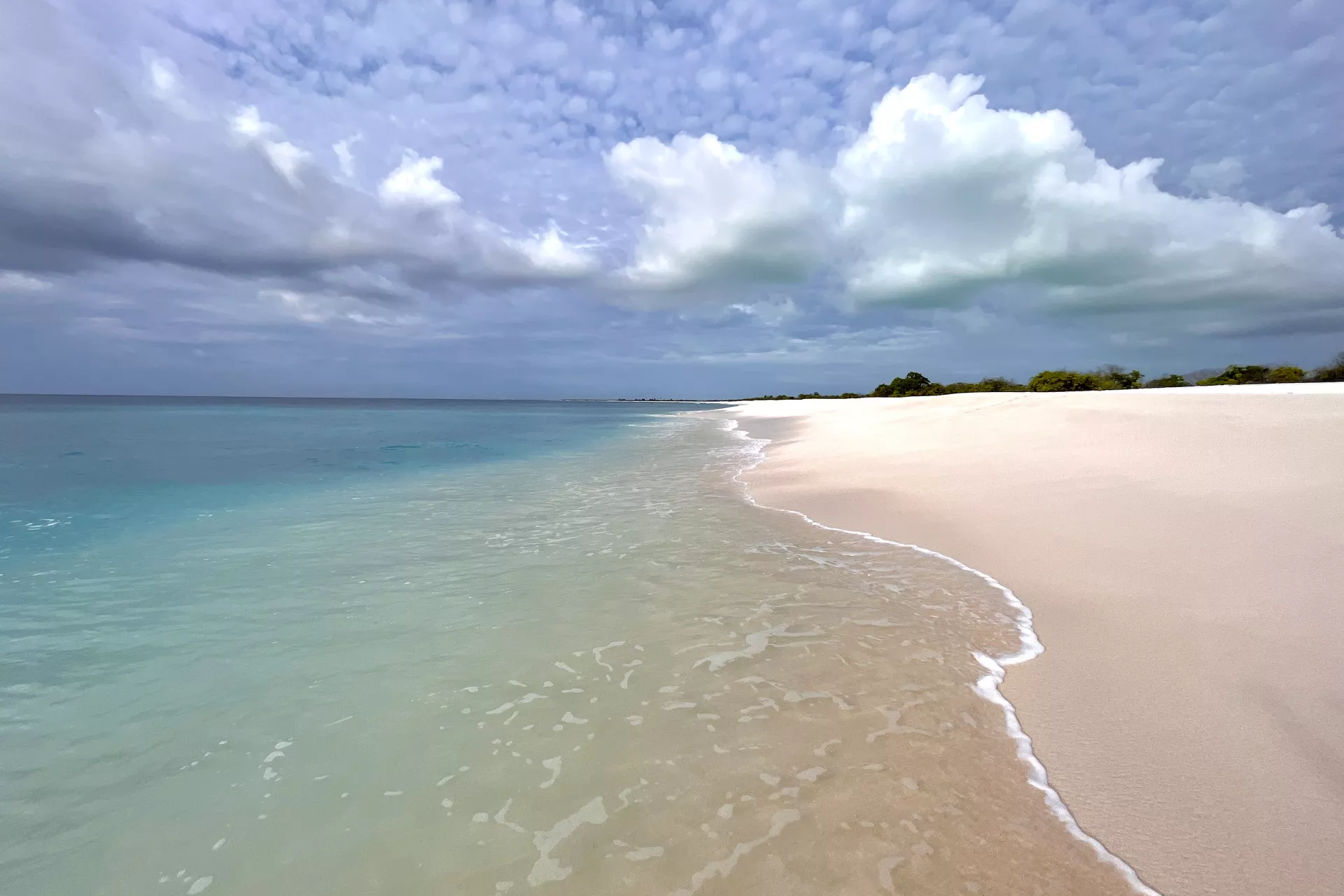
Kiritimati is a pristine tropical island with turquoise blue lagoons and white sandy beaches with lush coconut groves. Located in the Central Pacific, Kiritimati is part of Kiribati – an island country of Micronesia comprised of 32 atolls scattered across 3.5 million km2. Kiritimati truly is a paradise island today, but how can we protect it so that it can remain so for future generations?
Kiritimati only had 38 inhabitants in 1931, but as of 2020 has more than 7,400 – 44 per cent of whom are under 19 years old. With this growing population comes the challenges of balancing the growing pressures of sustainable urbanization with protecting a sensitive ecosystem, all while safeguarding the health of I-Kiribati children.
Kiritimati doesn’t receive much rainwater, and weather patterns have become increasingly unpredictable, so the majority of the population relies on groundwater. Since most of the land in Kiritimati is just a few metres above sea-level, communities like Poland where Beeta lives, are extremely vulnerable to the impacts of the climate crisis.
But positive changes are on the horizon.
UNICEF is working with the Kiribati Ministry of Line and Phoenix Island Development (MLPID) and the Pacific Community (SPC) to improve access to adequate and equitable sanitation and hygiene, as well as strengthen community, household and institutional resilience for water, sanitation and hygiene (WASH).
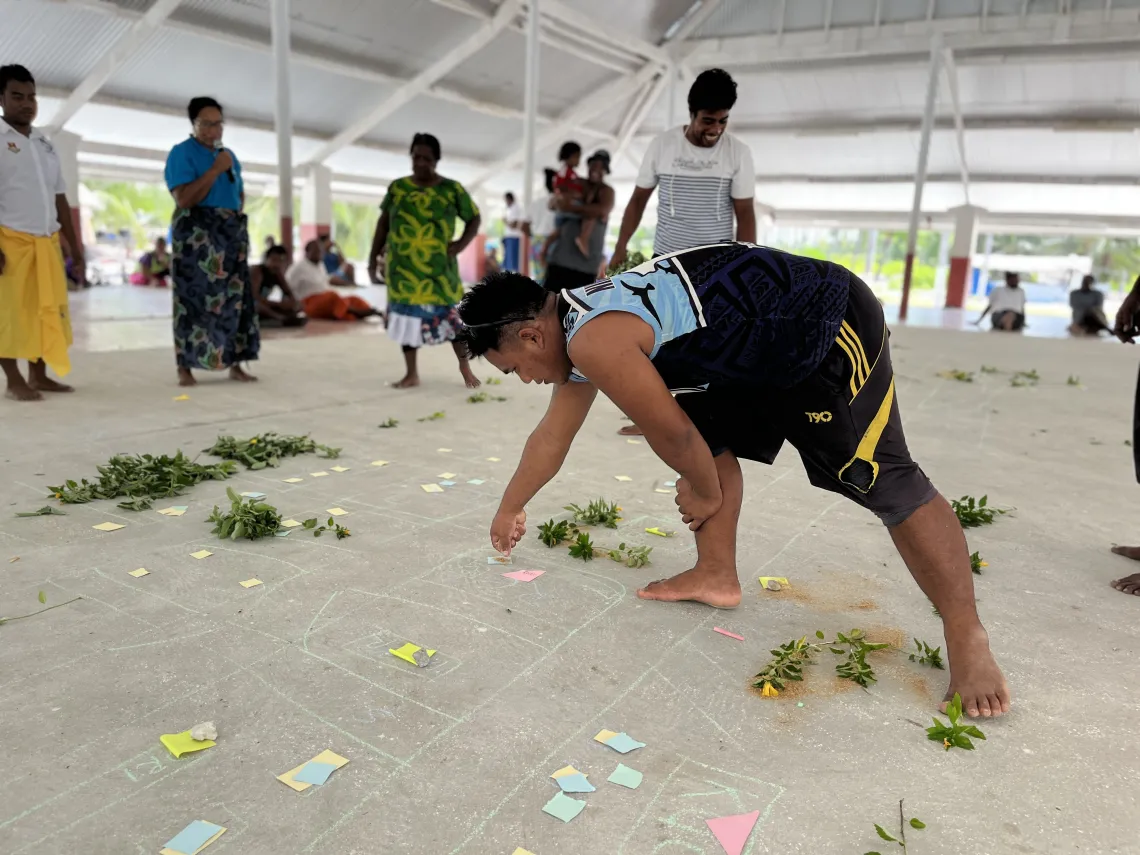
Just this month, as part of the European Union -Kiribati Partnership – Building Resilience through Improved Sanitation (BRIS), UNICEF rolled out a community-led total sanitation programme (CLTS) on Kiritimati, training over a dozen government staff, schoolteachers, principals, nurses and healthcare workers. CLTS is a time-tested methodology that has shown to effectively and sustainably reduce open defecation. It has also proven to improve village-wide sanitation, with significant correlating health gains for children.
Within the overall plan, Beeta’s community was recently “triggered”, which means that their desire for collective change was kickstarted through awareness raising on the impact of poor sanitation practices. This process will soon unfold through all communities of Kiritimati, before being rolled-out in Tabuaeran and Teraina, the two other inhabited islands of the Line Group.
“My daughter is just one-year old, and I can’t imagine her growing without a toilet” says Beeta. “I grew up with a toilet at home, but didn’t have one here on our new plot of land. Building one for our family is my priority.”
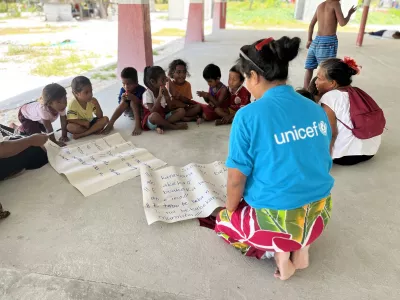
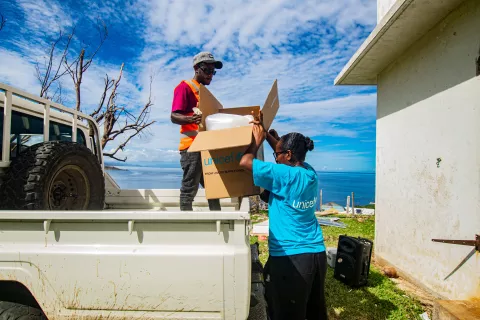
Through the BRIS programme, communities will receive technical and logistical support, as well as tailored financial assistance through a combination of subsidies and rebates, to build their own household toilets. Eradicating open defecation can be a challenging process – simply building toilets is not enough: sustainable behaviour change takes time and communities often need guidance and support to navigate new social norms. UNICEF Pacific established a sub-office on Kiritimati to do just that: being closer to the communities we serve, and provide that assistance long-term, even in the world’s most remote locations.
Through the BRIS programme, over 10,500 people will gain access to improved sanitation – that’s the entire population of the Line Islands. Achieving full sanitation coverage in Kiritimati, Tabuaeran and Teraina is not only possible and within reach, it is also necessary.
The BRIS programme is funded by European Union funding.
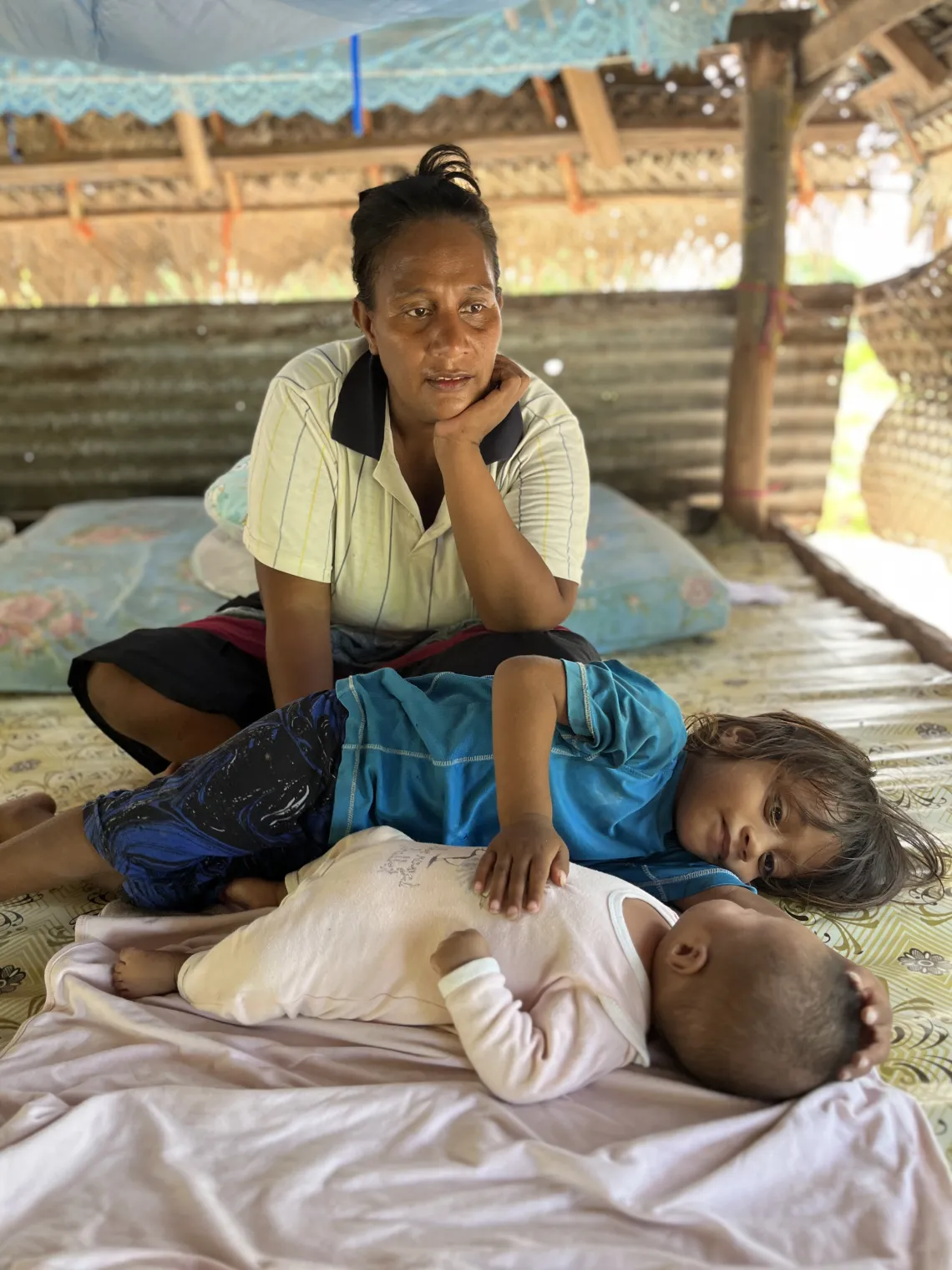
“Poland is a beautiful, remote village on a paradise island” said Terauea, Beeta’s next-door neighbour. “To keep it a paradise, we have to work together as a community and protect it for our children.”