

Why primary school resources need to be reorganised
UNICEF is working with the Ministry of Education, municipalities and local school communities to develop municipal plans to adjust the school network in line with demographic changes, to better allocate staff and improve conditions for learning
- English
- Македонски
- Shqip
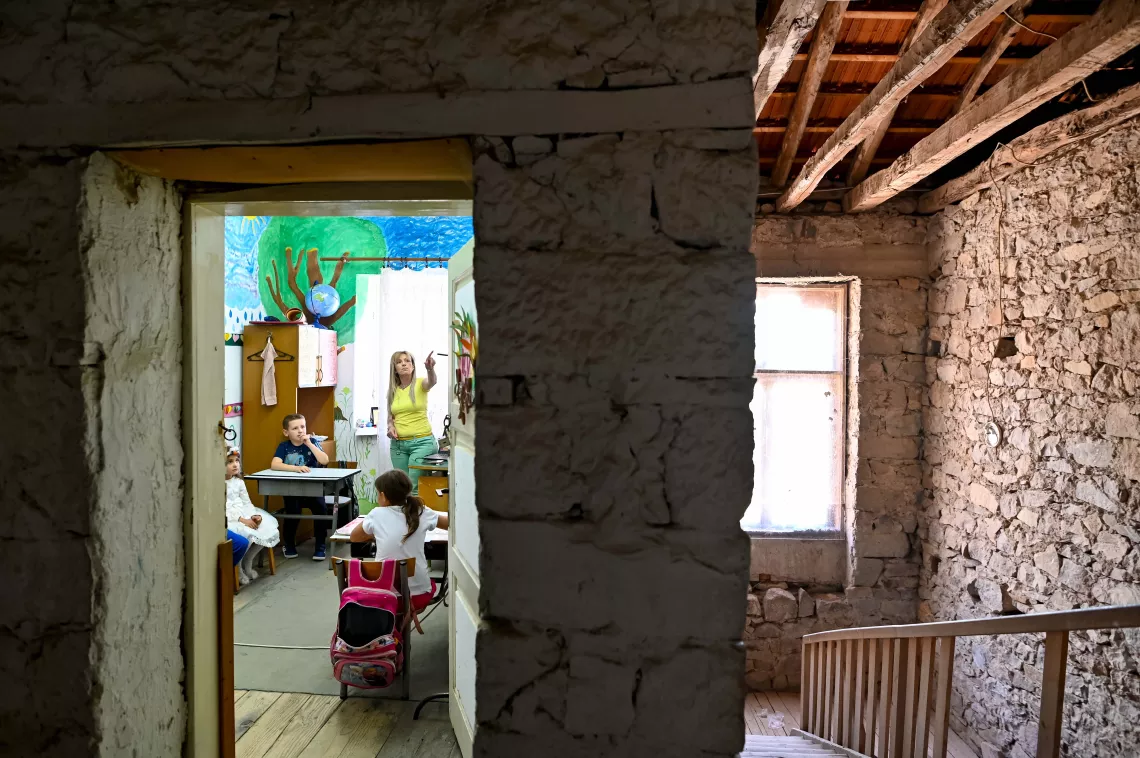
From a 200 students’ central school to a satellite school serving only 15 students
North Macedonia’s primary school network has 858 schools, of which 340 central schools and 518 satellite schools. Satellite schools, managed by the administration of the central schools, bring education to more remote urban or rural communities.
The primary school in Bajlovce is one of two satellite schools administered by the primary school “Hristijan Todorovski Karposh” in Mlado Nagoricane, some 20 kms away. The building is situated at the top of a windy mountainous road in the village inhabited by some 100 residents.
A local shop owner recalls graduating from the school in 1968 together with some 40 classmates when it served 200 grade 5 to 8 students. Back then it was a central school. After decades of demographic changes, including declining birth rates and migration, the school now serves 15 students from grade 1 to grade 9, or less than 2 students per grade on average.
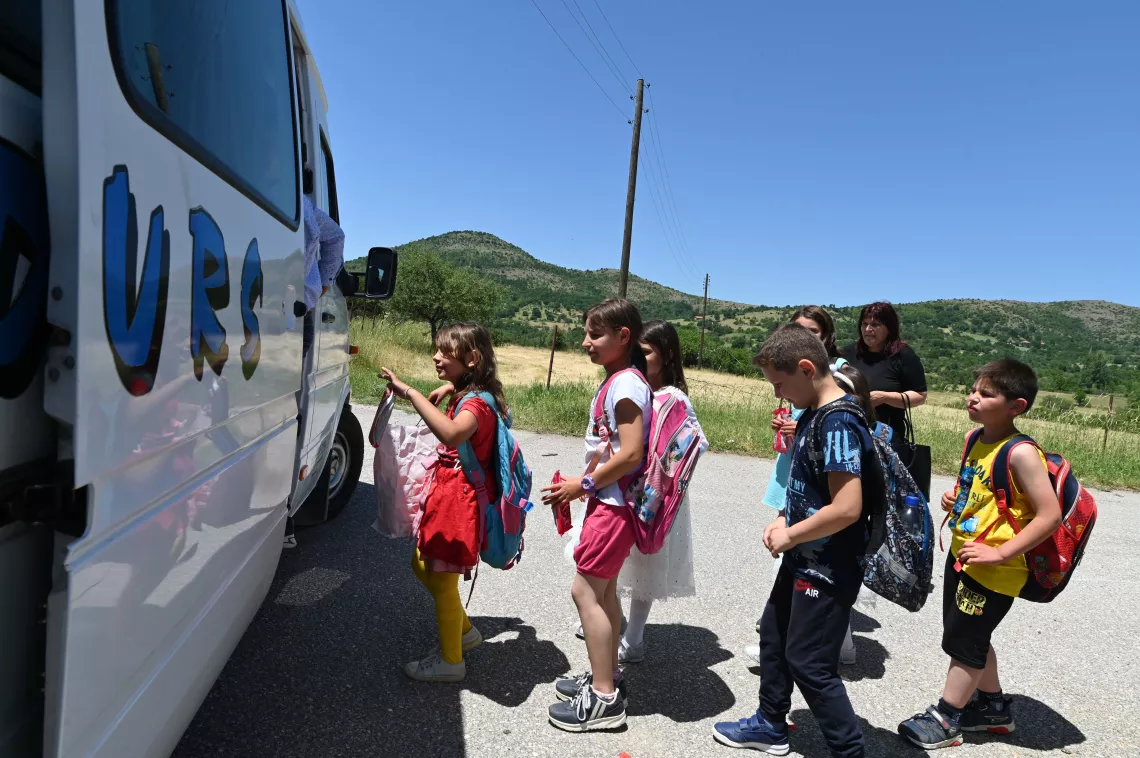
Only 13 municipalities (16%) in the country meet the legal standard that classes should have at least 20 students. Most municipalities in the country have an average class size between 10 and 15 students.
Satellite schools, like the one in Bajlovce, make up two-thirds of the school network, yet they only serve 10 per cent of the students in the country. It is an example of how demographic changes, without major adjustments to the primary school network, have resulted in some schools being underutilized, while other schools are overcrowded.
In fact, only 13 municipalities (16%) in the country meet the legal standard that classes should have at least 20 students. Most municipalities in the country have an average class size between 10 and 15 students.
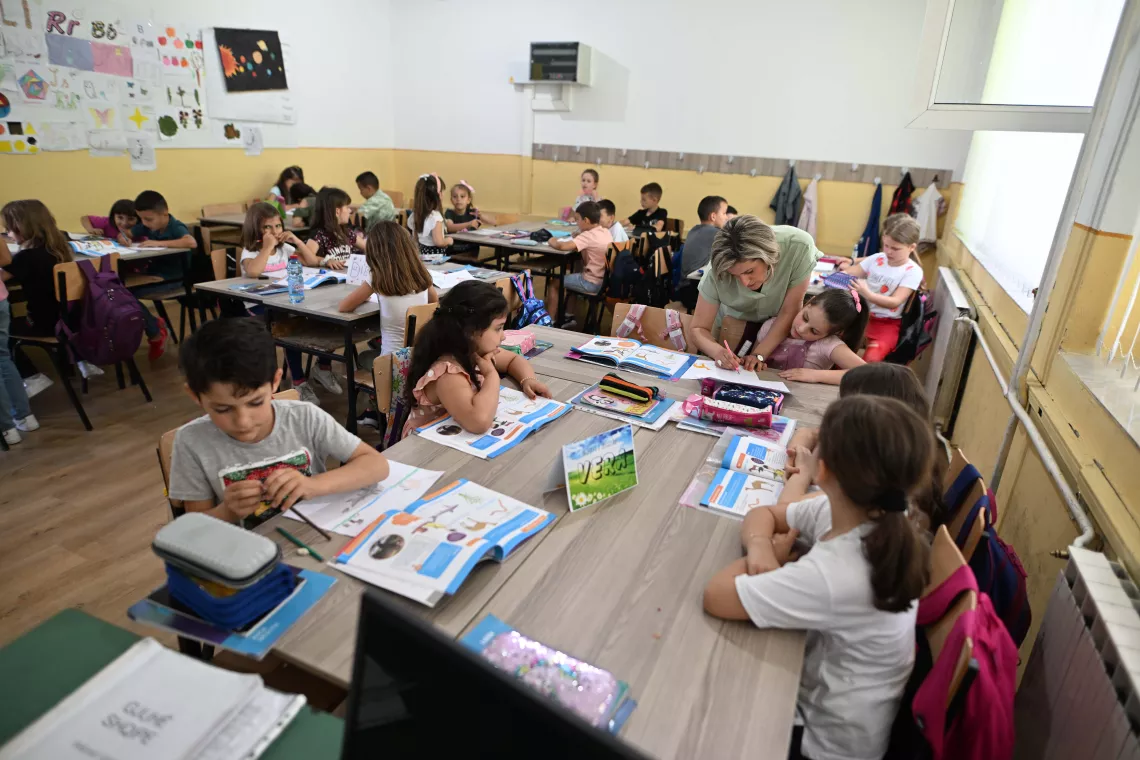
In some schools, particularly in hard-to-reach remote areas, it may be justified to have smaller class size, to ensure all children enjoy the right to education in their community. However, some of satellite schools have more employees than students. Due to the small number of students, 43% of children in satellite schools attend classes that combine children of different grades – making teaching and learning more difficult and offering less opportunities for socialisation and peer-to-peer learning. Maintaining hundreds of satellite schools in adequate condition and covering the costs for their operations does not seem the best use of education funding, particularly as analyses have shown that the performance of students in very small classes is poorer compared to the performance in classes 20 and 30 students, as per national standards. On average North Macedonia has much smaller classes than OECD and Western Balkans countries, and lower student’s performance.
Urban schools working in shifts - struggling to find ways to deliver quality education for every child
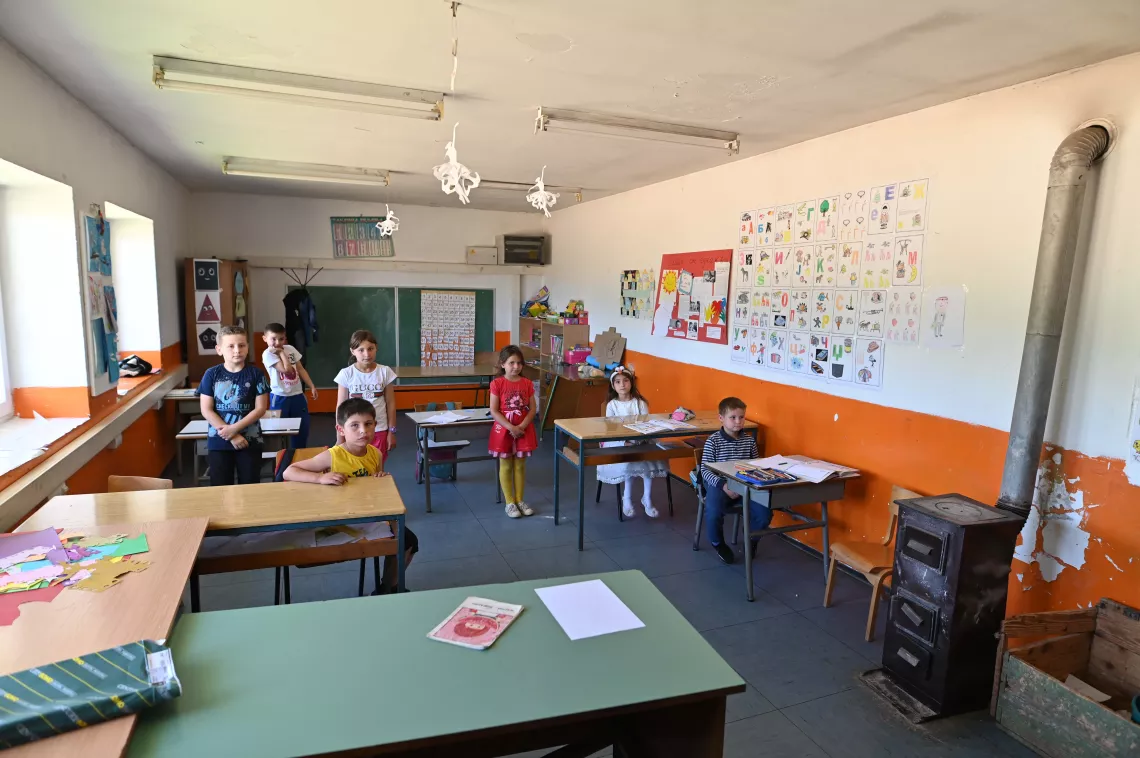
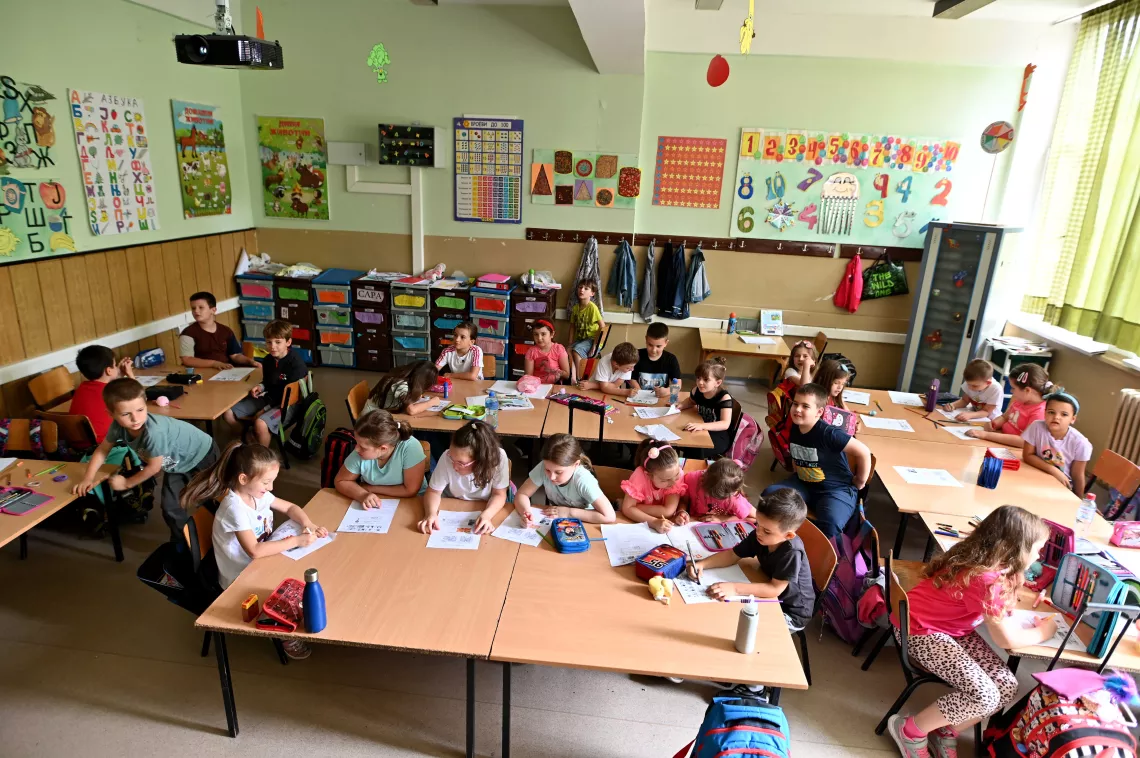
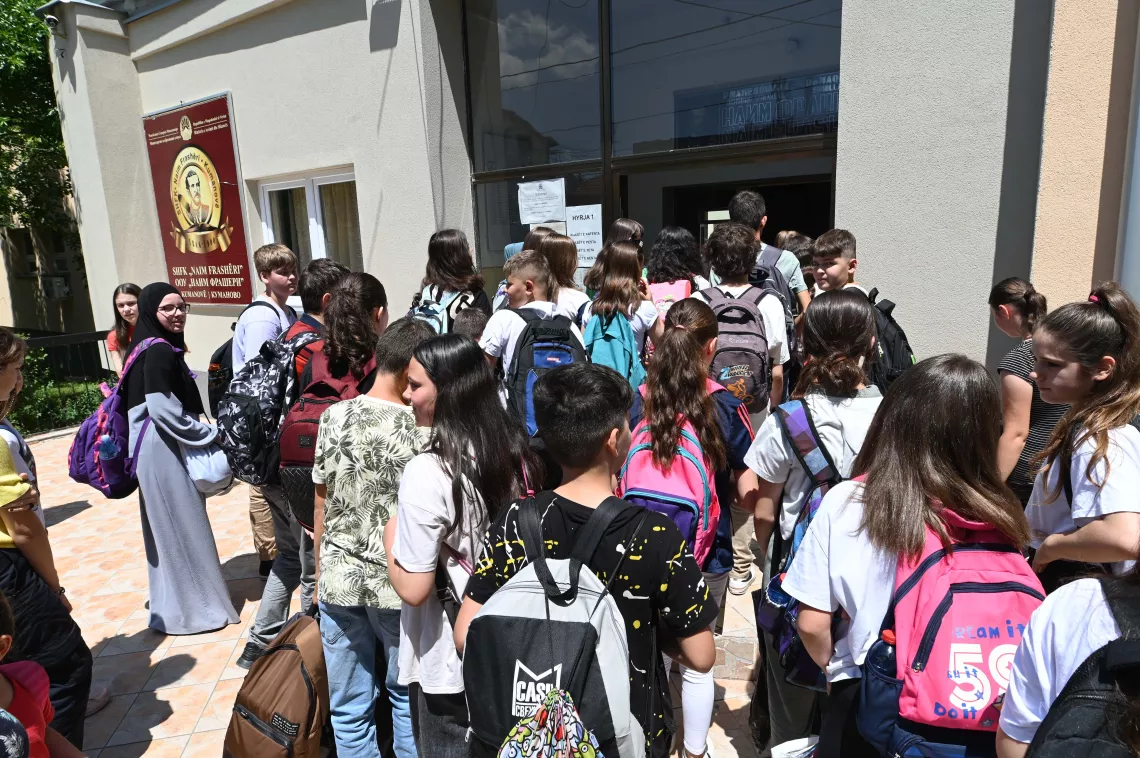
The elementary school “Naim Fraseri” in Kumanovo delivers education in two shifts to 1,200 students in 55 classes. Struggling with lack of space, the school converted two toilets into classrooms. While this provided some extra space, the solution left an entire wing of the school with only one toilet.
Accommodating a large number of students in the relatively small number of central schools has required school management to introduce teaching in shifts. Some two-thirds of central schools in North Macedonia deliver education in two-shifts.
The primary school “Lazo Angelevski” in Aerodrom - one of the most populated and fast-growing municipalities in the capital of Skopje – had operated for years in three shifts making teaching and learning exceptionally challenging for both teachers and families.
Working in shifts meant that the 1,300 students were split into three groups each coming at different times and that the school is working from 7.30 am to as late as 9.30 pm. It also meant children spend less time in school with little or no time for extracurricular activities. Luckily, a few years ago, “Lazo Angelevski” school management in cooperation with the municipality managed to enlarge the building with four additional classrooms and moved back to double shifts.
Other schools resort to finding other improvised ways to accommodate overcrowding. The elementary school “Naim Fraseri” in Kumanovo delivers education in two shifts to 1,200 students in 55 classes. Struggling with lack of space, the school converted two toilets into classrooms. While this provided some extra space, the solution left an entire wing of the school with only one toilet.
Making the most of the existing teacher workforce
“We expect another wave of educators reaching the age of retirement. And to make things worse, it is becoming increasingly difficult to retain science teachers, because the young and educated workforce is going abroad.”
The demographic changes, without major adjustments to the school network, have not only created challenges with the school space, it have also resulted in some municipalities struggling to find enough qualified teachers, while others have underutilized teaching staff.
In the developed countries of the OECD and the EU, there are on average 15 students per each teacher. Yet, in North Macedonia over half of the municipalities have, on average, 5 to 10 students per teacher due to lack of readjustments in the primary school network and its human resources, despite a significant drop in students over the last two decades. Simultaneously, imbalances in the structure of the teachers and their geographical allocation results in many municipalities experiencing a shortage of qualified teachers for specific subjects. For example, the primary school “Naim Fraseri” in Kumanovo has experienced a shortage of teachers qualified to deliver maths, physics and chemistry. The school director says that in the last 10 years some 40 teachers have retired.
Meeting the needs of every child
The central government allocates a budget to municipalities to cover school operational expenditures. However, a large share – above 90 per cent - of primary education block transfers to municipalities goes to cover teacher and auxiliary personnel salary costs.
As a result, schools have limited funds for recurrent costs of updating and keeping facilities in good condition, enabling inclusion of all children, including for example those with disabilities and investing in staff professional development to ensure quality and inclusive education. The ability to find resources and solutions to meet the ever-changing needs that come with a new generation of learners is left up to the dedication and resourcefulness of school management.
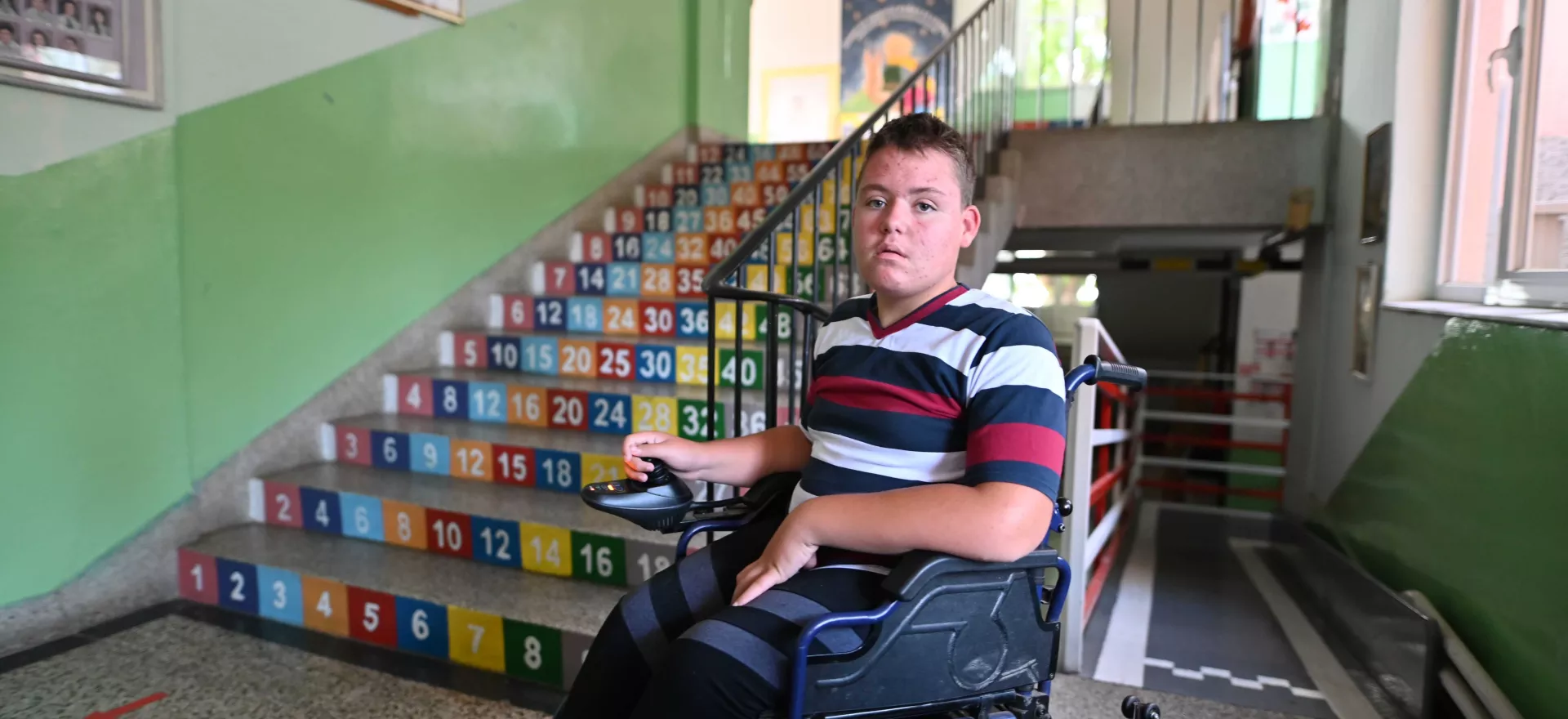
The primary school "Risto Shuklev" in the village Negorci is one example of how a team of dedicated staff, together with their local municipality were able to leverage resources to build a ramp inside the school to accommodate a learner with a wheelchair. During the same time, they reconstructed the change rooms within the gym so they could build an accessible toilet.
UNICEF/North Macedonia/Georgiev/2022
Zivko independently learns side by side with his peers at the primary school "Risto Shuklev" v. Negorci. thanks to the resourcefulness of the school to find solutions to improve accessibility.
To address these challenges, UNICEF has been supporting and working with the Ministry of Education and Science, municipalities, local school communities, students, parents and teachers to develop detailed municipal plans to adjust the school network in line with the students’ population, better allocate staff and create modern conditions for learning. The plans also propose repurposing of unused spaces in schools to create new kindergartens and other basic social services. Part of this work also includes supporting the development and implementation of a new primary school funding formula that will ensure municipalities are allocated financial resources to meet the needs of every learner.


