

“The best decision I made was to become a foster parent”
Being a foster parent means caring for a child as part of their own family

- English
- Македонски
- Shqip
Majlinda and her husband Doncho are among the few carers in North Macedonia fostering babies. For a period of couple of months, they ensure the baby grows up in a loving family environment while the system finds a permanent solution such as reuniting the child with their biological family or finding an adoption family.
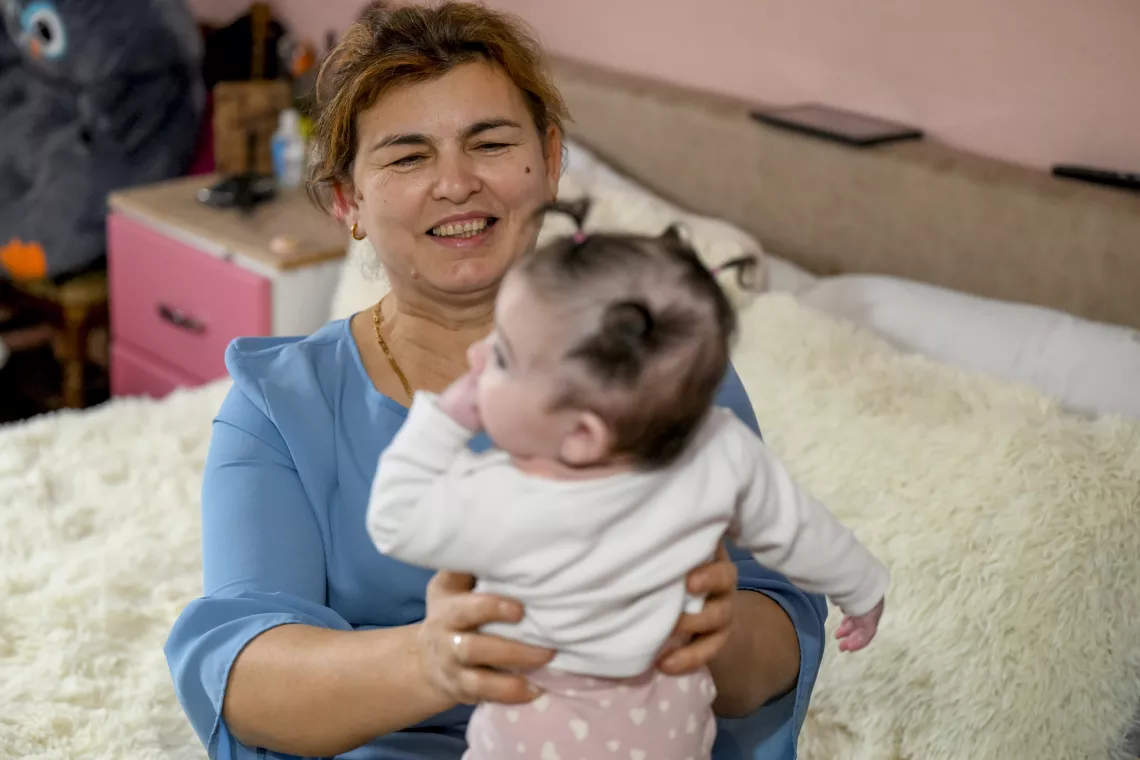
Majlinda Trajanovska learned about fostering from a friend three years ago. “When I heard about the possibility to foster a child - I could not think of anything else.” Thrilled by the new idea, she talked to her husband and they decided to apply for foster parents. “We have a big house, why not helping children who need a warm home”, they say. After applying, they participated in specialized foster care trainings which prepared them to give their best when caring for babies and children at risk.
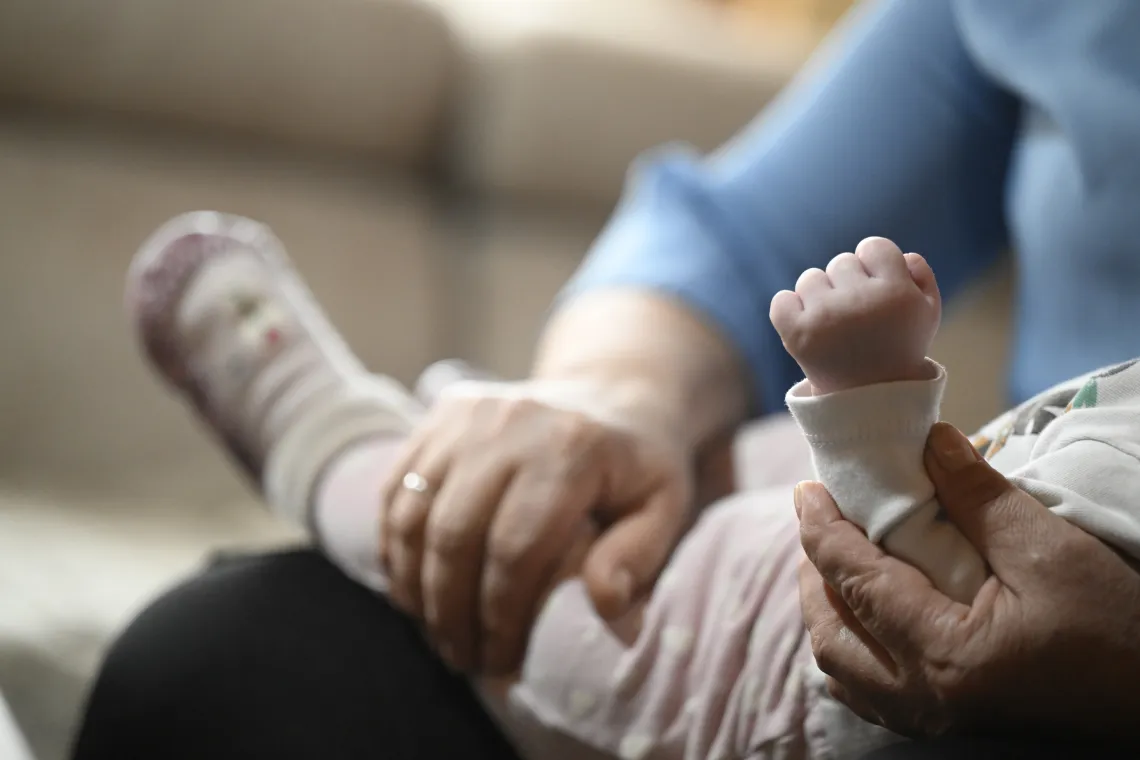
Currently the family is fostering a 3-month-old baby and two brothers without parental care (10- and 12-year-old) who go to school with their biological children, a daughter, 13 and a son, 11.
“At school I attend parents’ meeting for our foster children, and my husband attends the one for our biological children. Fostering requires patience because children currently living with us have gone through traumatic experiences, they have lost their parents. At school they are not doing as well as when their parents were alive. I do all I can to help. In the evenings, I think about fun activities, so they don’t spend too much time on their mobile phones. For example, we play countries and capitals game, or football in the back yard. When children from the neighborhood are not around, I play football with them,” she smiles.
“My husband gives me great support. He enjoys taking care of the baby girl; he wakes up at night to check in on her. In the mornings he talks to her, something like – Hey there, hey there?”
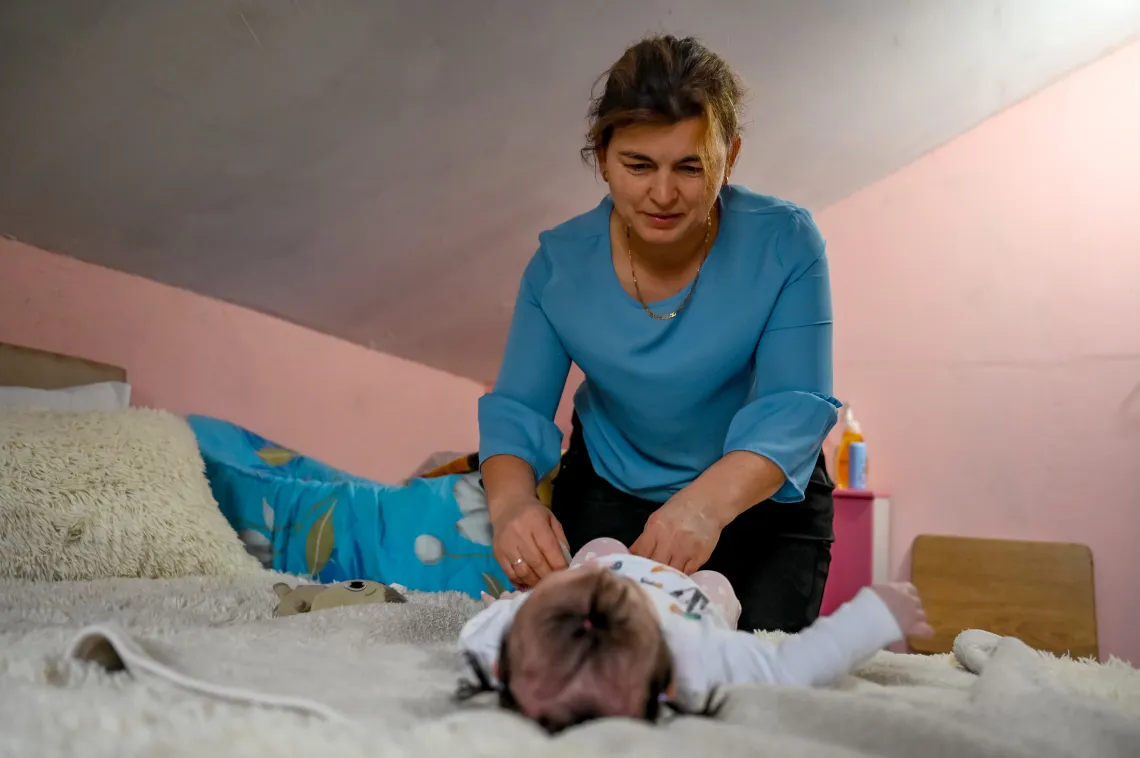
The first child Majlinda’s family fostered was successfully adopted a year ago. “I wish her the best of luck in life. It was not easy for me to say goodbye, but I know she is with good people now,” says Majlinda who got the child when she was just 11 days old and six months later gave her away with a smile and tears.
Six months or one year means a lot in the life of a young child. During this crucial period for child development, every single experience the child has, impacts brain development and shapes the way they think, feel, behave and learn throughout life. The absence of parental care can leave life-long scars. Therefore, foster and kinship care are the best family-like alternatives for children without parental care giving them the love, care and attention they require.
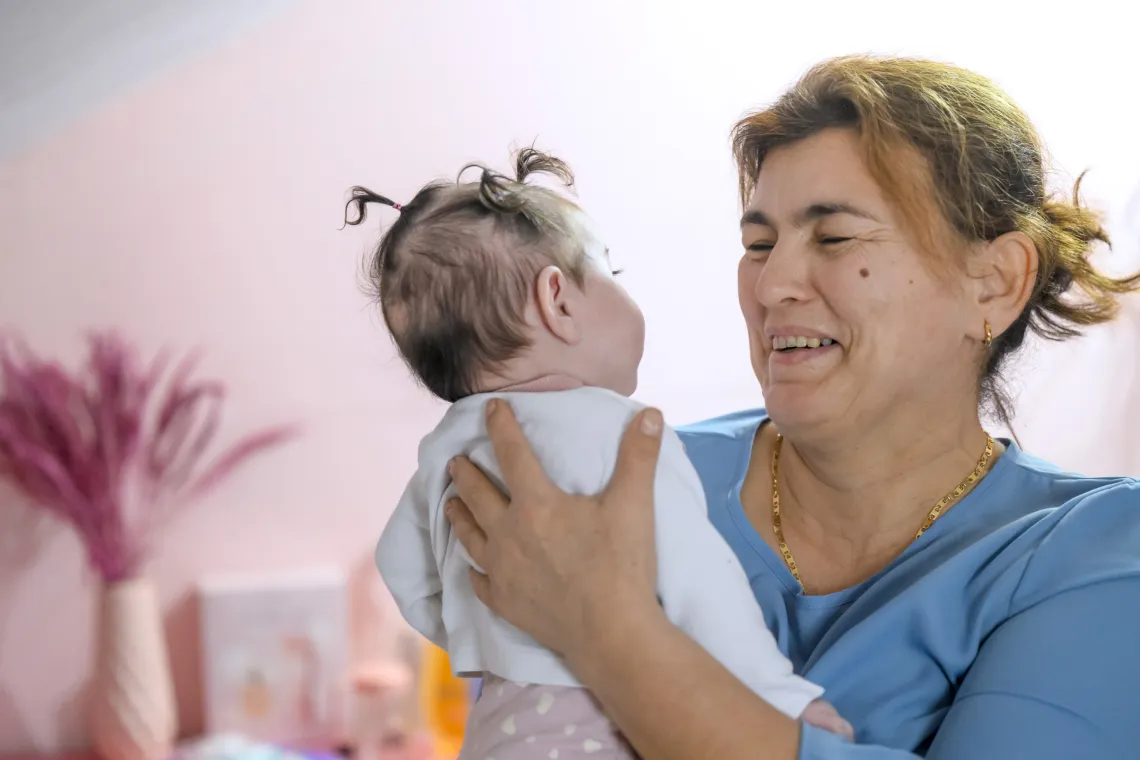
Foster and kinship care, together with small group homes, have become the main family-like alternatives for children without parental care following the successful deinstitutionalization of children from the large-scale institutions in 2019 which was implemented with UNICEF support.
Since then, UNICEF works with the Ministry of Labour and Social Policy to further strengthen the child-care system, with focus on foster and kinship care. The main goal is to expand the number of foster families which, like Majlinda’s family, in their decision to foster a child, are motivated by sincere desire to help and give love.
Learn more about foster care possibilities at www.zgrizuvanje.gov.mk


