1 in 10 children in North Macedonia subjected to technology-facilitated sexual exploitation and abuse
New evidence reveals abuse is most often perpetrated by someone previously known to the child, while social media and online platforms are used to facilitate harm online and in-person
- English
- Македонски
- Shqip
Skopje, 26 August 2026: One in ten internet-using children aged 12-17 (10%) in North Macedonia – an estimated 12,000 children - were subjected to technology-facilitated sexual exploitation and abuse in a single year, according to the new Disrupting Harm in North Macedonia report, highlighting the urgent need for stronger prevention, protection and support systems for children.
Technology-facilitated child sexual exploitation and abuse refer to situations involving digital, internet and communication technologies at any stage of the abuse or exploitation. It may occur entirely online, through a combination of online and in-person interactions, or through in-person abuse that is recorded, distributed or facilitated using technology.
The consequences for affected children are profound and require timely, child-sensitive support and services. Children subjected to technology-facilitated sexual exploitation and abuse were 11 times more likely to engage in self-harm and 12 times more likely to experience suicidal thoughts or behaviours compared with children who had not experienced such abuse. Interviewed professionals working with children described long-lasting impacts, including shame, loss of control, sleep disturbances, stress and fear that abusive material would remain online indefinitely.
“Behind every statistic in this report is a child whose trust has been broken, whose safety has been compromised and whose wellbeing is at risk. What makes this research so important is not only that for the first time the scale of the problem is measured, it also captures the voices and lived experiences of children and young people themselves,” said Lesley Miller, UNICEF Representative. “The evidence leaves no doubt that protecting children in the digital age requires stronger laws, better services, safer online environments and open conversations that empower children.”
Nearly half of affected children (48%) experienced more than one form of abuse in the year before being surveyed. More than half of recorded incidents involved social media, while nearly one-third occurred through online gaming environments. Importantly, the study found that boys and girls were affected at similar rates, with no significant differences observed by gender, age, place of residence, digital skills or parental education level.
Contrary to perceptions that online sexual exploitation is primarily caused by strangers, the research found that nearly four in five children (78%) were subjected to abuse involving someone they knew. More than half of perpetrators were adults (57%) - former or current intimate partners or crushes were particularly common (39% of instance), as were family members who were implicated in more than one quarter of instances (27%). This highlights how harm often unfolds across digital and physical environments and is closely linked to relationships of trust and broader social norms that normalize violence and stigmatize victims of sexual abuse.
While 88% of children who were exploited or abused told someone about their experience, reporting and help-seeking through formal channels remained extremely low (under 1%). Children cited embarrassment, stigma, uncertainty about reporting processes and lack of trust in institutions as key barriers to seeking formal assistance.
“This report helps us understand the reality in our society - how young people behave online, which risks are most prevalent, and where institutions need to intervene more effectively. It provides guidance for strengthening the legal framework, supporting professionals who work with children, and improving practical mechanisms for prevention and protection,” said Astrit Iseni, Deputy Minister of Interior. “Let it serve as a roadmap for concrete action: stronger prevention in communities and schools, more effective information-sharing among institutions, clear procedures for reporting and responding to cases, and comprehensive support for affected children and their families.”
The report shows that while technology is changing the way abuse is perpetrated, legislation has not always kept pace. It identifies several legal gaps that leave children vulnerable – particularly those aged 14-17 and calls for legal reforms that would help close loopholes, ensure accountability for offenders and provide better safeguards for all children equally.
The findings underscore the importance of stronger child online safety measures and call for urgent action across sectors to modernise legislation, ensure access to justice, improve reporting systems and protection services including mental health and psychosocial support, increase investment in prevention for both children and parents, require safer platform design and enhanced inter-sectoral collaboration between different sectors in the government institutions, technology companies, internet service providers and law enforcement agencies.
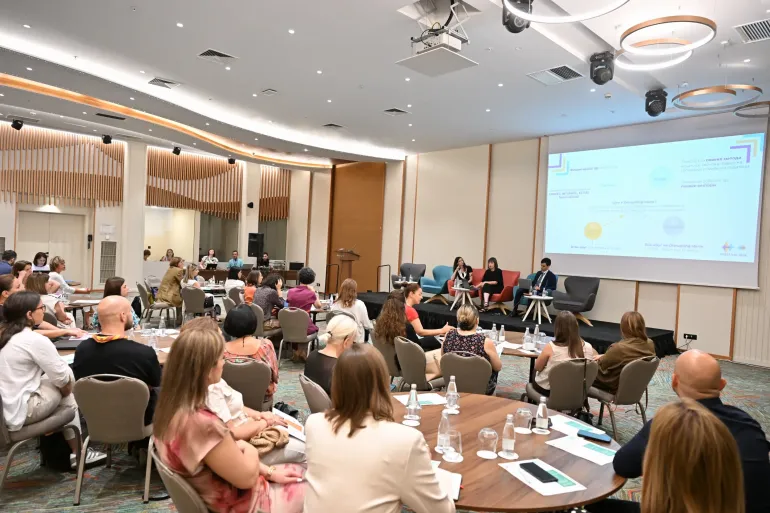
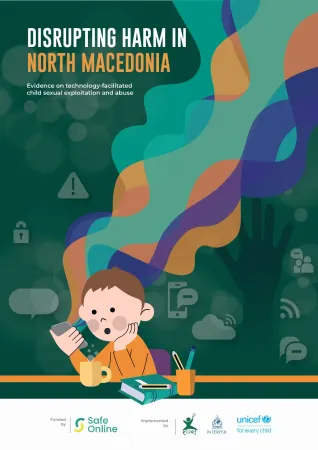
The Disrupting Harm in North Macedonia report was conducted through collaboration between the UNICEF Office of Strategy and Evidence – Innocenti, ECPAT International and INTERPOL, with funding from Safe Online and in cooperation with the Government of North Macedonia.
Children and caregivers who are worried or affected should seek support from social services, schools, police or specialized support services. No child is responsible for the abuse or exploitation to which they are exposed.
###
Statements from implementing partners:
“Building an effective response to technology-facilitated child sexual exploitation and abuse requires a strong understanding of the risks children face and how these crimes are committed. The Disrupting Harm research in North Macedonia provides valuable insights on key trends, gaps, and opportunities to improve prevention, investigations, and victim-centred responses. By translating these findings into practical recommendations, the initiative supports enhanced coordination among national stakeholders and contributes to stronger child protection systems. This work reflects INTERPOL’s ongoing commitment to evidence-based, victim-centred approaches to tackling crimes against children in the digital age.”
- Mark BEAVAN, Head, INTERPOL Crimes Against Children Unit
“Encouragingly, more children in North Macedonia are speaking up about the abuse and exploitation they have been subjected to. However, children and their parents rarely use formal reporting channels. Institutions in North Macedonia must close this gap by creating trust in these systems while also investing in trauma-informed and gender-sensitive training for professionals who work with children.” - Andrea Varrella, Head of Programme: Justice and Child Rights, ECPAT International
“Disrupting Harm Report in North Macedonia reveals that children are far more likely to experience sexual abuse from someone they know than from a stranger - yet only 1% of the cases are officially reported. Safe Online’s $15 million investment across 25 countries is helping turn evidence into action to ensure that every child can seek help and be protected. We commend the Government of North Macedonia, ECPAT, INTERPOL, UNICEF, and local partners for their leadership.” - Marija Manojlovic, Executive Director, Safe Online
Notes to editors:
- The estimation of 12,000 children is based on the projected national population of internet-using children aged 12-17 in North Macedonia.
- Technology-facilitated child sexual exploitation and abuse include abuse and exploitation that occurs online, offline with technology involvement, or through a combination of digital and in-person interactions. The Disrupting Harm survey looked at: Receiving unwanted sexual comments, images or videos; Being pressured to talk about sex; Requests for sexual content; Use of fake, AI-generated sexual images; Sharing or threats to share sexual images without consent; Offers of money or gifts for sexual content or meetings; Threats or blackmail to force sexual activity, and Livestreamed sexual abuse or exploitation.
- The Disrupting Harm study combined a nationally representative survey of 1,039 children aged 12-17 and 1,039 parents and caregivers with interviews with young people subjected to technology-facilitated child sexual exploitation and abuse, frontline service providers, police and justice professionals, and an analysis of existing laws and policies.
Helpful resources for children and families:
- Nacionalna mreza protiv nasilstvo: https://www.glasprotivnasilstvo.org.mk,
(02) 616 0016 - MEGASI: http://www.childrensembassy.org.mk/home.nspx; SOS helpline: 02 2465 316; Email: [email protected] or [email protected]
- Police #192
Media contacts
Additional resources
About UNICEF
UNICEF, the United Nations agency for children, works to protect the rights of every child, everywhere, especially the most disadvantaged children and in the toughest places to reach. Across more than 190 countries and territories, we do whatever it takes to help children survive, thrive, and fulfil their potential.