From Streets to Screens: A Day at the Digital Village for Almajiri Children and Out-of-School Girls
How technology and skills training are giving forgotten children a second chance at life

Invisible Children in Plain Sight
Nigeria carries the world’s heaviest burden of out-of-school children—over 11 million.
Among them are millions of Almajiri - young boys sent far from home to study under traditional Qur’anic teachers but often forced to beg for survival.
Girls face their own obstacles—poverty, early marriage, restrictive norms. These children drift outside systems of care, education, and protection; their potential lost in the noise of survival.

Abdulrahman: Childhood on the Streets
Raised in Kalambaina on the outskirts of Sokoto, Abdulrahman never entered a classroom.
“I woke up every day thinking only of what to eat,” he recalls. “I don’t know what I want to become in the future. I have never thought about it”.
With no exposure to school, no knowledge of technology, and no concept of structured learning, Abdulrahman had resigned himself to a life of begging — unaware of the world beyond the street corners he roamed. Begging for scraps became his routine; the idea of using a computer was unimaginable.

Shamsiyya: A Restricted Childhood
Raised in Gagi, a suburb in Sokoto, it is a custom in her household that girls don’t attend school. “In our house, girls are not allowed to go to school, but boys actually go” she narrated “Our late father mandated we stay at home and help with house chores before our time to get married”.
A future limited to house chores and other family ceremonies when needed.

A Game-Changer Arrives
In 2024, a new initiative disrupted those cycle.
The Digital Learning and Skills Empowerment Project, led by UNICEF with support from the ELEVA Foundation, created Digital Villages across northern Nigeria—including Sokoto. Here, vulnerable children and youth receive digital literacy, vocational training, entrepreneurship support, and life-skills coaching. It is more than a training center—it is a lifeline.

From Wooden Slates to Digital Screens
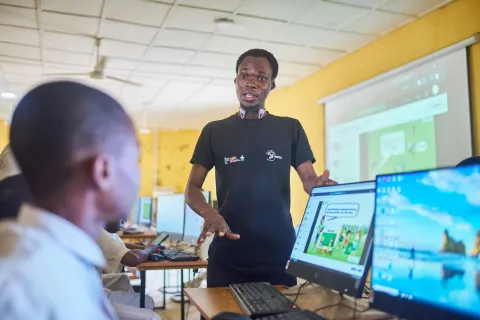
Abdulrahman touches a keyboard for the first time, eyes wide.
“I learned how to use a computer,” he says. “Now I want to be an entrepreneur who uses technology to sell things.” The boy who once roamed the streets is now learning to navigate the digital world and to imagine a future.

Shamsiyya: Dreams Rekindled
For Shamsiyya, extreme cultural norms influenced her illiteracy.
“I have never been to school, it is just a culture in our family. Even though things have now changed, my little sisters are allowed to school, I also aspire to enroll into school very soon,” she explains.
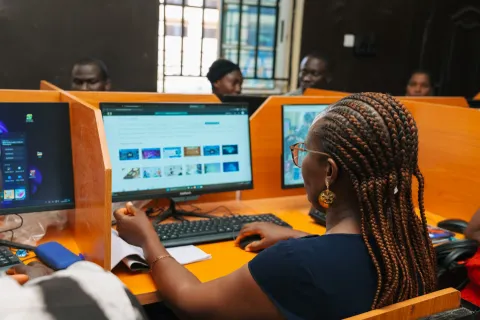
At the Digital Village she’s learning basic tech skills and small-business management. “I now know how to rear chickens and sell them using my phone,” she says proudly. Her ambition is back: “I want to become a company owner with my name on it.”

Learning Skills, Building Confidence
The curriculum blends computer literacy with entrepreneurship, hygiene, digital safety, and goal setting. For many participants, it is the first time anyone has asked them about their dreams and shown them how to chase them.

Scaling Impact
More than 80,000 marginalized children and adolescents across Jigawa, Kaduna, Kano, Katsina, and Sokoto States have already passed through Digital Villages. Each center provides safe spaces, gender-sensitive support, and trained facilitators. The project is equipping a generation with skills to pursue education, employment, and dignity.


Hope Beyond Sokoto
In a country where 22 percent of school-age children remain out of school, these Digital Villages are more than classrooms; they are bridges to opportunity.
For Abdulrahman, for Shamsiyya, and for thousands more, the journey from the streets to the screens is just beginning.
Partners:
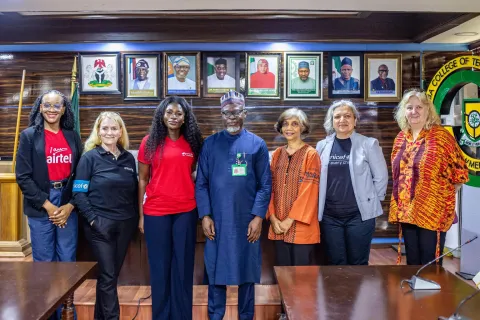
Implemented by UNICEF with funding from the ELEVA Foundation and in collaboration with the Sokoto State Government