In north-west Nigeria, relief for Almajiris
With support from UK National Committee, UNICEF is helping Almajiris in north-west Nigeria enroll in schools and have their births registered

KANO, 19 October 2022 - The day Mustapha Sani left home in Ruwan Bago community of Kano State to Kaduna to acquire Qur’anic education, he was excited but after spending four years in Kaduna with a cleric, he’s happy to be back home, living with his parents.
Although 12-year-old Sani was already acquiring Islamic education in his village, his father woke him up one morning and asked him to get ready for the trip that will eventually make him an Almajiri.
Sani dressed up hurriedly; excited, but apprehensive.
“I was anxious because I was leaving my parents to a strange environment; but excited at the adventure of seeing a big town, and living in it,” said Sani.

Two years ago, while begging for food on the streets one afternoon, Sani and other Almajiris were “arrested” by government officials implementing a lockdown policy to fight the spread of COVID-19 in Kaduna State.
Sani was whisked off to a location where he met scores of children like him.
“We were eventually herded into vehicles which drove us to Kano,” said Sani.
Some days after arriving in Kano, Sani was eventually taken to Ruwan Bago, his community of origin where he was first handed over to the Village Head, and subsequently reunified with his parents.
“I am not contemplating ever going back to the streets! Life out there is harsh and difficult; living far away from home without your parents,” retorted Sani to a question if he would like to be back to Kaduna.
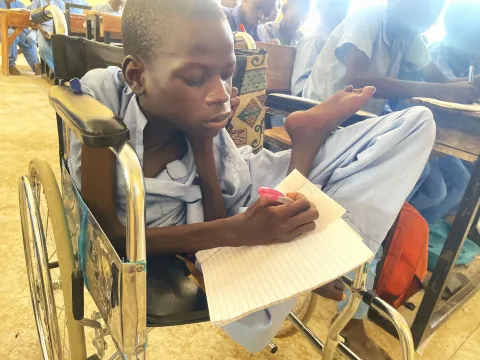
“Besides, here in Ruwan Bago, I’m still getting my Qur’anic education, and I have also enrolled in a primary school since my return,” volunteered Sani.
Abubakar Garba, 52, head teacher at Ruwan Bago Central Primary School, where Sani is now in Primary Six, confirmed Sani is in school, and doing well in class.

“When the Almajiris from this village returned home, I counselled their parents to enroll them in school, and I’m happy they did,” said Garba who is also the ward head of Ruwan Bago.
“When he came, we examined him and then placed him in Basic Four. Our interaction with him revealed he was attending a formal school while learning under his Qur’anic teacher in Kaduna, so it was easy for him to pick up fast,” explained Garba.
Amir Isah, nine, another returnee Almajiri, has enrolled in Basic Four, said Garba, pointing to a smiling child by his side.


To support Almajiri children integrate into, and adjust to life back in their communities, UNICEF, with funding from the UK National Committee, has supported Kano state government to implement a cash transfer programme targeting 1,258 returnee Almajiris located in 37 Local Government Areas (LGAs) out of the total of 44 of the state.

“While the cash transfer programme is not conditional, our objective is that the beneficiary families will use the funds to support the well-being of children, including their education and protection within the family,” said Ms. Emelia Allan, a Child Protection Manger at the Kano Field Office of UNICEF.
Allan says UNICEF, in partnership with the state government, continue to collaborate with traditional and religious leaders to identify, validate and reunify Almajiris with their parents.