Renovated Classrooms, Renewed Hope: Children in Benue Return to Learning
With support from the Government of Sweden through the Swedish International Development Cooperation Agency (Sida), UNICEF and the Benue State Government are helping children affected by displacement find their way back to safe and dignified learning.

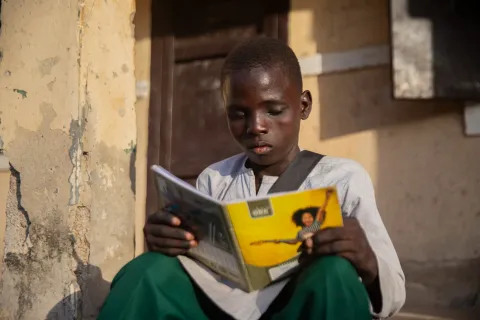
MAKURDI, Benue State, Nigeria - At 15, Ayoosu Myoom should have years of classroom memories behind her. Lessons learnt. Friendships made. Teachers remembered. Dreams slowly taking shape.
Displacement took much of that away.
For years, Ayoosu lived at the Abegana Internally Displaced Persons (IDP) camp, where the disruption of displacement followed children into almost every part of their lives, including their education.
Today, Ayoosu is back in school.
She has a desk to sit at, a teacher in front of her and other children learning beside her. These may seem like ordinary things. For a child who has spent years without consistent access to quality education, they are anything but ordinary.
For Ayoosu, returning to a classroom means being able to learn again. It means making friends. Most importantly, it means being able to look beyond displacement and imagine what her life could become.
Eleven-year-old Janet Faga is beginning that journey too.
Both girls are among children newly enrolled following the rehabilitation and refurbishment of classrooms at the Abegana IDP camp, supported by UNICEF with funding from the Government of Sweden through Sida and in partnership with the Benue State Government.
For children who have already lost so much time to displacement, a classroom is helping give some of it back.
Across Benue State, conflict and displacement have interrupted the education of thousands of children. Families forced from their homes often arrive in displacement sites carrying little more than they can manage. In the struggle to find shelter, food, water and safety, children's education can easily slip away.
Days outside school become months. Months can become years.
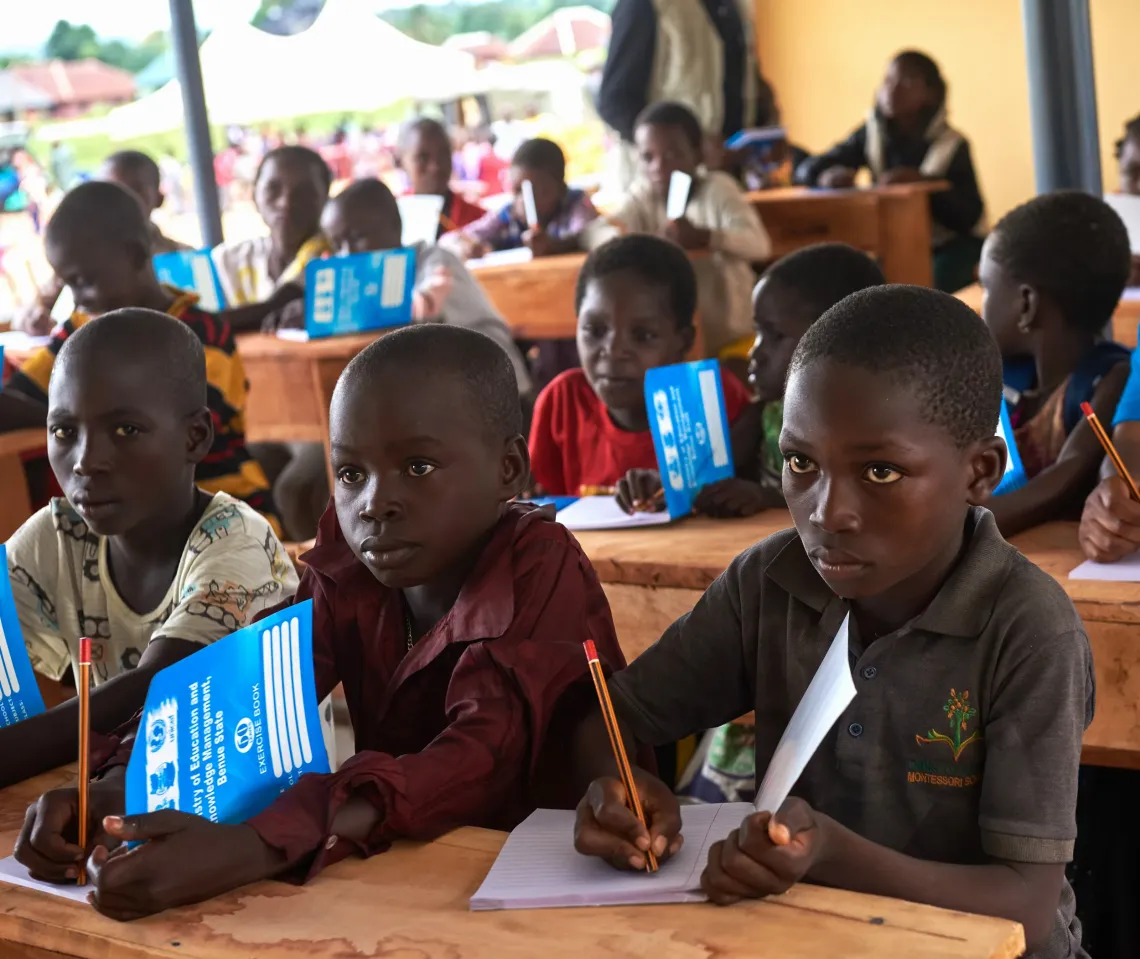
At Abegana, that is beginning to change.
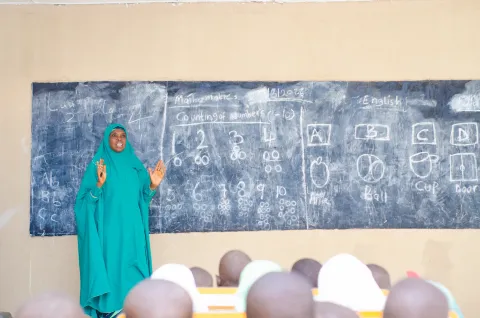
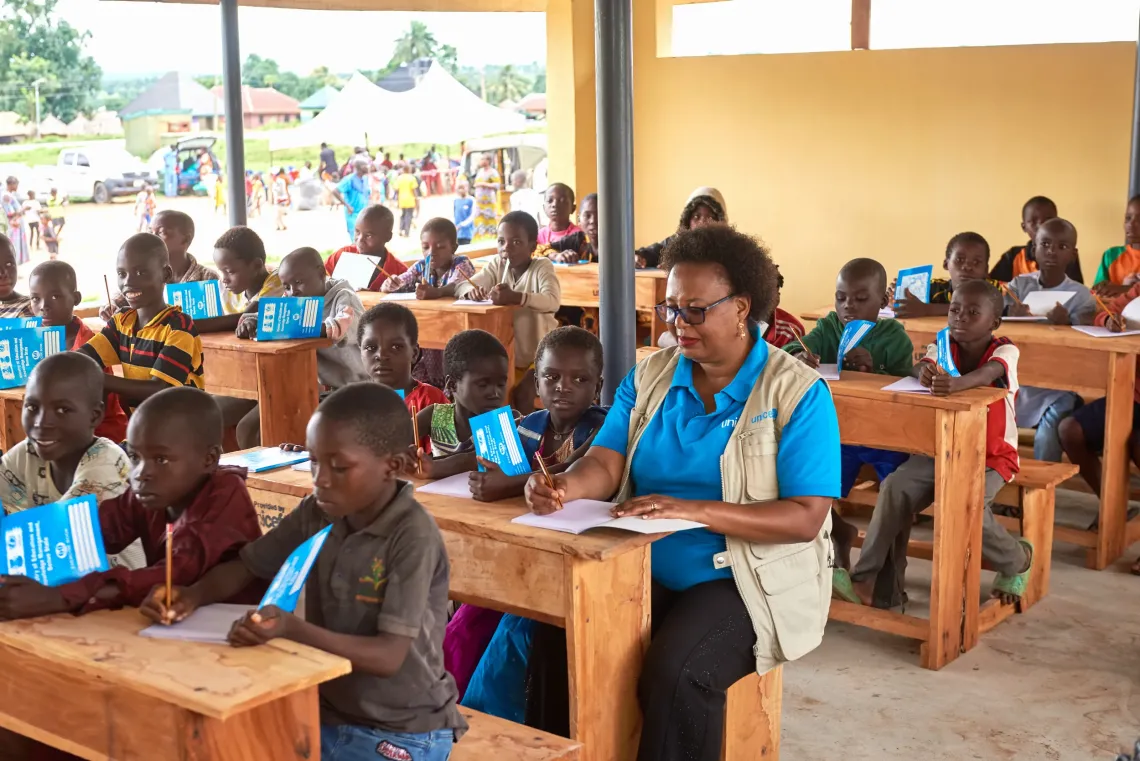
The rehabilitated classrooms are clean, safe and welcoming. Desks and learning materials have replaced spaces where teaching was once difficult. Children can sit together, listen, ask questions and concentrate on being students again.
For teacher facilitator Festus Azenga, the difference is visible on their faces.
“Before these classrooms, teaching in the camp was very challenging. The children struggled to concentrate because the learning environment was not adequate,” he says.
“Today, we can see excitement on their faces because they have a proper place to learn. These classrooms give us the opportunity to teach better and give the children the confidence to dream again.”
That confidence matters.
A classroom is made of walls, a roof, desks and a blackboard. But for a child living through displacement, it can become something much bigger. It can provide routine after upheaval, friendship after separation and a sense of belonging when so much else feels uncertain.
It can also tell a child something very simple: your education still matters.
UNICEF supported the rehabilitation of damaged classrooms at the camp and provided essential teaching and learning materials, including desks, textbooks and teaching aids. The support is part of a wider effort to ensure that children affected by displacement are not also deprived of their right to learn.
For UNICEF Chief of Field Office in Enugu, Juliet Chiluwe, this is ultimately what the investment is about.
“For UNICEF, every classroom represents a promise to a child, the promise of safety, inclusion and a chance to build a better future,” she says.
“Through the generous support of the Government of Sweden, and in close partnership with the Benue State Government, we are helping children affected by displacement return to learning in an environment where they can feel safe, valued and hopeful.”
The partnership brings together the leadership of the Benue State Government, UNICEF's technical support and funding from the Government of Sweden through Sida. But its real measure is not simply the number of classrooms rehabilitated or desks provided. It is what children are able to do inside them.
Learn. Recover. Build confidence. Begin again.
“What we are seeing here is the power of bringing the right partners together around the needs of children,” says UNICEF Education Specialist Believe Eke.
“These classroom blocks provide more than physical space; they create an enabling environment where teachers can support children to learn, recover and regain confidence after experiencing disruption.”
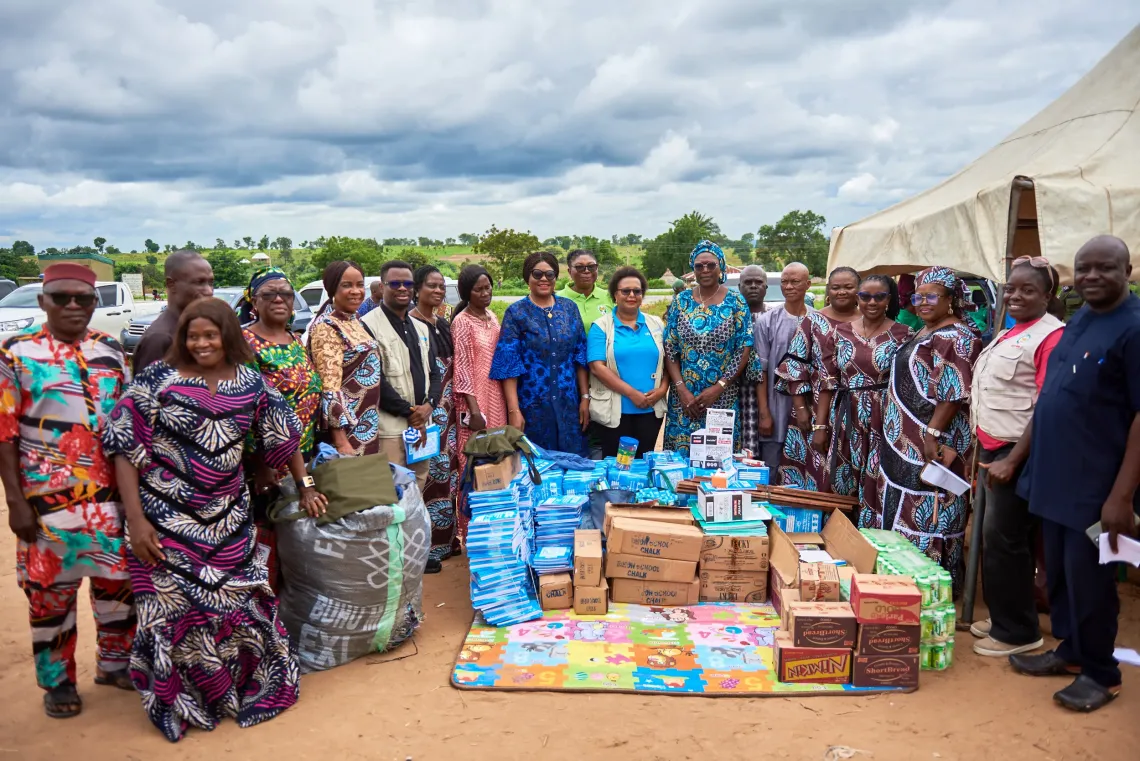
For the Benue State Government, ensuring that children continue learning despite displacement is an investment in the state's future.
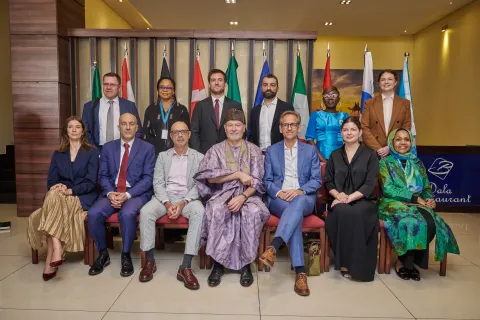
“This handover is more than the commissioning of classrooms; it is a renewed commitment to the children of Benue State,” says the Honourable Commissioner for Education, Dr Margaret Ijaguwa.
“Every child, including those displaced by conflict, deserves a safe, dignified and supportive environment in which to learn. We deeply appreciate UNICEF and the Government of Sweden for standing with Benue State and investing in the education and future of our children”. For families at Abegana, however, the change is perhaps best understood through something much simpler: children are going to school again.
Mrs Mimidoo Vangeryina, the IDP Camp Coordinator, has watched the classrooms bring a new energy to the camp.
“This classroom block has brought hope to the camp,” she says. “For children who have already experienced the disruption of displacement, having a safe and proper learning space gives them a sense of normalcy.”
Inside the classrooms, that normalcy plays out in small, everyday moments.
A teacher prepares a lesson. Children settle behind their desks. A hand goes up to answer a question. Friends talk between lessons. A child discovers something she did not know yesterday.
For most children, these moments are simply part of growing up.
For Ayoosu and Janet, they represent something that displacement had placed beyond reach for too long.
Their return to school cannot undo what they have experienced. It cannot give back the years of learning that were interrupted. But it can help ensure that displacement does not write the rest of their story.
At 15, Ayoosu is once again sitting in a classroom.
And from that desk in Abegana, the future looks a little closer.