From Name to Nation: Why Birth Registration Matters for Every Child
Birth registration, a lifeline for children’s legal recognition

Every morning at Badariya Primary Health Care Centre in Birnin Kebbi Local Government Area of Kebbi State, Ubaida Muhammad Mafara takes her seat with quiet determination. By the end of the day, dozens of parents will pass through the clinic doors, all carrying the same hope, that their children will be officially recognised by the state.
As the birth registration focal person at the facility, Ubaida prepares for another long day. Like the many days before it, she is ready to ensure that newborns are given something that will stay with them for life, a legal identity.
“It gives me a great sense of pride to support families in securing an official identity for their children,” she says.
Birth registration is more than the recording of a name. It is a child’s first formal recognition by the state, proof of existence and the foundation for access to essential services such as healthcare, education, social protection, and legal safeguards.
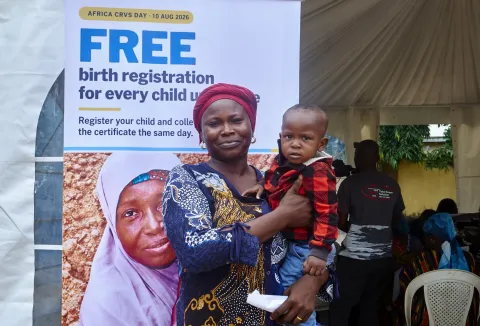
Among the parents waiting that day is Zainab Usman, 28, a mother of two. Cradled in her arms is Abdulkarim Sanusi, her six-month-old son. Married for seven years, Zainab remembers how her first child, Hafsat, now six, was registered through a manual process. This time, she arrived early, determined to ensure her second child was registered without delay.
“Growing up, my mother always registered us at birth,” Zainab recalls. “But in our neighbourhood, some families didn’t. My mother’s friend, Mama Binta, never registered her children, so people always relied on my mother to help guess their real ages.”

Those memories left a lasting impression.
“Our birth certificates were always a reference for our real age,” she explains. “That alone motivated me to make sure all my children are registered.”
Today, the importance of birth registration is even clearer.
“National identification has become mandatory, and a birth certificate is required to obtain it,” Zainab says. “Schools now ask for birth certificates for admission, and many government programmes require it too. To us, this registration is a privilege and an opportunity that opens many doors for our children.”
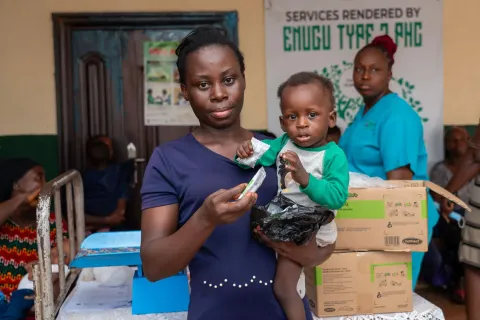
At Takalau Primary Health Care Centre, the story is similar. Jibrin Musa Arzikan, the birth registration focal person at the facility, says demand for the service continues to grow as awareness increases.
“Parents come in every day seeking birth registration,” he says. “They understand the benefits and insist on getting the service.”
Sometimes, parents wait long after routine clinic hours just to complete the process.
“There are days I stay until 8 p.m. because parents refuse to leave without registering their children,” Jibrin adds. “What I see every day are children who arrive with just a name, but leave with an officially recognised identity.”
On busy days, he registers between 50 and 100 children, an overwhelming but deeply rewarding responsibility.
With support from Gavi, the Vaccine Alliance, birth registration services are reaching more families across Kebbi State, particularly in hard-to-reach communities. Each certificate issued marks the beginning of a child’s legal status as a citizen, strengthening links to immunization, education, and other essential services.
UNICEF also underscores the central role of birth registration in protecting children’s rights.
Birth registration is the gateway to every other right a child has, when a child is registered at birth, they are visible to the system. That visibility allows governments and partners to plan better, deliver services more equitably, and ensure that no child is left behind from the very start of life.
For mothers like Zainab, and health workers like Ubaida and Jibrin, birth registration is not just paperwork. It is a promise that every child counts, and every child belongs.