A Bridge to Education
In Northeast Nigeria, a vocational training programme is helping adolescent girls and young women gain new skills and prosper.

It was her second ever certificate since dropping out of the National College of Education (NCE) some years back, but Deeja Idi, a mother of four and resident of Damagum, in conflict-affected northeast Nigeria says it is one of the greatest things that has happened to her in recent times.
The certificate was issued to me after a three-month training in bag production. It was one of the highest moments in my life because I had been unemployed for a long time. It felt like I had finally achieved something for myself because the training was not easy. There were days I had to follow the facilitator home to learn more, said Deeja.
For years, the northeast Nigeria region has battled protracted conflict, resulting in widespread poverty and loss of economic opportunities for people living in the region. Cultural norms and rigid gender roles make it particularly challenging for women, who are expected to provide full time housekeeping and childcare support to their families.

I heard about the vocational training through my friends. I visited the centre and was enrolled. I was tired of not having something to do because it has been difficult to support my husband who is a tailor. I could not contribute anything because I had no skills to work with. The children and I depended on my husband for everything, added Deeja.
Four months after, the UNICEF-supported vocational training programme has improved Deeja’s standard of living. Funded by the Government of Germany (BMZ) through KfW Development Bank, 13,000 adolescents and young women have graduated from this programme and have been equipped with different skills from bag and shoe production to tailoring and liquid soap production.

Through the Resilience Integrated Education Programming for Children in Northeast Nigeria, UNICEF is building the resilience of households to respond to the shocks of protracted conflict. By promoting self-reliance and industry, the programme which is being implemented across three states in northeast Nigeria has also enabled governments in the region to foster peace in various communities.
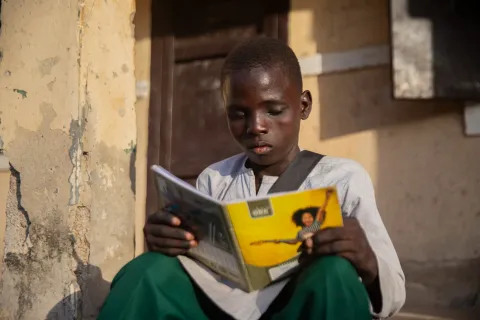
According to Deeja, the most visible benefit of the training was the enrollment of Adamu, her first son in school.
He dropped out of school so that he could help his father with farming and selling petty stuff. My greatest joy is that he is back in school after I started producing bags. We even enrolled him in a better school than he was before, said Deeja.

I am glad that I was part of the training and I always look at my certificate with pride. It has helped me support family and even neighbours in my own little way, she added.