Boy to Man
How Education Shaped Modu’s Path to the Future
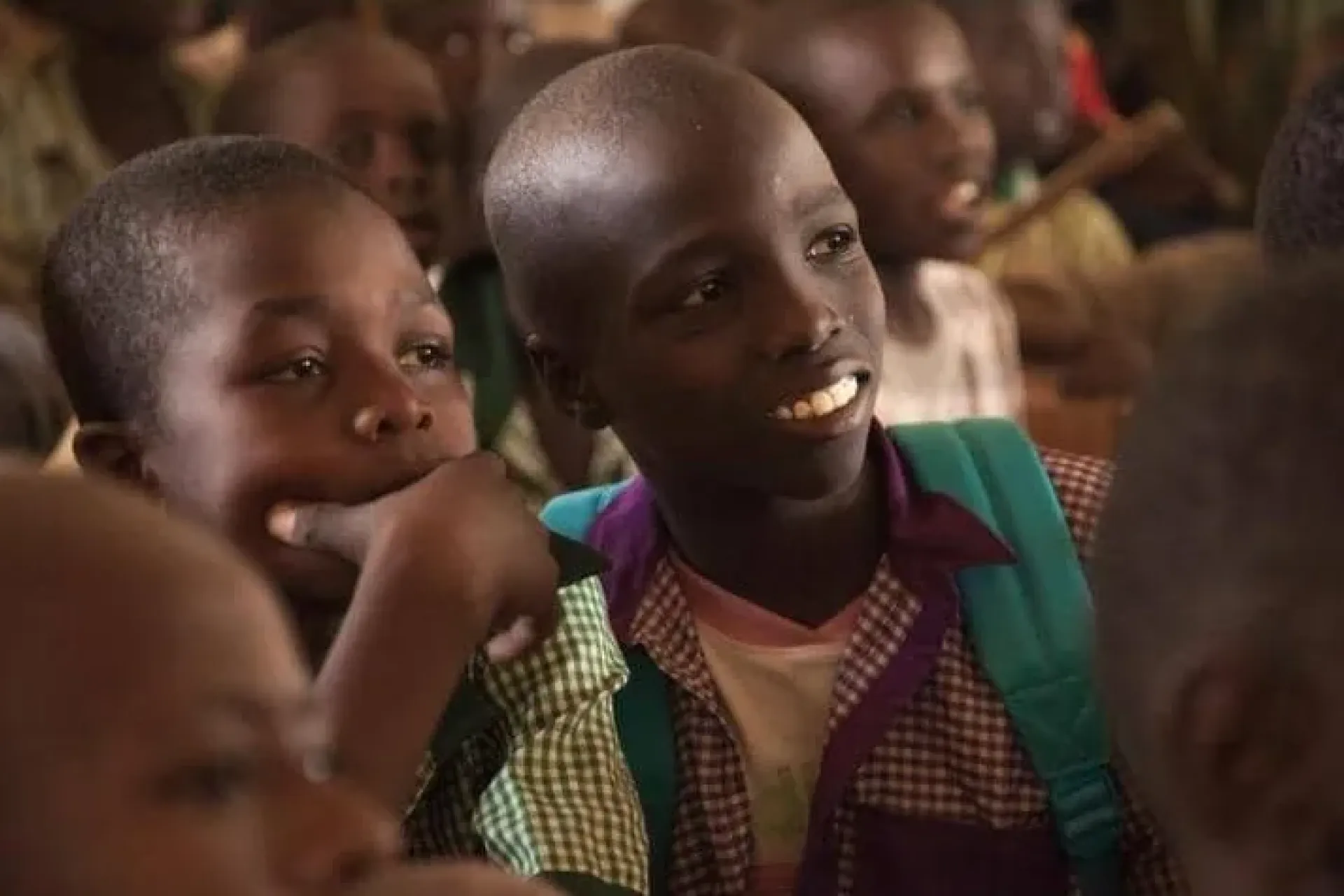
A decade ago in Monguno, Borno State, Modu Ali Mumma was just another out of school boy caught in the chaos of conflict. Today, he stands in front of a classroom, guiding children whose lives once looked a lot like his own.
Modu is now 24 and works as a volunteer teacher with a local organization in Monguno, a community that has lived through years of violence and displacement. Each morning, when he looks across the classroom at the children in front of him, many of them displaced, many of them unaccompanied, he sees reflections of his own past.
In 2016, Modu was a lanky teenager with little hope of returning to school. Conflict had forced families across Borno State to flee their homes. Schools were shut down. Many buildings were turned into camps for displaced families. Education simply stopped.
Like thousands of others, Modu and his family fled to Maiduguri. But even in the state capital, there was no real path back to learning.
“There was no opportunity to attend school in Maiduguri,” he recalls. “Everyone was confused. Nobody knew what would happen next. Before we realised it, two years had passed.”
When security forces later regained control of parts of Borno, families slowly began returning home. Monguno was one of those places where people tried to rebuild their lives from scratch.
As communities began to recover, UNICEF, working with the Government through the Educate A Child programme, launched a back to school initiative to help children restart learning. Mobilizers went door to door, speaking to parents and convincing them to send their children back to class.
One of those visits changed Modu’s life.
“Two people from UNICEF came to speak with my parents,” he says. “One of them was a woman called Katarina. She was very friendly. I joined the programme and suddenly I was learning again and meeting my friends. That programme shaped the person I have become today.”
That moment planted a seed.
Modu returned to school and later moved back to Maiduguri to complete his secondary education because Monguno did not have a secondary school. He went on to earn a diploma in Social Work from a polytechnic in Maiduguri before returning home.
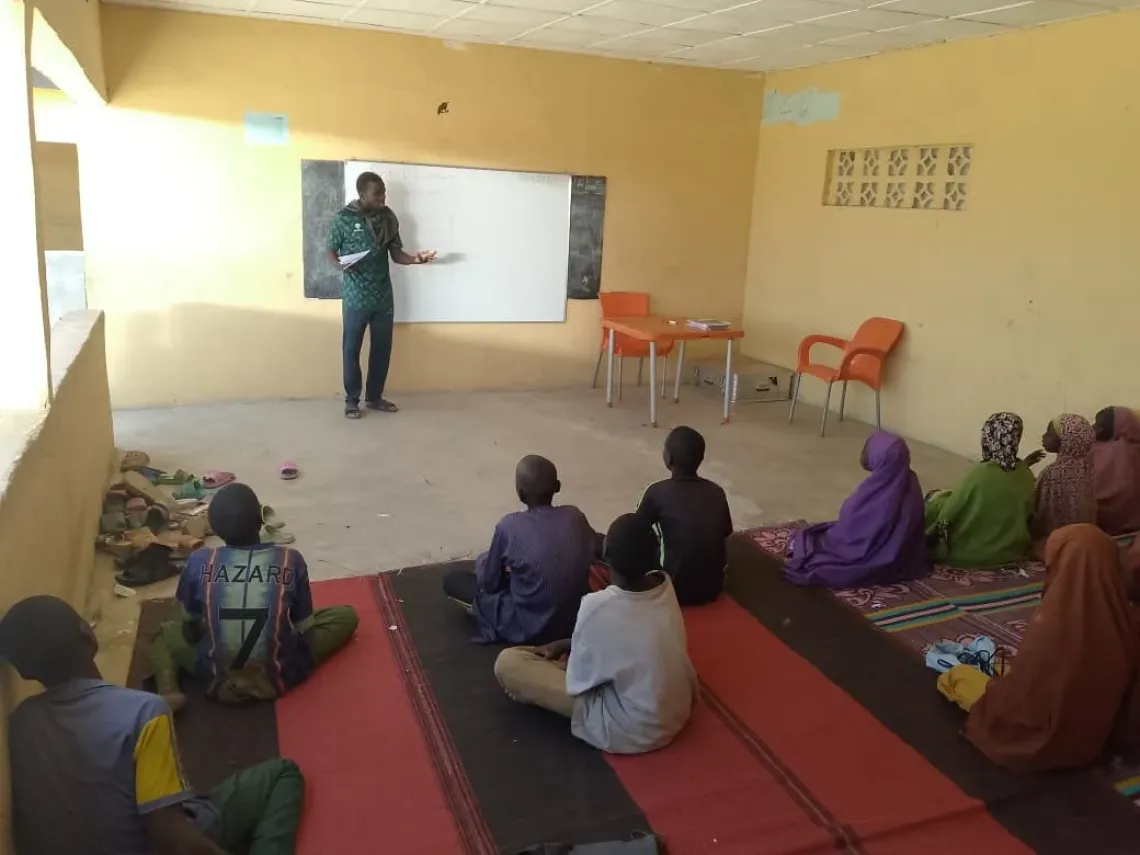
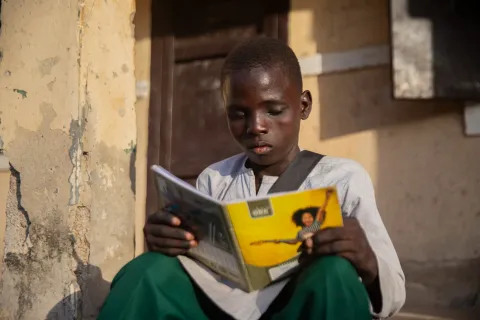
Today, he teaches in a catch up learning centre supporting about 120 children who had also missed years of education because of conflict.
“I never planned to become a teacher,” he says with a quiet smile. “I actually wanted to become a policeman or a lawyer. I sat for the entrance exam twice but was disqualified because I was considered too short.”
Life had other plans.
After completing his diploma, Modu began working with different humanitarian organizations as a learning facilitator. Over time he discovered something unexpected, he had found his calling.
“I realised the education sector was where I belonged.”
For the children in his classroom, Modu is more than just a teacher. He is living proof that their future can still change.
“Many of them now say they want to become teachers like me,” he says proudly.
One student in particular stands out to him.
“Adamu Yakubu could not read or write when he arrived. After just a few weeks he can now recognise two and three letter words. He can spell and write his own name.”
Moments like these remind Modu why he chose this path.
“My biggest achievement is my students,” he says. “They inspire me.”
A decade has passed since Modu first walked into that back to school programme as a hesitant teenager. In that time he has lived through displacement, uncertainty, and struggle. But education gave him something powerful, a second chance.
Now a father to a young daughter, Modu dreams of going even further.
“I want to continue my studies so I can help children in this community in bigger ways,” he says. “If I can get a scholarship one day, I know I can do more.”
In a place where conflict once shut the doors of classrooms, Modu now spends his days opening them for others.