Better outcomes, for every girl
Co-creating better outcomes for adolescent girls in Nigeria through human-centered design (HCD)
The Challenge
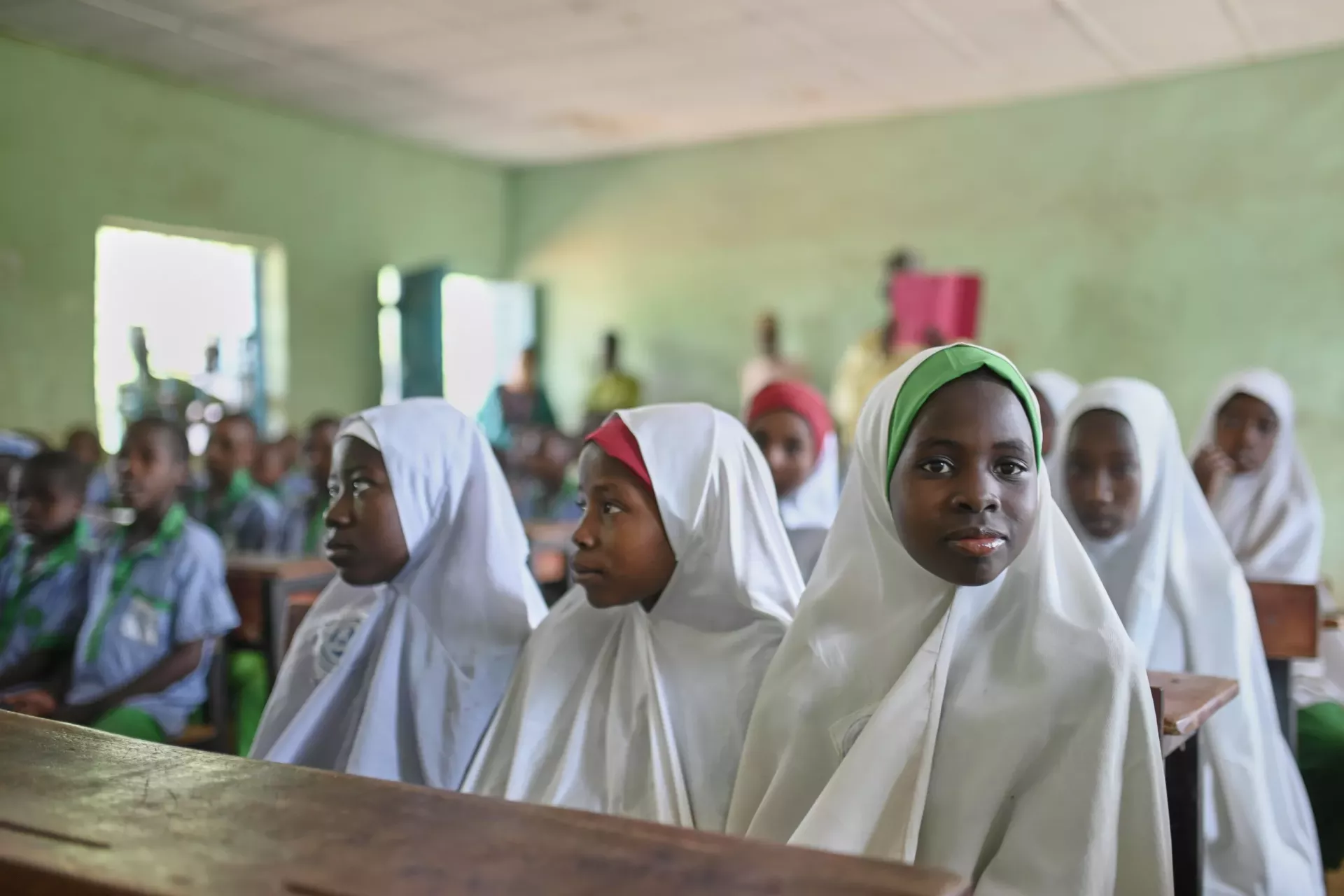
Although Nigeria has made some advances in improving educational access for adolescent girls, outcomes are still low, particularly for girls in the Northwest region of the country. According to the Multiple Indicator Cluster Surveys (MICS) 2021, nationwide, the net attendance rate for girls in lower secondary school is 48.8%, but only 15.8% in Sokoto and 27.6% in Katsina. And while the national net attendance rate (49.2%) for girls is slightly higher in upper secondary school, it falls significantly short for girls in Sokoto (12%) and Katsina (34.2%).
Additionally, the region grapples with high rates of early pregnancy, child marriage (30.1% of girls aged 15-19 in Katsina, 20% in Sokoto are currently married or in union), gender-based violence, and harmful gender norms that hinder girls' wellbeing and development.
Furthermore, adolescent girls face significant barriers to digital and financial inclusion - with only 13.7% using the Internet at least once a week (4.3% in Katsina and 2.2% in Sokoto) - and a substantial gender gap in financial exclusion – only 11.4% of adolescent girls aged 15-19 own a bank account. Addressing these interconnected challenges is crucial for empowering adolescent girls and supporting their transition to adulthood in these regions.
The Solution
As part of the Adolescent Girls Programme Strategy 2022-2025, UNICEF Nigeria launched the Reaching and Empowering Adolescent Girls in north-western Nigeria programme (REACH) to accelerate gender-transformative, multisectoral and integrated programming with and for adolescent girls. As part of this programme, formative research was conducted in 2023 to understand better the gender and social norms affecting adolescent girls in Sokoto and Katsina, the target states for REACH.
Through the research, led by UNICEF and supported by Yux Design, adolescent girls in Katsina and Sokoto States expressed themselves and their priorities, and are informing UNICEF’s programming with and for adolescents. Social and Behavior Change (SBC) strategies to address barriers girls face and their desired solutions to improve access and retention in school, protection from harmful practices, digital and financial inclusion, and access to healthcare services were developed through a human-centered design (HCD) approach, comprising:
- Qualitative research: 40 in-depth interviews of adolescent girls and stakeholders
- Quantitative research: 548 survey responses collected in person with Survey CTO, and,
- Girl-centered design: Co-creation workshops with 80 girls and then separately, with stakeholders (caregivers, male siblings, community leaders, and officials) to ideate solutions to the challenges expressed by the girls.
The Impact
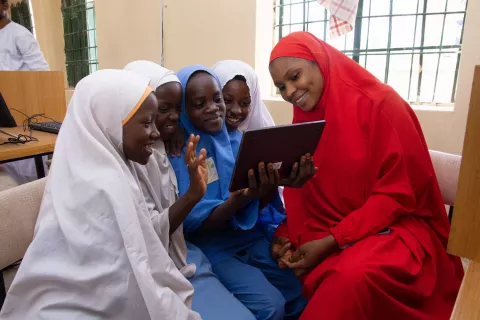
The adolescent girls participating in the interviews, surveys, and co-creation workshops shared freely on sensitive topics, reinforcing deliberate design decisions to ensure psychological safety and diversity, and reaffirming the importance of putting girls at the centre of programming, and allowing them to lead in identifying solutions to their challenges.
The local mother tongue, Hausa, was the language of engagement with the adolescent girls throughout to ensure all the girls participated fully and were comfortable, especially girls who had never been to school or had limited English proficiency. In line with the girl-centered approach, 30 adolescent girls and young women selected from the focus Local Government Areas (LGAs) in both states were meaningfully engaged in all aspects of the research.
The adolescent girls and young women were trained as researchers, data collectors, and facilitators. The girls engaged with their ‘big sisters’ who are in university, in technology industries, teachers, and doctors on topics that may be taboo to discuss with outsiders or men e.g., sexual and gender-based violence (SGBV) and menstruation. Finally, age, disability, school, marital, and parental status were considered in participant selection to ensure diverse representation.