Connecting every child to digital learning
Nigeria Learning Passport sees sixfold increase in registrations in 2023, reaching over 750,000 children
The Challenge
Nigeria faces a severe education crisis, with the world's highest number of out-of-school children. With a population of nearly 224 million people, including 110 million children (63% under 25 years old), the country's education system struggles to deliver quality learning at scale. One in five primary-school-age children (10.5 million or 25.6%) are not in formal schooling, with girls representing 60 percent of out-of-school children.
The challenges are compounded by:
- Limited digital infrastructure and access - only 36% of the population uses the internet
- 78% of youth lacking digital literacy skills
- Less than half of teachers (47%) equipped with basic ICT skills
- Limited and unaffordable access to electricity and broadband coverage, particularly in rural areas
These systemic issues, combined with inadequate digital infrastructure, are leaving millions of Nigerian children without access to quality education and the digital skills needed for the future.
The Solution
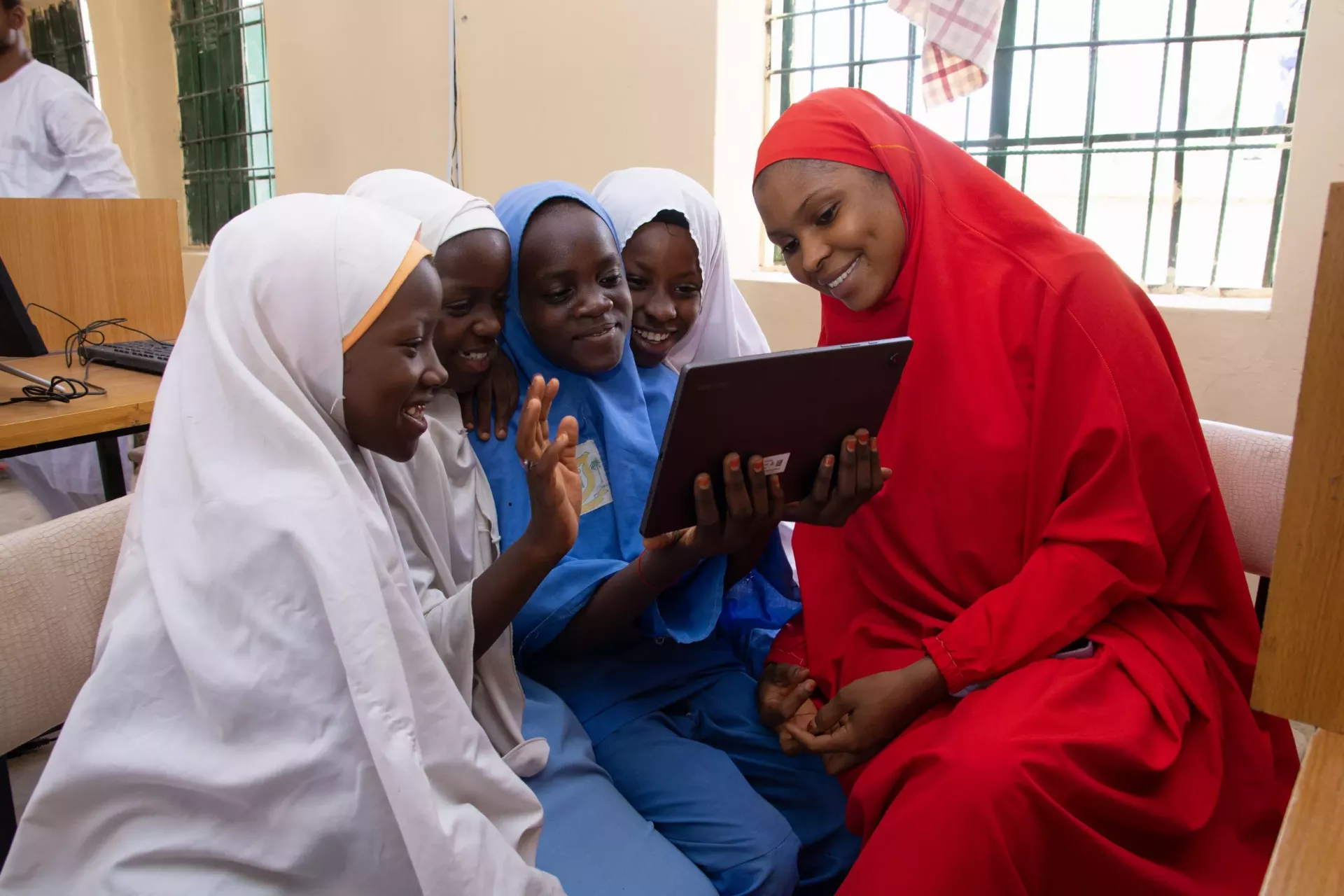
UNICEF Nigeria and the Federal Ministry of Education (FME) are deploying the Nigeria Learning Passport (NLP), a digital learning platform, to improve learning outcomes for 80% of learners in school, at home, and in non-formal structures.
This initiative is part of Generation Unlimited Nigeria (GenU 9JA), a public-private-youth partnership platform pioneering a nationwide initiative to connect every school to the internet and over 20 million Nigerian youth to skills, opportunity, and choice. Through the concerted efforts of five partners - Airtel, ATC Nigeria, Federal Ministry of Education, IHS, & UNICEF - the programme has:
- Extended internet infrastructure to 1,187 underserved communities
- Geo-mapped, assigned a school archetype to 109,000 public schools, and connected 1,027 schools to the internet with data plans and routers
- Deployed 84 community access points for digital access and training
- Trained 63,000 teachers and education officers in digital skills
- Distributed 13,000 devices to support digital learning
Whitelisted key digital learning platforms including the NLP, Yoma, and four FME learning platforms
The Impact
The GenU 9JA programme has achieved significant results, reaching over 2.7 million young people with connectivity, digital access, and learning opportunities. The Nigeria Learning Passport has seen remarkable growth, with registrations increasing from 117,585 in 2022 to over 750,000 registered users in 2023.
Key achievements include:
- 30,420 adolescents (15,654 females) receiving skills development support
- Successful implementation of blended learning approaches in formal and non-formal schools
- Enhanced teacher capacity to deliver standardized content through digital platforms
- Improved learning outcomes through personalized learning features
- Effective integration of Reading and Numeracy Activity (RANA) and Teaching at the Right Level (TaRL) methodologies
Field visits to Sokoto state demonstrated the NLP's effectiveness in supplementing traditional teaching with interactive digital content. Teachers reported improved ability to deliver standardized content, while the platform's personalized learning features helped address individual student needs. In non-formal education centers, the platform proved particularly valuable for foundational literacy and numeracy, supporting learners traditionally excluded from formal education.
Looking ahead, UNICEF will strengthen the education system by training government officials on digital learning planning and budgeting, engaging parents to use the NLP, and expanding its use for employability skills, especially for adolescent girls. GenU 9JA will focus on connecting new schools and communities to the Internet in 2024-25, while developing sustainable business models for school connectivity and digital inclusion.