TECNO and UNICEF Release Second-Year Results of Partnership: "The Learning Passport" Now Reaches Over 2.3 Million Children and Youth in Nigeria
On September 10, 2026, TECNO and United Nations Children's Fund (UNICEF) jointly announced a deepened partnership to support the implementation of “The Learning Passport Programme” in Nigeria for the third year.
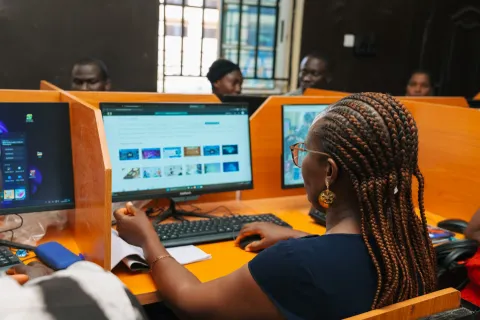
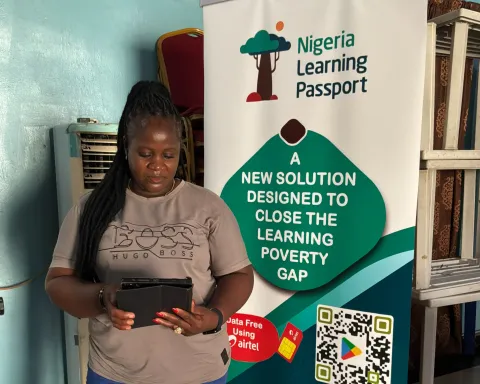
To create equitable learning conditions for children and youth in Africa and bridge the education gap, The Learning Passport Programme is a digital education platform that combines online and offline approaches, providing students with multilingual courses accessible offline. The curriculum covers primary education and skills development while also offering professional development support for teachers—serving as a key driver of digital transformation in Nigeria's education system.
Over the past year, the partnership has made significant progress. Addressing real challenges in Nigeria's remote areas—including weak teaching capacity, limited internet connectivity, and a shortage of learning equipment—the partnership has focused on scaling access, empowering teachers, and optimizing hardware, driving the deep integration of digital education into Nigeria's national education system.
Users growing, completion rates rising: In the last year, the platform added 471,189 new registered users, bringing the total number of registered users in Nigeria to over 2.45 million. The overall course completion rate increased from 69% in the first year to 81.6% in the second year, reflecting substantial improvements in the quality of engagement with digital learning among students.
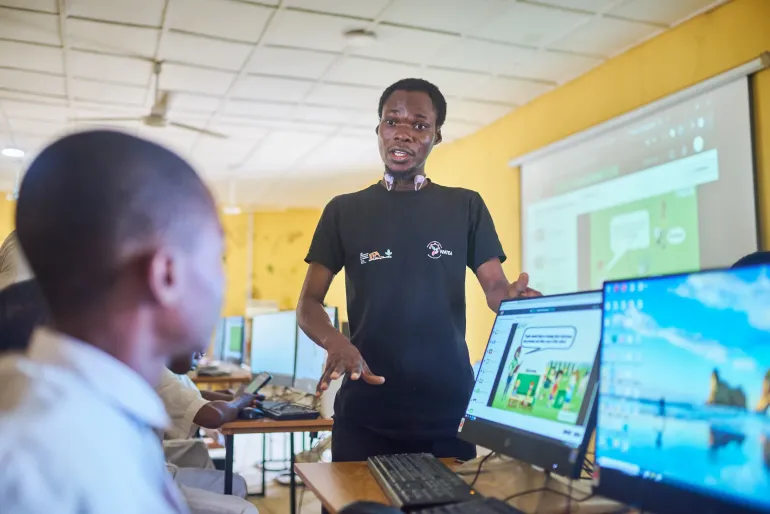
Teacher empowerment, blended learning in practice: Teachers are at the core of the digital education system. To ensure platform usage effectiveness and teaching quality, the local implementation team provided specialized training to 2,300 teachers throughout the year, in terms of digital literacy and platform utilities. This systematically enhances local teachers’ capacity to use digital devices and design blended learning curricula.
Hardware optimization: With support from TECNO, 10 schools in remote areas of Osun and Kwara states were equipped with customized tablets and smart projectors to access the platform. After receiving the equipment, UNICEF's local implementation team coordinated with technical teams to conduct multiple rounds of on-site visits, helping schools establish management and maintenance mechanisms covering equipment distribution, damage reporting, and classroom application.
Localization & vulnerable groups inclusion: "Local people" and "local languages" were at the centre of the second year's localization efforts. "Local people" refers to the technical support teams stationed by The Learning Passport Programme across Nigerian states—all composed of in-service staff from the State Ministries of Education (SMOE) and State Universal Basic Education Boards (SUBEB). "Local languages" refers to the “Blended Learning Handbook”, distributed simultaneously in three indigenous languages: Hausa, Igbo, and Yoruba.
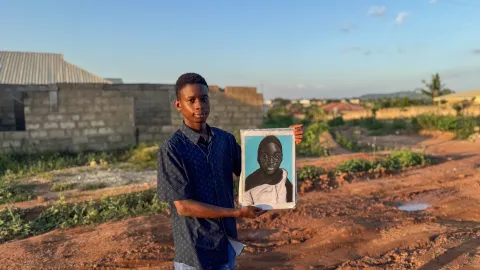
Building on these localization efforts, the local team reached communities across Enugu State, holding multiple outreach campaigns targeting out-of-school children and their families, helping 1,888 out-of-school children gain access to “The Learning Passport” platform.
"We are delighted to see The Learning Passport Programme bearing fruit in Nigeria.”Jack Guo, General Manager of TECNO commented on the second-year outcomes of the partnership: “Only when technology is matched with local languages, teachers, and community contexts can the education gap be effectively narrowed. TECNO will continue to uphold the social responsibility vision of 'Education for Africa, for the Future,' and is committed to helping more African children overcome geographical and resource barriers to access equitable, quality learning opportunities."
UNICEF Nigeria Country Representative, Wafaa Saeed stated: "The progress we are seeing through The Learning Passport highlights the value of investing in solutions that place children at the centre. Together with TECNO, we are supporting government efforts, in helping more children and young people access quality learning opportunities, while strengthening the systems and capacities needed to sustain these gains. We look forward to deepening this partnership and reaching even more learners across Nigeria."
Looking ahead to the third year of the partnership, TECNO and UNICEF will focus on tangibly improving teaching effectiveness. Based on the teacher training and hardware optimization from previous phases, the partnership will introduce advanced courses for teachers, guiding them in using the “Blended Learning Handbook” and hardware devices such as tablets to design classroom interactions with greater precision—ensuring that local children and youth not only "have classes to attend," but truly "attend quality classes."
Media contacts
About UNICEF
UNICEF promotes the rights and wellbeing of every child, in everything we do. Together with our partners, we work in 190 countries and territories to translate that commitment into practical action, focusing special effort on reaching the most vulnerable and excluded children, to the benefit of all children, everywhere.
For more information about UNICEF and its work for children in Nigeria, visit www.unicef.org/nigeria