
Making the Connection
From the dusty hills of Opuwo to the gentle glow of a computer screen, the lives of two learners reveal both the quiet power and the cost of being connected.
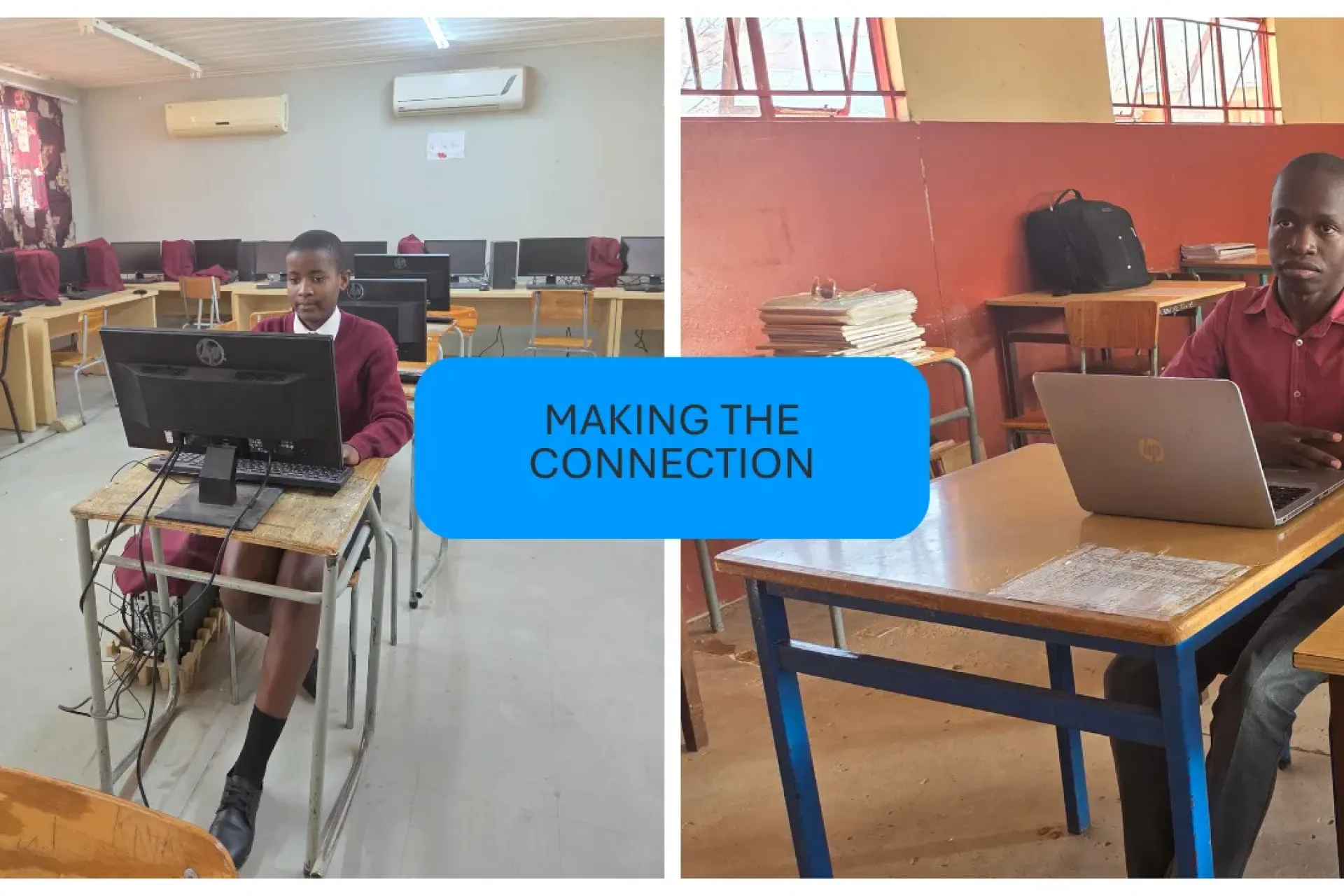
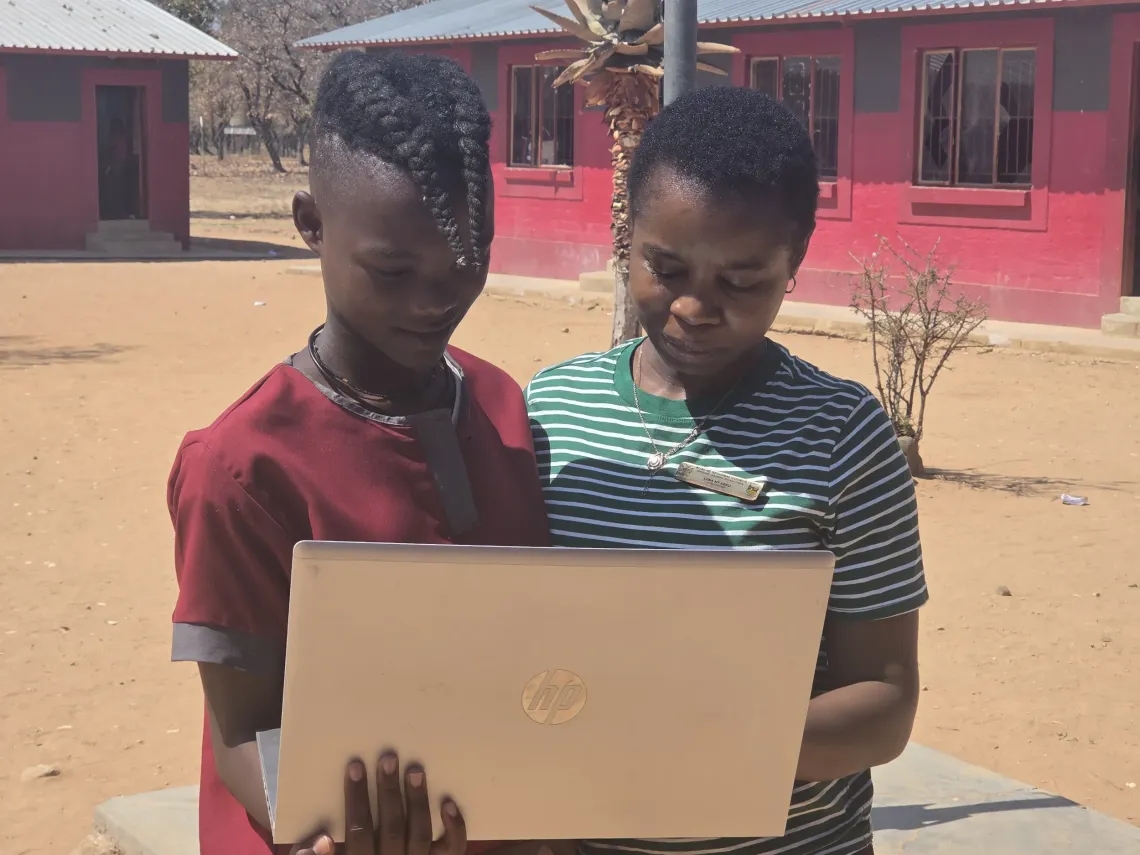
Liina, a 16-year-old and one of only six computer science students at Putuavanga S.S.S., sits in the computer lab, her fingers moving carefully over the keyboard. The internet signal flickers, and the page takes ages to load. But when it finally does, her face lights up at the possibilities it reveals. Her dream is to become a computer programmer—an ambition sparked by her exposure to digital learning.
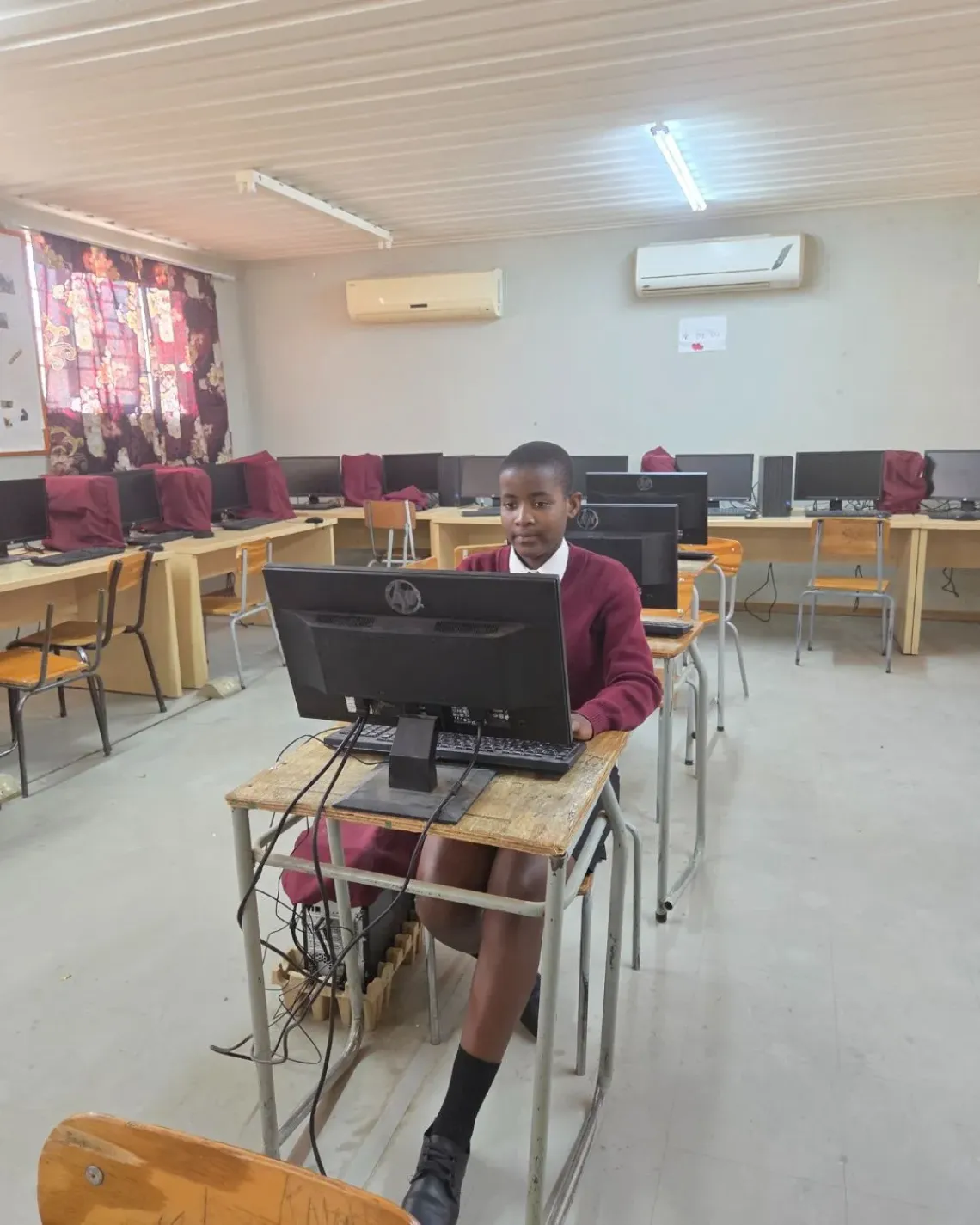
“Access to computers and the internet has created so many opportunities—to connect with peers— doing research online and exposure to the digital world”, said Lena
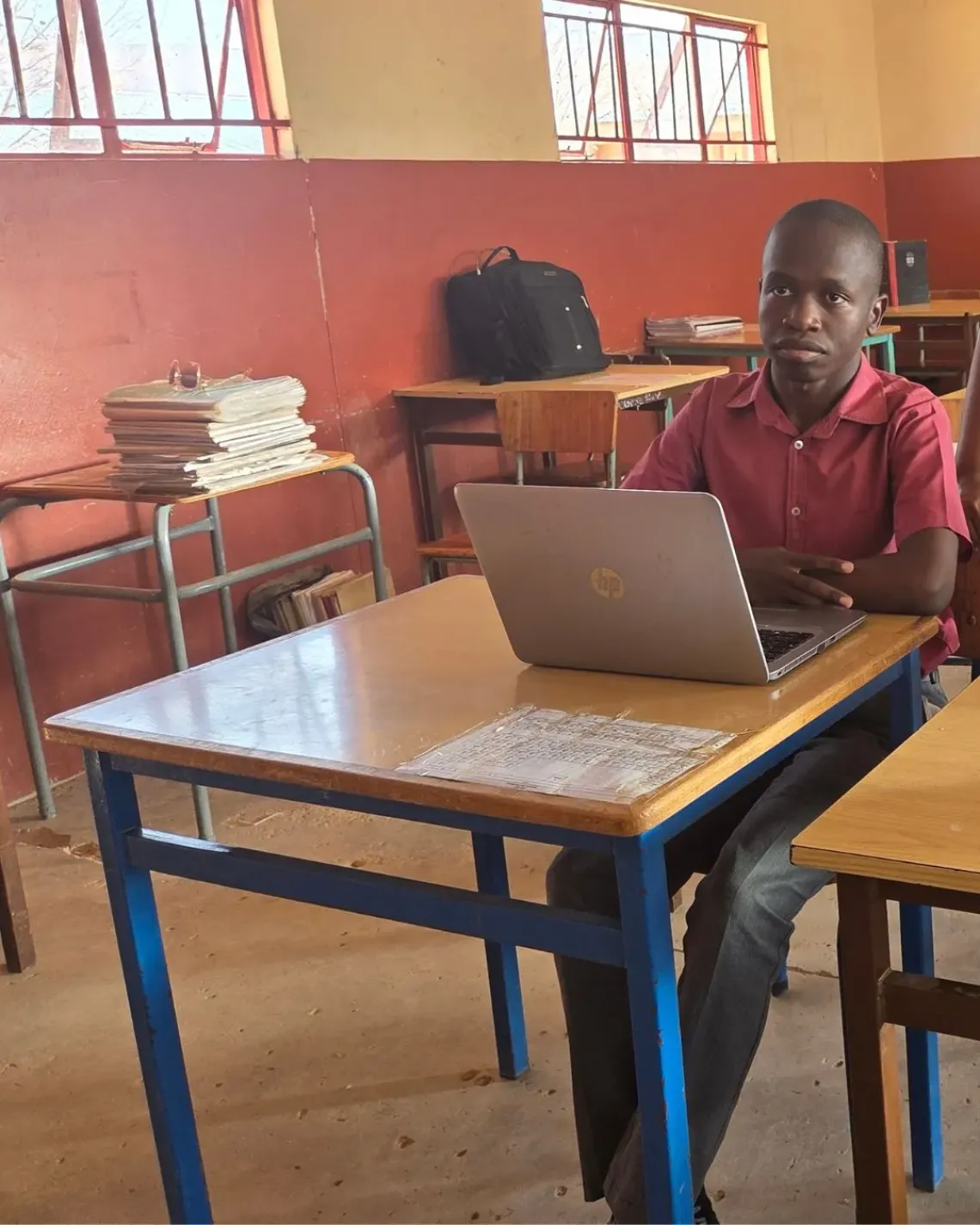
Meanwhile, 121 kilometers away, another classroom remains silent: no hum of computers, no flicker of Wi-Fi. Tjipura, age 17, waits in a classroom at Omuhonga Combined School, hoping for the day his school will be connected to the internet.
Although the school has received donated laptops, without internet access, they’re limited to basic tasks like typing assignments.
Tjipura often thinks about the students he might meet if he makes it to university—students from towns like Windhoek or Swakopmund who grew up clicking, typing, and researching assignments online. “They’ll already know so much,” he says.
Tjipura has heard about government projects and something called Giga that wants to connect every school in the world.
“Maybe one day it will reach us,” he says quietly.
Giga, a global initiative by ITU and UNICEF, aims to connect every school to the internet.
In Namibia, connectivity is not just about cables or towers; it’s about access to dreams, knowledge, and the feeling of being part of the wider world. The difference between Liina’s glowing screen and Tjipura’s disconnected laptop is more than geographic—it marks a line that divides opportunity. In a country striving to connect every citizen, some young people are already plugged into the world, while others are still waiting for the signal to reach them, growing up connected or disconnected within the same country and generation.
The Namibian government has pledged N$145 million to expand rural connectivity —a move that could transform schools like Tjipura’s into community hubs, empower teachers, and level the playing field for all learners.
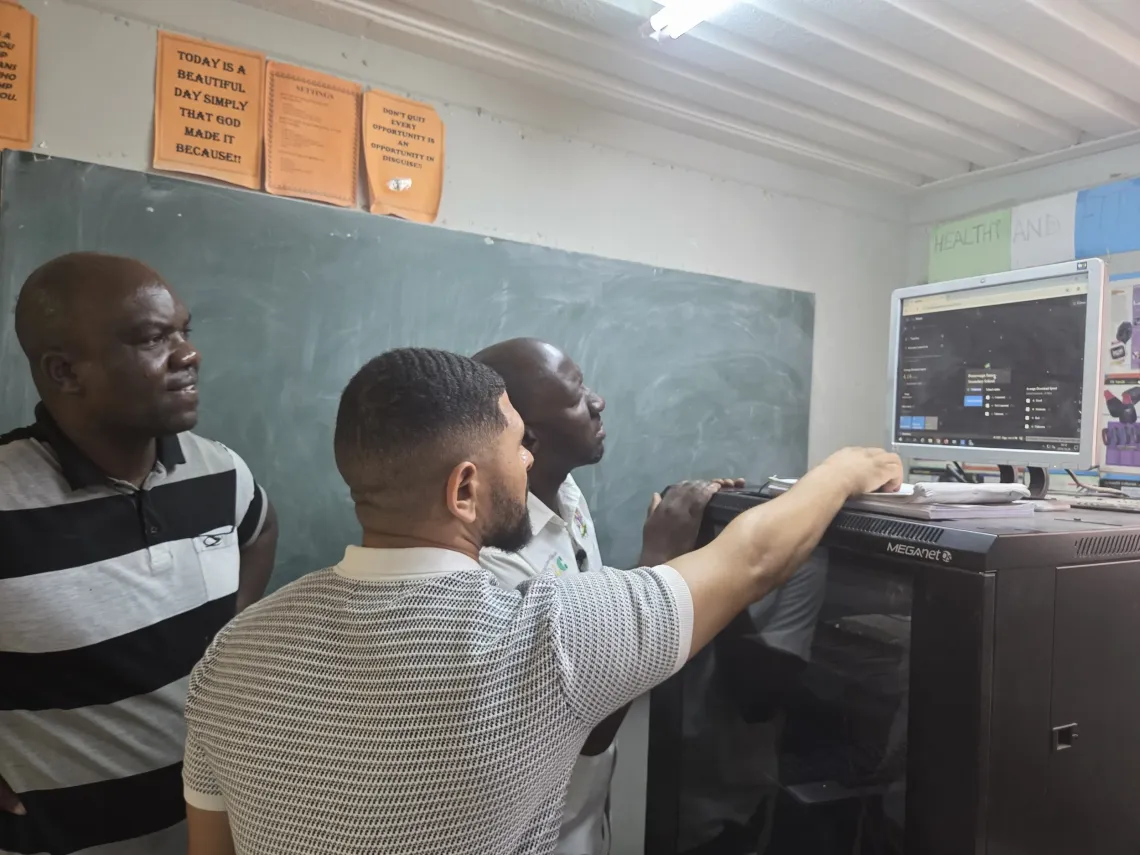
If Tjipura’s school joins a Giga-style mapping project, the benefits would ripple far beyond his classroom. His laptop could become a gateway to research, e-learning classes, and digital literacy—a window into a world his peers already explore.
When the signal finally reaches every school, every child, and every dusty classroom in Kunene, it won’t just connect devices—it will connect futures. Bridging gaps between rural and urban learners across Kunene. And perhaps, it will help Liina and Tjipura, and others, to truly make a connection.