
Grants for all vulnerable and poor children
The child support grant system in Namibia
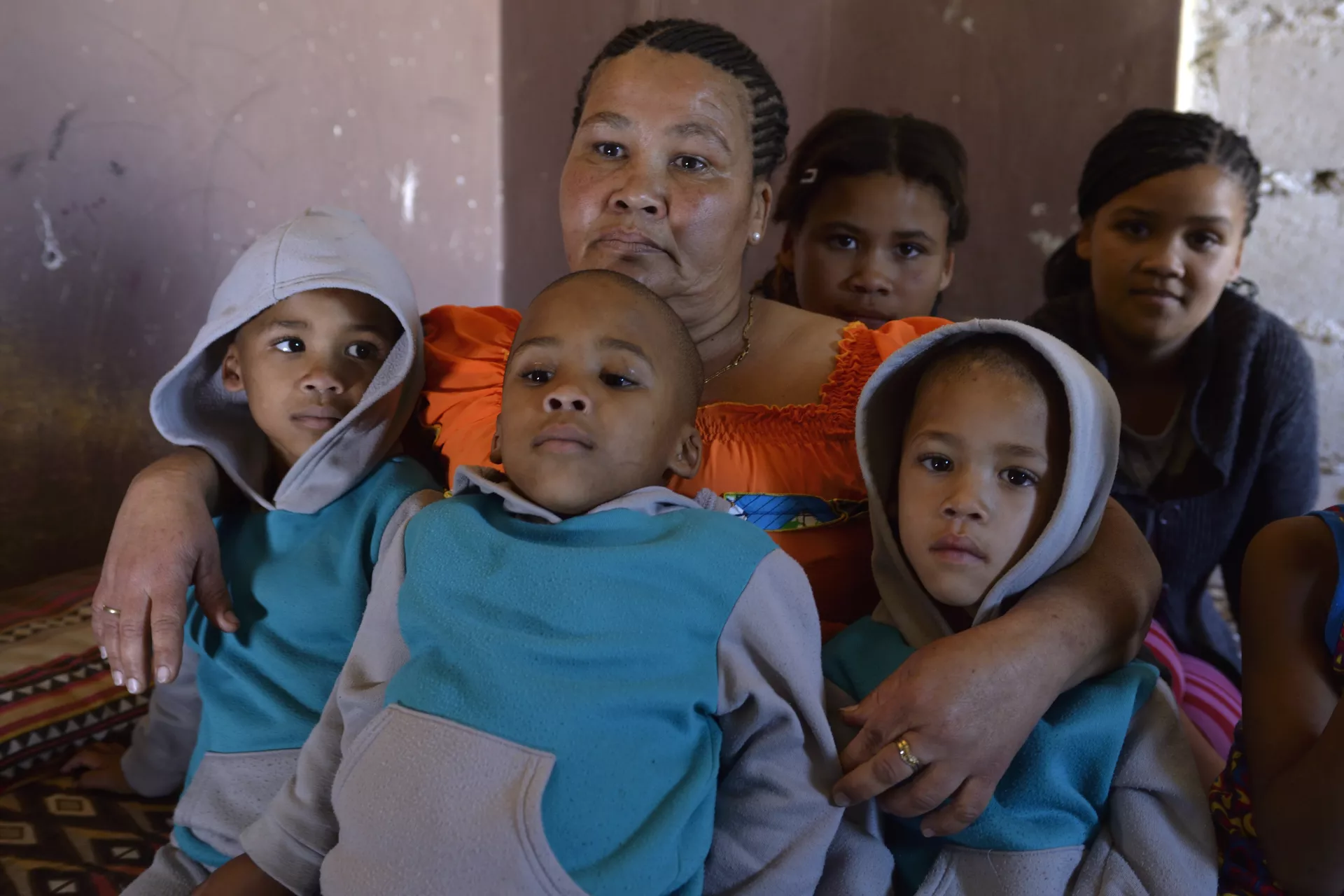
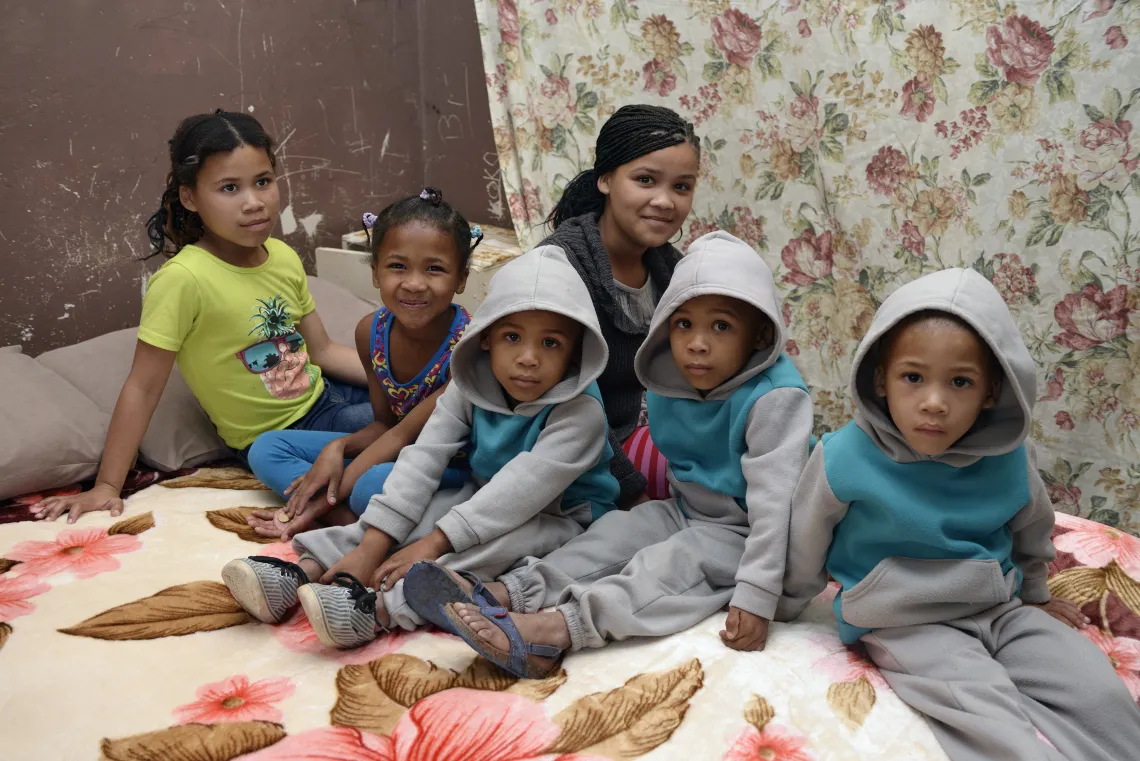
LÜDERITZ, Namibia, 8 August 2015 - Katriena Bezuidenhout’s deep brown eyes twinkle as she looks at her 4-year-old triplet sons who hover close to her. The boys are waiting for their mother to cut up rolls of bread, which Katriena has prepared for her seven-member family to have for afternoon tea. Katriena makes sure she has just enough rolls to feed her six children and herself. Besides the triplets, she has three other older daughters, who help their mother to serve the food in their one-roomed accommodation.
From the conversations and the jovial smiles they exchange as they partake of this meal together, one can see this is a closely knit single-parent family, with Katriena at its heart.
Katriena earns her living as a domestic worker in Lüderitz, a coastal town in the southwest of Namibia. Her husband deserted her and the girls when the triplets were born, and does not pay child maintenance. Until recently, when she began receiving social assistance from the state, even the bread rolls would have been a luxury for the family.
“Before I got the grant I paid for a room and bought electricity with my N$1,200 (US$88) and I couldn’t manage to buy clothes for my children,” says Katriena. “With N$400 left, I could maybe buy some food but I couldn’t buy any clothes for my children. When that little bit of food was finished I had to beg from people to be able to make a potjie (stew) for my children.”
With so little at hand, Katriena relied on the goodwill of her neighbours to keep herself and her kids going. Sometimes there simply was no food in the house and the girls often missed school because they did not have enough to eat. To any mother whose instinct is to protect and nurture her children, seeing them go hungry was heart breaking and incredibly stressful.
Easing the burden
But the Vulnerable Child Grant changed everything.
Katriena first applied for the grant on account of her triplets in December 2014.
“I heard people talking about the money that was helping people and so I went to the welfare office and I asked for help there,” said Katriena.
“I asked them if they couldn’t help me with the triplets and she told me no, I must go back home first because, you know, you’re not helped immediately.
But then she phoned and said I must come back and then she listened to me and heard what I needed... They filled out the forms for me there and there I got help.”
After a wait of four months, she was told that her application was successful. After assessing her dire situation, officials from the Ministry of Gender Equality and Child Welfare informed her that all six children were entitled to N$300 each a month.
“In April they phoned me and said it’s come through,” said Katriena. “I still asked if it’s good news or bad news and the lady said no, it’s good news... all six of my children are now getting help... and I’m very, very happy about that.”
This extra income has been a tremendous relief for Katriena, who like the throng of single mothers in Namibia struggles on a daily basis to keep her family afloat and children in school. She is now able to buy food and decent clothing for the children. Her broad smile and the new clothes worn by her children are just the tip of what grants can do for a vulnerable family.
Need for scale up
The Government of Namibia introduced the vulnerable children’s grant in 2014 to support families in distressed financial situations such as Katriena’s. This is one of four different types of grants to address the plight of children in difficult circumstances in Namibia. The other grants include maintenance grants, special grants for children under 16 with disabilities, and foster care grants.
Namibia is one of the few African countries with a comprehensive and entirely government-funded social protection system. But more than a third of children still live in poverty and many continue to be excluded from the social protection system.
A 2010 study by the Ministry of Gender Equality and Child Welfare on the effectiveness of child welfare grants and the Concluding Observations of the UN Committee on the Rights of the Child recommended that Namibia introduces a universal child grant. It has been estimated that if all poor and vulnerable children received a universal grant, child poverty would be reduced from the current 34 per cent to 9 per cent, and extreme child poverty would be eliminated.
Reforming the child grant system
UNICEF has been at the forefront of advocacy and research to help the Government of Namibia reform the social protection system and introduce a universal child grant.
“We have done a lot of work to show the positive impact of child grants and how they can reduce child poverty,“ says Jolanda Van Westering, UNICEF Chief of Child Protection and Social Protection in Namibia.
“UNICEF has helped to develop a scale-up proposal and our focus now is to develop and implement a concrete operational plan to expand the grant to all children.”
For Katriena and her six children, the future is hopeful. “My children can today go to school and dress nicely to go to church,” she says with that glint in her eyes. “At the moment they are doing very well at school and they are keen about doing new things... when they’ve done their matric, I’ll see which direction they want to go, or even study further. I want the best for them in the future.”