Nutrition
Scaling up nutrition interventions

Challenges
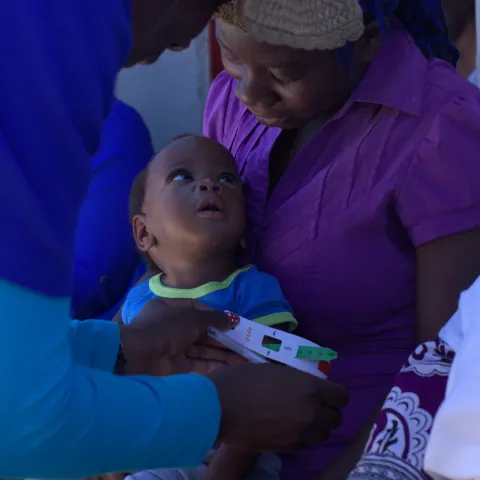
Nearly a quarter of Namibian children under the age of five suffer from stunting. Stunting in Namibia is higher among children of undernourished mothers and among children born with low weight. This highlights the importance of tackling undernutrition across the life cycle, starting early in life, with a focus on the 1,000-days window and continuing into adolescence and pregnancy.
In Namibia, about 87 per cent of infants and young children do not receive a minimum acceptable diet, 1 out of 2 children are not exclusively breastfed in the first six months of life, and only 79 per cent of children do not continue breastfeeding to two years of age.
Solutions
As nutrition is not only an issue of health, it needs to be tackled on many fronts, from addressing food insecurity to improving sanitation and hygiene and promoting breastfeeding.
The Government has adopted a multisectoral approach to food and nutrition security and committed to scaling up treatment of acute malnutrition in health-care facilities.
UNICEF continues to work with the Ministry of Health and Social Services by implementing an integrated service delivery of essential commodities for health, immunization and nutrition; and the adoption of innovations that support outreach to remote or underserved communities