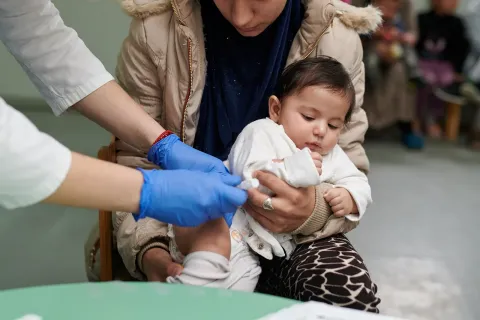
New Year - a time to ensure a family for every child
UNICEF and the “Mladost” Children’s Home in Bijela are calling on citizens, institutions and organizations to join forces in preventing the separation of children from their biological families and in developing foster care
- Crnogorski
- English
- Shqip
BIJELA, 1 JANUARY 2025 – While many welcomed the New Year surrounded by family, warmth, and joy, some children in our country were in an institution for children without parental care, far from the sense of security and belonging that a family provides. Their New Year serves as a reminder that every child’s right to grow up in a family is not just an ideal, but an obligation of the entire society.
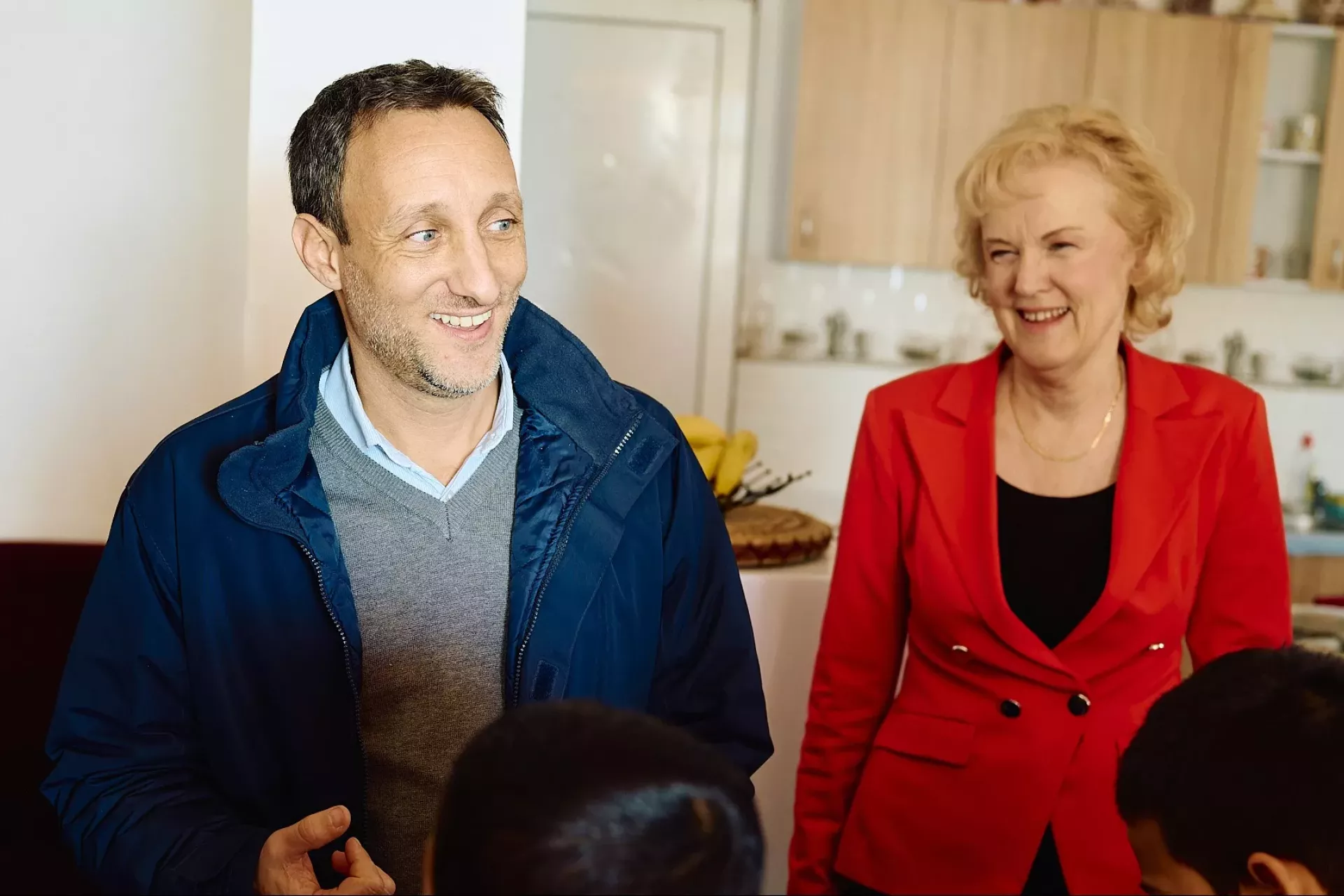
Michele Servadei, UNICEF Representative to Montenegro, recently visited the “Mladost” Children’s Home in Bijela, where nearly 70 children without parental care have been placed.
“I met many children today. Almost half of them have disabilities, and many belong to minorities, such as Roma and Egyptians. Ninety percent of them have parents. I heard numerous, complicated stories about family crises and abandonment. However, solutions always exist. Placing children in institutions should be the last and a very temporary solution. Many of the children I met have been here for many years. That is unacceptable,” Servadei said.
UNICEF is advocating for three key things to ensure that every child in Montenegro grows up in a safe family environment.
“First, we need to prioritize deinstitutionalization as the highest political priority. This requires strategies that need to be supported, as well as budgets for their implementation. Second, we must ensure that social workers are closer to families during crises, to prevent the separation of children from their families. Third, when it is not in the best interest of the child to stay with the biological family or relatives, we must provide foster care through foster care centres or adoption,” Servadei emphasized.
Marela Savic, Director of the “Mladost” Children’s Home in Bijela, identifies a lack of human resources as the key challenge for the entire system of social and child protection, as well as a lack of support services for families in local communities, particularly for those with children with disabilities. The increase in the number of these children, as well as of those who have experienced domestic violence or who have mental health issues, highlights the urgent need for greater investments in human resources, particularly social workers, and in adequate support services for children, young people and families across the country.
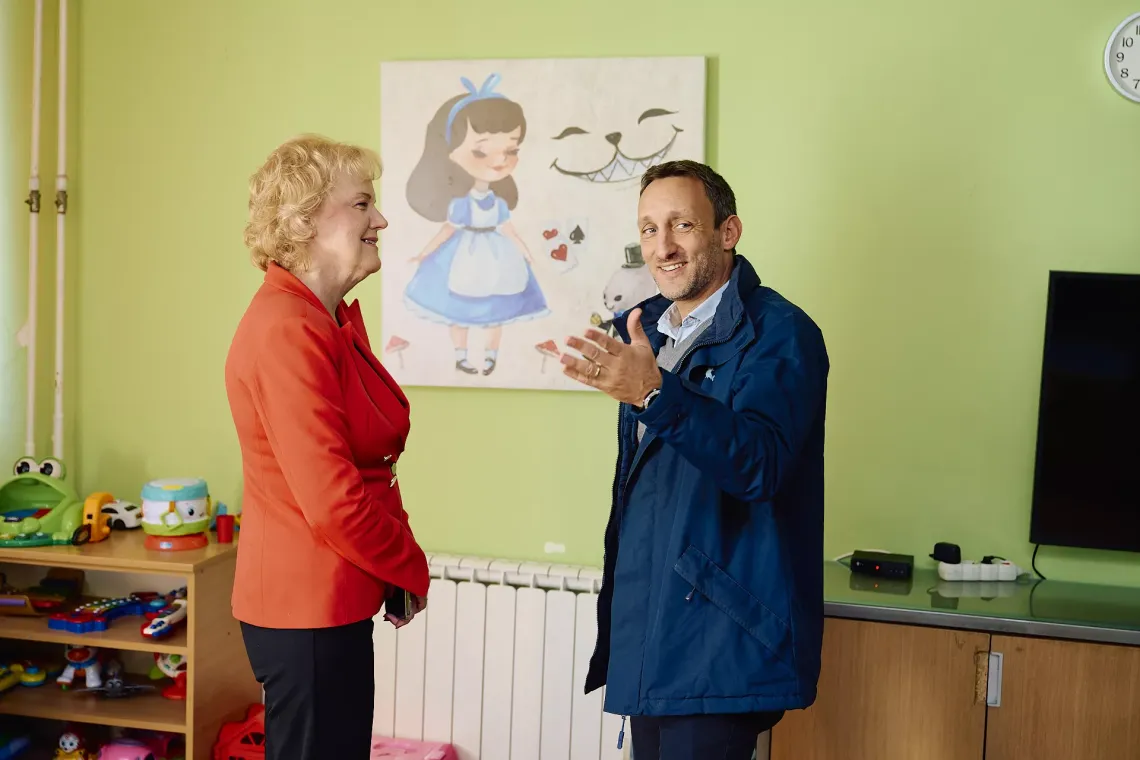
“First and foremost, we need to focus on foster care, which is being addressed through plans to open a Foster Care Centre. I believe this centre will significantly contribute to preventing the institutionalization of children. Also, we need to invest in working with biological families in order to provide support to those families,” Savic explained.
Her primary recommendation is to urgently increase the number of social workers and professionals working with children and families in crisis.
“As for the recommendations − provided that centres for social welfare have sufficient human resources, case managers or guardians should be changed less frequently, because children get attached to people. It is important to children that the person or guardian who was previously in charge is there for them again. I know that colleagues in the centres for social welfare cannot always ensure this for various reasons, primarily due to a lack of professional staff. That issue troubles all of us in the system,” Savic said.
She is calling for better cooperation between the systems of child and social protection, education, healthcare and justice.
“I believe that, for every child entering this institution, it is evident that the parents cannot take care of them, that the parents’ capacities are not at the expected and required level, and this should be identified within the system, at least by limiting parental rights. This limitation has its duration and can, of course, end. Therefore, as a system, I think we need to be more efficient − and when I say ‘system’, I also mean the judicial system, as we know that these proceedings take quite a long time,” Savic added.
Regarding the healthcare system, she points to the urgent need for support from the recently opened mental health clinic for children in Podgorica, which has not yet begun working.
“The clinic is open, but according to the information we have, it has not yet received its first patients. It would be significant for colleagues in the healthcare system to find a way for this hospital department to start admitting patients, because the needs are quite significant. I am not only referring to the needs of the children residing in this institution, but also to the needs of Montenegro’s society, as we are witnessing increasing mental health problems among the youngest ones. This obliges all of us to do more and do it better,” Savic stated.
As we celebrate the New Year and open doors to new beginnings, it is essential to remember those most in need of support – children spending the holidays without a family. UNICEF and the “Mladost” Children’s Home in Bijela are calling on citizens, institutions and organizations to contribute to the development of foster care, ensuring that every child feels the warmth and security of a family home. Let 2025 become a year of positive changes for every child in Montenegro.