Child marriage – a violation of human rights
UNICEF is calling for stronger action to end child marriage and ensure quality education for all girls

- Crnogorski
- English
- Shqip
PODGORICA, 7 March 2025 – On International Women’s Day, UNICEF is calling on policymakers, educators and communities to take stronger action to end child marriage and ensure quality education for all girls. Every child has the right to grow up safe, educated and free to choose their future.
Child marriage is a serious violation of children’s rights, while in Montenegro it remains a serious issue, disproportionately affecting girls from the Roma and Egyptian communities. According to the MONSTAT and UNICEF Multiple Indicator Cluster Survey (MICS) from 2018, over one-third of Roma and Egyptian girls aged 15 to 19 were already married or living with a partner. Research consistently shows that education is one of the most powerful tools for preventing child marriage.
“Keeping girls in school is key to ending child marriage. Every additional year of education significantly lowers the risk of early marriage, giving girls a future of choice and opportunity,” UNICEF Montenegro Representative Michele Servadei said.
Data confirms this: 59% of Roma and Egyptian women with little or no formal education get married before the age of 18. However, among those who complete secondary education, this number drops to 25%.
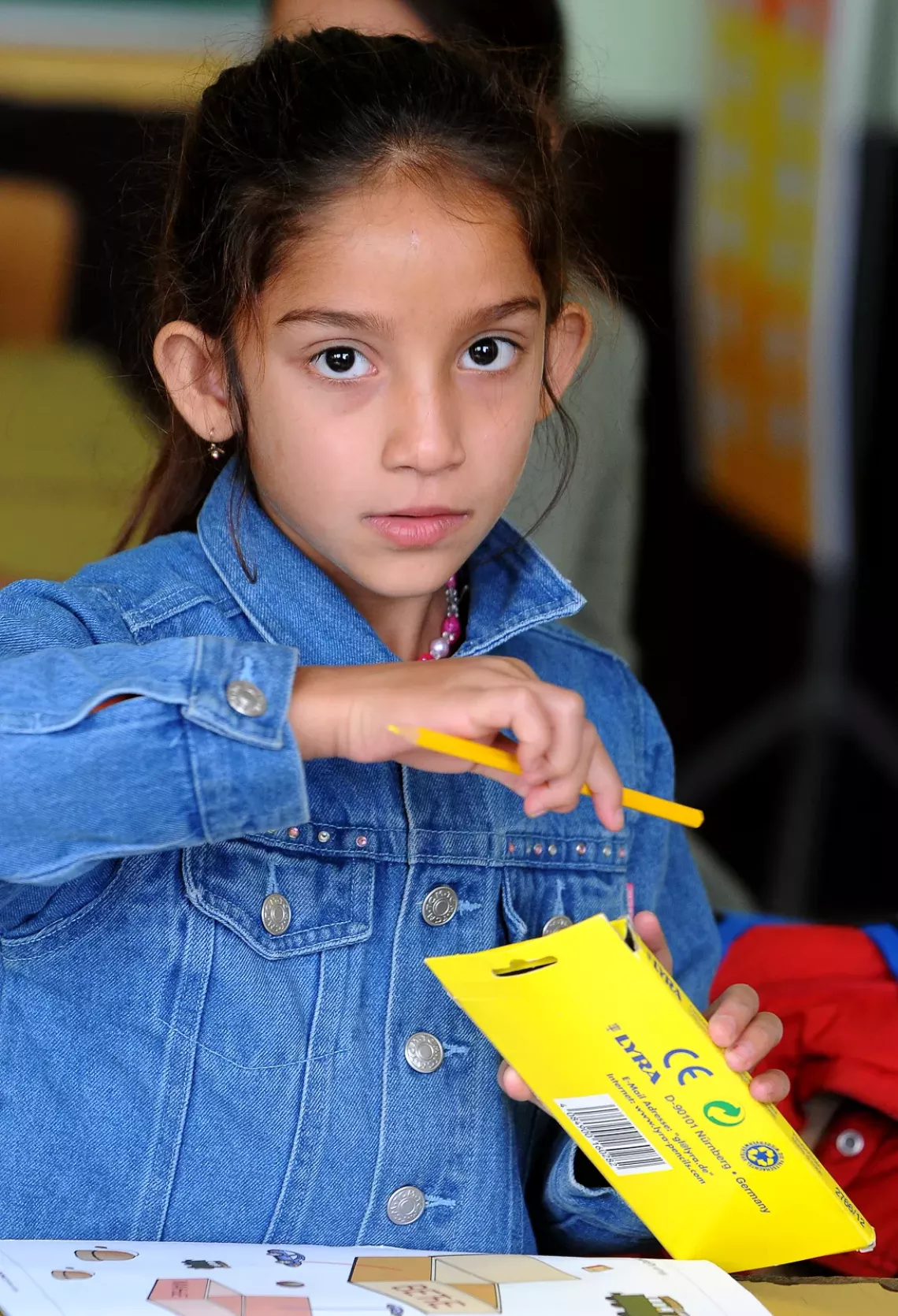
To combat child marriage, UNICEF is strengthening the community and school support systems. With the support of UNICEF, a module within the education information system has been developed, helping identify children at risk of dropping out and enabling the triggering of immediate action from teachers and school management. Currently, UNICEF and the EU are supporting the training of educators in 11 municipalities that have high numbers of Roma and Egyptian students, to use this system effectively.
Also, expansion of the role of Roma mediators in education is essential. Recent regulatory changes will allow more Roma mediators to work in primary and preschool education, ensuring better communication between families and schools, and reducing dropout rates.
Ending child marriage requires a multisectoral approach that tackles the root causes, including child poverty. Expansion of social protection measures and of parenting and outreach programmes is essential for supporting Roma and Egyptian families and reducing the financial pressures that contribute to early marriage.
Stronger legal protections are also needed. Despite UN recommendations and efforts by the Women’s Club of Montenegro’s National Parliament, the country has yet to raise the minimum legal age for marriage to 18. Aligning national laws with international child rights standards is critical to protect all children from early and forced marriage.