Transforming dietary practices of nomadic communities
UNICEF is improving food culture for children and parents.
- English
- Mongolian
In Mongolia, 27% of children under the age of five are anemic, 21% suffer from iron deficiency, 70% have insufficient levels of vitamin A, and a staggering 90% lack adequate levels of vitamin D.
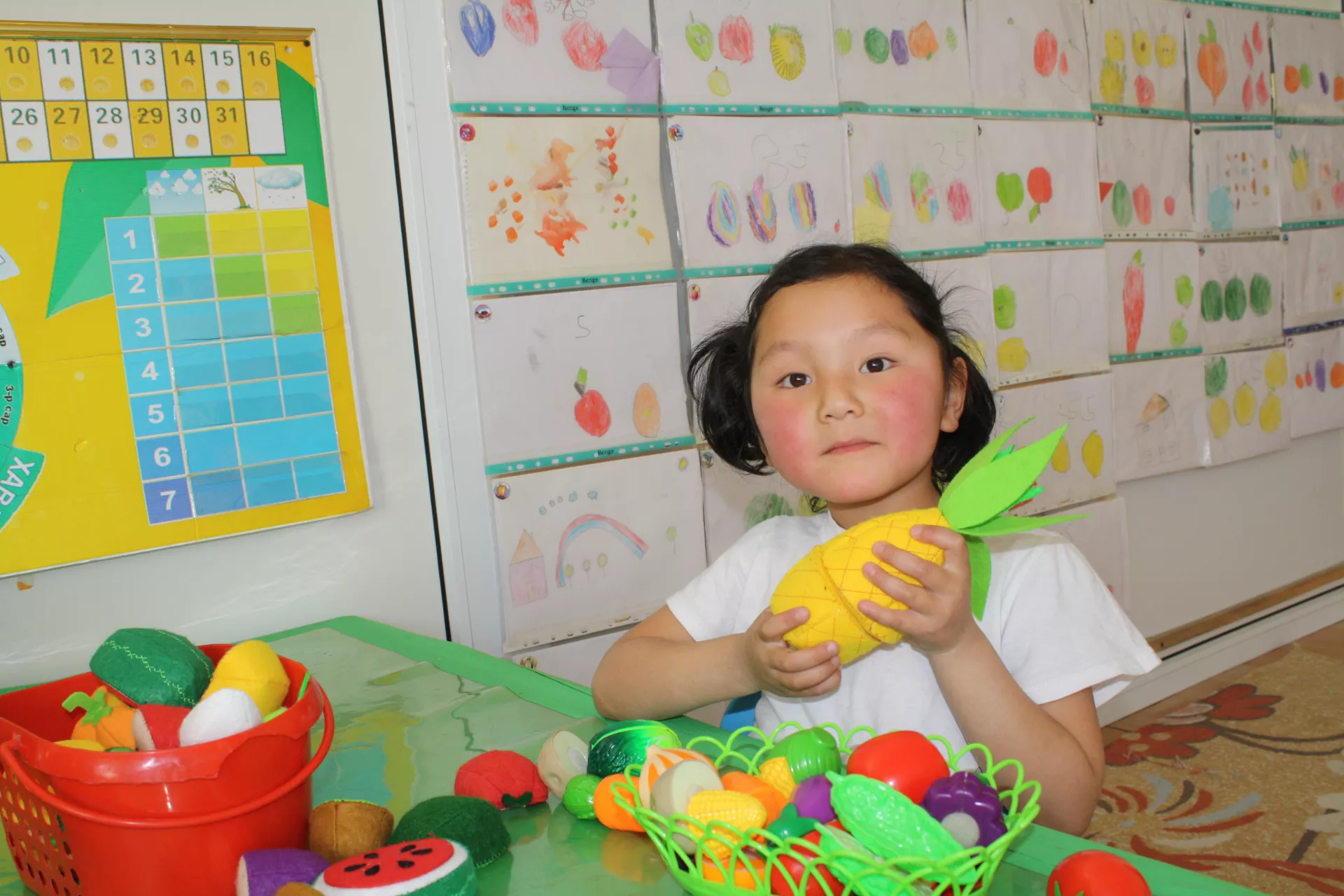
To the question “What’s your favorite food?”, Adilbileg, a 5-year-old girl, answers, “Formerly, it was noodle soup. But now, it’s different fruits.…”
She is enrolled at kindergarten No.6 in the center of Bayankhongor province, which is located over 600 km from the capital city Ulaanbaatar. During all seasons except summer, she stays at her grandmother’s place along with her brothers and sisters. She goes home to help her parents with the livestock herding on her summer holiday.
As her parents are herders, they stay busy tending their livestock, engaging in nomadic pastoralism, and overcoming all the challenges of harsh climatic conditions. They believe, however, that their children must obtain a good education and send them to the schools and kindergartens located in the provincial center, located 72 km from their home. This is the general picture of all families who make their living by raising livestock in any rural area of Mongolia.
During the three of the four seasons of a year, both husband and wife stay busy, spending most of their time outdoors rather than indoors and there is no way for them to prepare, cook, or store a variety of dishes in a comfortable kitchen, which is just not something available. There are only a few dishes that they can make. The main ingredient is meat, accompanied by either dough, rice, or Mongolian homemade noodles, high in carbs, those that you can keep for a long. Children in this setting usually grow up eating boortsog, a doughnut deep fried in oil, and Mongolian homemade noodle soup.
Consequently, the intake of vitamins and minerals among children in Mongolia is alarmingly low. According to National Nutrition Survey 2017 data, 27% of children under the age of five are anemic, 21% suffer from iron deficiency, 70% have insufficient levels of vitamin A, and a staggering 90% lack adequate levels of vitamin D.
Therefore, the current state of nutrition of Mongolian children is a concern. We cannot change food consumption in every family. But we are making a difference at least in a certain context by bringing knowledge on healthy eating habits to the kindergarten food and kitchen.
If the situation persists in Mongolia, we will have more and more children with malnutrition, children who are unhealthy or prone to sickness. Chronic malnutrition is prevalent among children under 5 from poor households (13.8%), Kazakh ethnic group (17.6%), and in the Western region (17%). The prevalence of overweight and obesity among children under 5 remained high over the last 15 years at 10.5%. Therefore, it is important to change the situation without delay.
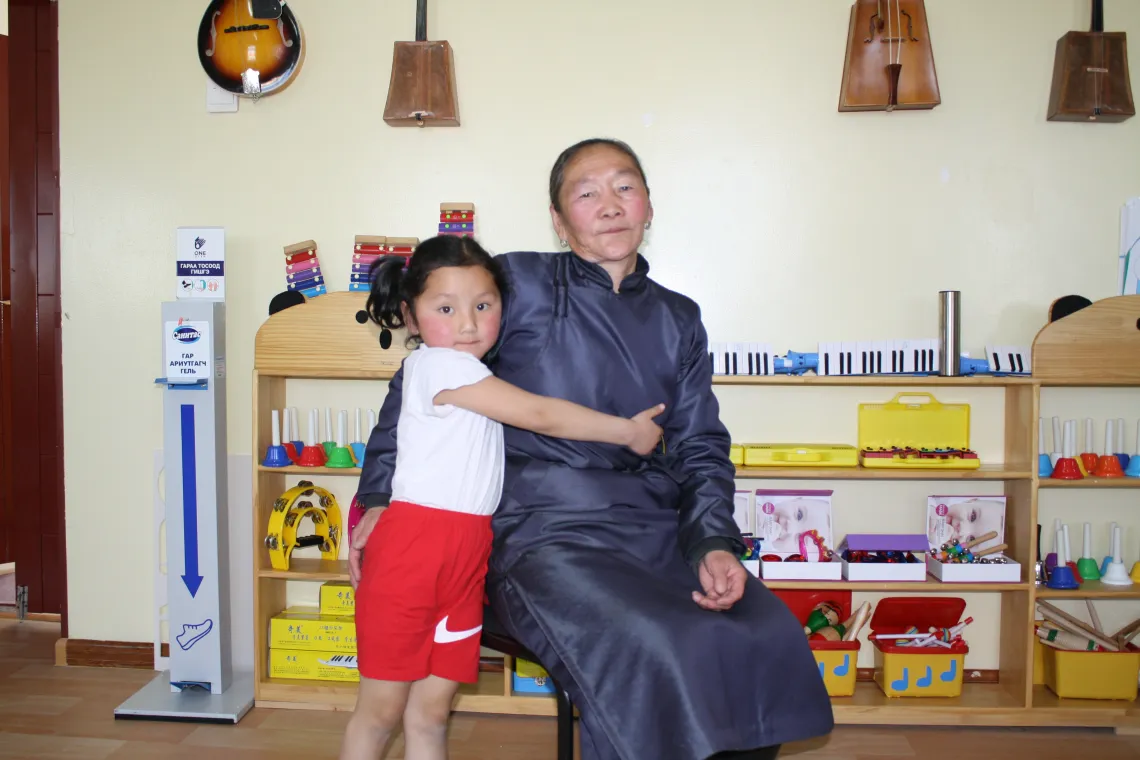
Adilbileg attends kindergarten while staying at her grandmother’s place. At the end of the day at home, she used to eat the noodle soup her grandmother usually cooked for them. In 2021, new kitchen equipment and a refrigerator where they can store fresh produce, fruits, and berries were installed at the kindergarten’s food production area with the funding of UNICEF making it possible for them to cook and serve the children a variety of safe, healthy dishes. Thus, the children who grew up in rural Mongolia started enjoying a variety of dishes that they had never seen before. Until 2023, UNICEF supported the modeling of food services in 6 kindergartens in selected 4 provinces for further scale-up that benefitted 1800 children.
In addition, children and their parents are now learning how to cook diverse nutritious food and eat more vegetables, fruits, and dairy products.
Adilbileg’s grandmother also attended the training, “Eating healthy and keeping active” offered by the kindergarten to the parents and caregivers of the children, where she learned how to cook meals and creamy soups and prepare snacks and compotes using different types of vegetables and fruits. As a result, she can now enjoy delicious meals and snacks at home, too. By 2023, more than 3,000 parents attended training funded by the UNICEF Canada National Committee.
It is easy to tell the people and children living in rural areas to eat healthily. But we can only see the real difference and good results by teaching them how to diversify their diet by growing, preserving, and processing their own produce, or how to cook a variety of food dishes at home using commercially available vegetables and fruits, making them understand the importance of a diverse diet, and making a diverse diet a habit in their daily life.
Nutritious food for every child!