Nine out of ten parents and caregivers in the Republic of Moldova vaccinate their children on time
The results of the study on behaviour insights research on drivers influencing childhood immunization-related behaviours

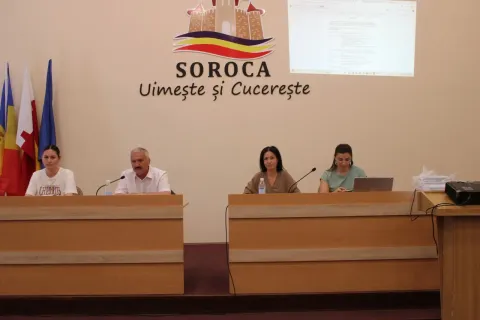
Chișinău, September 18, 2024 – Over 88% of parents and caregivers vaccinated their children on time according to the immunization schedule, 7.6% refused one or more mandatory vaccines, while 2.2% did not vaccinate their children at all. These are the findings of the Study on Behaviour Insights Research on Drivers Influencing Childhood Immunization-Related Behaviours in the Republic of Moldova, conducted by the Ministry of Health, the National Public Health Agency, and UNICEF. Opinion leaders, health experts, and community members gathered at a public event to analyze and discuss challenges and solutions related to vaccination.
According to the data, most parents (74.4%) have a positive attitude toward vaccination, and 81.1% believe in the effectiveness of vaccines, with 86% following their doctor's recommendations. More than two-thirds of parents feel they received the necessary information about vaccination, but 24.6% believe that a lack of information was an obstacle in their decision-making process. Additionally, parents and caregivers trust the recommendations of pediatricians, family doctors, and those provided directly by the Ministry of Health the most.
In contrast, the church (8.3%), the internet (14.9%), and the media (8.3%) are less trusted sources of information when it comes to vaccination.
The greatest influence on parents decisions to vaccinate their children comes from family members (52.1%), doctors (62.1%), and community members (30.9%). Parental responsibility regarding vaccination is high, with 71.2% fearing that not vaccinating their child would harm them.
As for healthcare workers, 80.5% reported always adhering to the vaccination schedule, and 78.7% stated they consistently convince parents to vaccinate their children. However, 17.3% of healthcare workers still recommend parents administer the vaccine later than the recommended age. Healthcare workers also showed high confidence in the information provided by health authorities and in continuing medical education programs when it comes to vaccination.
The study's conclusions demonstrate that concerns about vaccine safety and effectiveness were among the most influential psychological factors affecting vaccination behavior among parents and caregivers. Hesitant parents were more likely to hold alternative beliefs and views about child health. The social influence of family members significantly impacts parents’/caregivers acceptance of vaccination, with family members being among the most trusted and frequently used sources of information.
During a panel discussion moderated by Nicolae Jelamschi, Director of the National Public Health Agency, journalists, doctors, and civil society members addressed solutions for changing vaccination behaviors, offering recommendations and proposals to eliminate barriers and combat stereotypes in this field. All discussed solutions will be included in a Long-Term Social and Behavioral Change Plan for Immunization, integrated into the National Immunization Program 2023-2027.
The study results can be consulted and downloaded here[1].
The study was conducted through the collaborative research network of the Euro Health Group International Agency, UNICEF Moldova Country Office, and the CIVIS team, under the supervision of the UNICEF Regional Office for Europe and Central Asia and the National Agency for Public Health.
The survey included 1,053 parents/caregivers of children under the age of 5 living in the Republic of Moldova and 1,023 healthcare workers, and was carried out between October 28, 2023, and February 24, 2024.
Quotes:
„Thanks to the national immunization program, we have been able to prevent more than 300 deaths among children. However, although we are seeing positive results, the COVID-19 pandemic contributed to a drop in the immunization rate from 92% to 87% in the Republic of Moldova. So, there is still work to be done. We have great success with some vaccines, but less so with others. As part of the National Immunization Program, we have set out several activities necessary to achieve that target of over 95%,” said Angela Paraschiv, State Secretary of the Ministry of Health.
„Unfortunately, approximately 931 children in Europe and Central Asia missed total or partial immunization between 2019-2021. We are witnessing the re-emergence of diseases we had forgotten about, such as polio and measles. Around 36% of measles cases from January to August 2024 were recorded in the European region. It is our duty to do everything we can to prevent these cases, by involving and convincing the population to accept vaccination. The study data will help us identify the necessary interventions to increase trust and public demand for vaccination,” added Angela Capcelea, Health Specialist at UNICEF.
Daniela Demișcan, Immunization Programs Coordinator at the WHO Moldova Office, added: „The WHO encourages countries and governments to prioritize vaccination as the best investment in public health. Our common goal is to save lives, not just to provide vaccines. Delivering vaccines requires enormous effort, but to build trust in these vaccines, the involvement of all actors is needed.”
Media contacts
About UNICEF
UNICEF promotes the rights and wellbeing of every child, in everything we do. Together with our partners, we work in 190 countries and territories to translate that commitment into practical action, focusing special effort on reaching the most vulnerable and excluded children, to the benefit of all children, everywhere.
For more information about UNICEF and its work for children, visit www.unicef.org
Follow UNICEF on Twitter and Facebook