

Every child has access to healthcare in the Republic of Moldova
Refugees from Ukraine are entitled to primary, emergency inpatient, outpatient
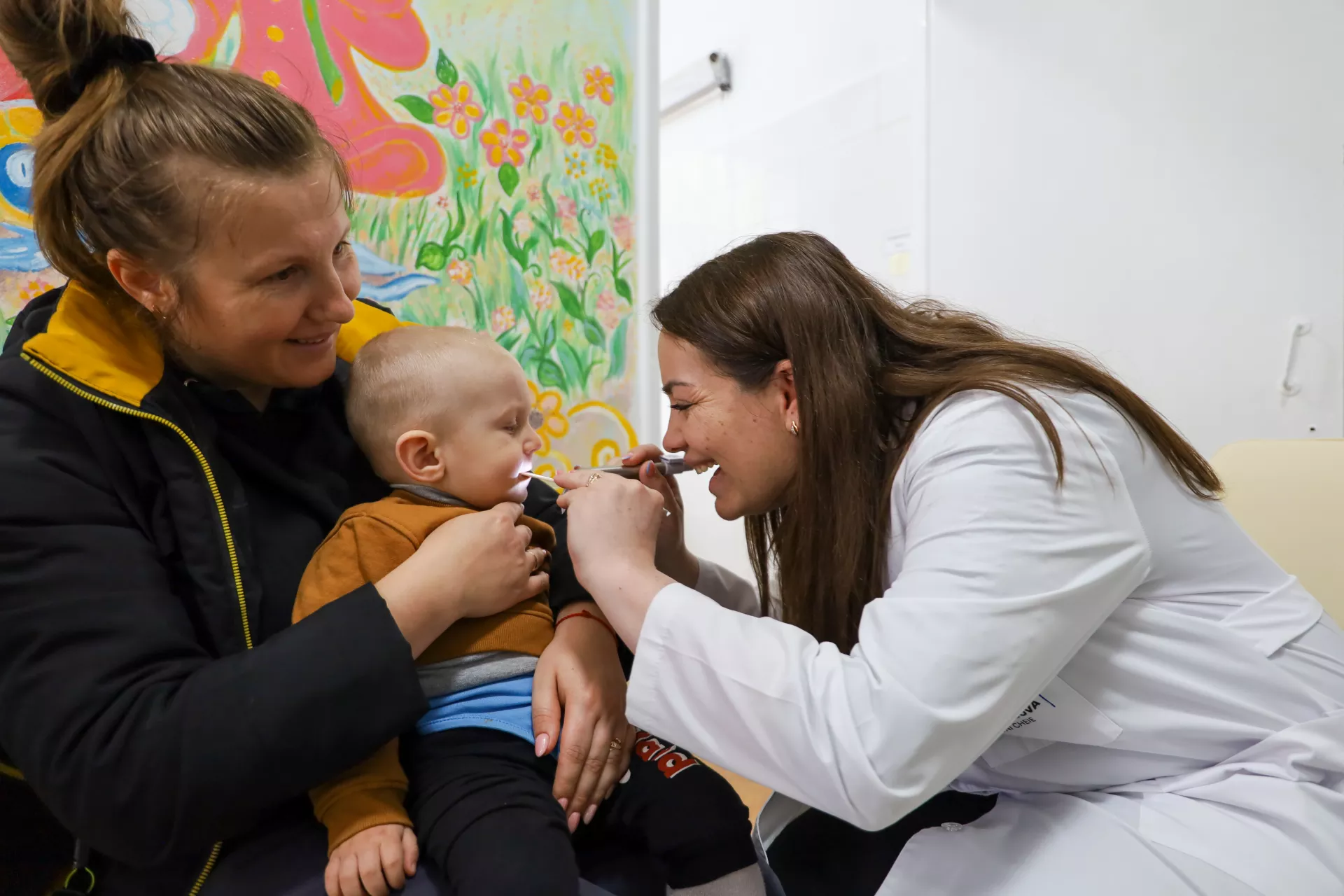
Access to Medical Services for Displaced Persons from Ukraine
Refugees from Ukraine who have temporary protection or are in the process of obtaining it are entitled to preliminary, emergency, primary, and specialized outpatient medical care free of charge in medical institutions of the Republic of Moldova, in accordance with the list of medical services established by the Ministry of Health.
Access to Medical Services in the Republic of Moldova
Services guaranteed to beneficiaries of temporary protection at the level of inpatient medical care:
- At the level of inpatient medical care, beneficiaries of temporary protection have access to medical services for severe medical and surgical conditions, including levels II and III, as specified in Annex No. 1 to the Unified Compulsory Health Insurance Program, approved by Government Decision No. 1387/2007.
Hospitalization is provided when all possibilities for outpatient medical care have been exhausted, or the patient's health condition requires round-the-clock monitoring. Emergency hospitalization is carried out without delay if failure to provide timely inpatient medical care poses a threat to the patient's life, may lead to serious health consequences, or poses a risk to public health. The need for hospitalization in each case is determined by specialist doctors who assess the patient's condition. - In an emergency, a person can be transported by ambulance or the AVIASAN service, seek care independently, or be referred to a specialist doctor following a consultation at another level of medical care.
- Services for beneficiaries of temporary protection are provided by state inpatient medical care providers at the district/municipal/republican levels, as well as by private providers who have contracts under the interventional cardiology program (managing patient flows with acute coronary syndrome).
Medical Institutions Provide a Wide Range of Emergency Medical Services to Beneficiaries of Temporary Protection. Medical institutions offer a broad spectrum of emergency medical services for beneficiaries of temporary protection with severe illnesses or injuries. The scope of emergency care may vary depending on the capabilities and resources of each hospital but generally includes the following:
Assessment and Triage: Upon arrival at the hospital, patients undergo an initial assessment and triage in the emergency department/admission unit to determine the severity of their condition. This helps prioritize medical assistance based on the urgency of the problem.
Stabilization: For patients with severe illnesses or injuries, the primary focus is on stabilizing their vital parameters. This may involve administering medications or implementing measures to maintain critical functions such as breathing and circulation.
Treatment of Severe Illnesses: Hospitals manage a wide range of severe illnesses, including heart attacks, strokes, respiratory failure, severe pneumonia, myocardial infarctions, and other critical conditions.
Emergency Surgical Care: When necessary, hospitals can perform emergency surgeries to address injuries, appendicitis, bowel obstruction, internal bleeding, and other conditions requiring immediate surgical intervention.
Radiology and Medical Imaging: Hospitals are equipped with diagnostic imaging tools such as X-rays, computed tomography (CT), ultrasound (US), and magnetic resonance imaging (MRI) to diagnose and monitor urgent medical conditions.
Laboratory Tests: Medical institutions can conduct blood, urine, and other laboratory tests to support diagnosis and monitor disease progression.
Injury Treatment: Patients with injuries receive care for fractures, sprains, dislocations, burns, open wounds, and other types of trauma.
Medical Assistance for Refugees from Ukraine
Foreign nationals or stateless persons arriving from the war zone in Ukraine in exceptional circumstances, who hold or are in the process of obtaining temporary protection status, are entitled to:
- Preliminary Emergency Medical Assistance
In case of a medical emergency, call 112. Preliminary medical assistance is provided at the site of the incident or illness, the temporary place of residence, during transportation, and before hospitalization in a medical facility.
- Primary Medical Assistance
A full range of medical services, including preventive measures, vaccination, therapeutic and supportive counseling, provided by family doctors and their teams (including counseling on contraception and provision of contraceptives, antenatal care, monitoring during pregnancy, postpartum care for mothers and newborns, youth-friendly health services, preventive gynecological examinations, including cytological testing, and more).
- Inpatient Medical Care
This includes treatment for urgent medical and surgical conditions, including gynecological and obstetric emergencies (such as bleeding, inflammatory diseases of reproductive organs, etc.), as well as emergencies during pregnancy, childbirth, and the postpartum period.
- Emergency Dental Care
- Oncological Medical Services
These include diagnostic and therapeutic services for cancer patients.
- Dialysis Services
Provided on both an outpatient and inpatient basis.
- Mental Health and Psychosocial Support Services
- Free Medical Examinations for Public Health Reasons
These include prevention and control of infectious diseases such as sexually transmitted infections (including HIV), tuberculosis, COVID-19, and viral hepatitis B and C.
Emergency Hospitalization is carried out unconditionally in cases where the lack of timely medical assistance in a hospital setting poses a threat to the life of the patient and/or others or could have serious consequences for the patient’s health and/or public health. The determination of an emergency situation in each specific case is made by specialists who examine the patient in the admission department and assess the patient’s condition based on the applicable regulations of the Ministry of Health.
Primary Medical Care Services for Refugees from Ukraine
A family doctor serves as the first point of contact for patients within the healthcare system. Primary medical care services are based on continuous interaction between the doctor and the person registered with them. Individuals arriving from the war zone in Ukraine with temporary protection status or those in the process of obtaining it, who seek medical care for the first time, must be registered with family doctors in the compulsory health insurance system.
For individuals arriving from the war zone in Ukraine with temporary protection status or those intending to obtain it, family doctors provide medical services in accordance with the Unified Compulsory Health Insurance Program.
The primary medical care package includes:
- Therapeutic Medical Services
- Preventive and Health Promotion Services
(Including addressing risk factors, conducting organized screenings for disease prevention such as cervical and breast cancer screenings, etc.) - Medical Services in Emergency Situations
- Additional Services
(Such as issuing medical leave certificates).
Vaccination
Vaccines provide protection and safeguard children and those around them from many serious infectious diseases, such as polio, measles, diphtheria, and tetanus. Diseases that can be prevented by vaccination may lead to severe complications and even death, making vaccination the best and safest way to protect your health.
All vaccines currently available in the Republic of Moldova are safe and effective. Millions of doses have been administered, and the vaccines have been approved based on clinical trial results, with their safety continuously monitored.
It is crucial to vaccinate children and adults with all recommended vaccines and doses outlined in the host country’s national immunization program. You and your family, including your children, can receive catch-up vaccinations if you are not fully vaccinated or are unsure of your vaccination status and lack a vaccination record. For more information, contact a medical center or your family doctor.
It is essential not to delay the vaccination of newborns.
Adults should also remember the importance of COVID-19 vaccination. If you or your loved ones are not fully vaccinated against COVID-19, contact your family doctor.
Administering multiple vaccines on the same day is a common international practice. The use of multivalent vaccines reduces the number of injections and provides protection against several infections.
Additional tests (such as blood, urine, or immune profiling) are not required before vaccination.
If a child has a chronic condition (e.g., asthma or diabetes), this is not a contraindication to vaccination. On the contrary, such children are at a higher risk of severe infections that can be prevented through vaccination.
You can view the vaccination schedule in the Republic of Moldova at vaccineaza.md.
Patients with Chronic Diseases
Scheduled consultations for refugees from Ukraine with temporary protection status who have chronic diseases are conducted by appointment. These consultations are intended to continue monitoring the course of the disease and its complications. Patients with chronic conditions can seek advice and care from their family doctor.
The family doctor is authorized to issue and manage the following medical documents:
- Issuance and management of medical leave certificates
- Issuance and management of medical health certificates, including certificates for marriage, child care, general medical statements, and death certificates
Consultations for People Living
With HIV
The life and health of people living with HIV depend on antiretroviral therapy (ART) and medications that control HIV infection. Of the 260,000 people living with HIV in Ukraine, 152,000 were receiving antiretroviral treatment. In Moldova, you can receive the necessary medical assistance regardless of your temporary protection status.
If you are living with HIV, you must be registered with a specialist to receive antiretroviral therapy at the Dermatology and Communicable Diseases Hospital in Chișinău. You will continue receiving the antiretroviral treatment that you previously took in Ukraine. Additionally, you will be able to undergo treatment monitoring through relevant blood tests.
You must schedule an appointment with a specialist at the Dermatology and Communicable Diseases Hospital, located at:
Chișinău, Codru town, 5/1 Costiujenskaia Street.
For more information, call the dispensary at: 0 22 79 41 19.
Medical Assistance for Tuberculosis
In Moldova, you can receive medical assistance for anti-tuberculosis treatment, regardless of your temporary protection status.
You need to be registered with a family doctor and a tuberculosis phthisiopulmonologist to receive treatment. You will continue receiving the medication you were taking previously in Ukraine. Additionally, you will be able to undergo treatment monitoring through relevant tests.
For more detailed information, contact the "Kiril Draganiuc" Phthisiopulmonology Institute at phone number 022 57 22 00.
Mental Health Support and Psychosocial Assistance
War can cause emotional tension that may develop into traumatic stress, exacerbated by acts of violence, including sexual violence, which often occur in humanitarian contexts. It is important to prevent and treat this within the first three months after traumatic events. In Moldova, mental health and psychosocial support services are available at any stage of mental disorders, including acute crises, recovery, maintenance, or social integration.
In Moldova, 40 Community Mental Health Centers provide the following services free of charge:
- Psychiatric consultations
- Psychological counseling
- Psychosocial intervention
- Pharmacological treatment (medications prescribed by psychiatrists)
- Activities in day centers (mental health education sessions, creative workshops, reading clubs, and other activities offered by the Mental Health Centers)
- Home visits by specialists from Mental Health Centers, including at least two specialists
- Support groups for clients
- Referrals to psychiatric hospitals
You can find a list of Public/Community Mental Health Centers here: www.sanatate-mintala.md, www.cumtesimtiazi.md
Where can you get mental health assistance in the Republic of Moldova?
Medical Centers
In Moldova, general practitioners are qualified to diagnose and prescribe treatment for depression and anxiety. If you are experiencing symptoms of these mental health issues, seek assistance at the nearest medical center or family doctor center (polyclinic).
Public/Community Mental Health Centers
A Public/Community Mental Health Center is a state-run medical and social service that provides medical care and psychosocial rehabilitation for people with mental health problems, support, and mediation in family and social relationships. Currently, 40 centers are operating across all districts and cities of the country.
A list of center contacts is available here: www.sanatate-mintala.md, www.cumtesimtiazi.md
People of all ages experiencing symptoms of mental and behavioral disorders or other mental health issues can access help at Public/Community Mental Health Centers. To receive assistance, please register for a consultation by phone at the nearest Public/Community Mental Health Center.
Psychiatric Hospitals
Beneficiaries of Temporary Protection receive free treatment at psychiatric hospitals in the Republic of Moldova in case of psychiatric emergencies and in accordance with the hospitalization criteria established by regulatory acts.
Sexual and Reproductive Health Assistance
Women and young people with temporary protection status can access the following services free of charge in the healthcare system of the Republic of Moldova:
- Antenatal care with monitoring of pregnant women during pregnancy
- Postpartum care for mothers and newborns
- Contraceptive consultations and provision of contraceptives
- Clinical management of rape cases
- Preventive gynecological examinations, including cytological tests
- Youth-friendly healthcare services
- Obstetric (critical conditions during pregnancy, childbirth, and complications after childbirth) and gynecological emergency cases (including bleeding, inflammatory diseases of the genital organs, etc.).