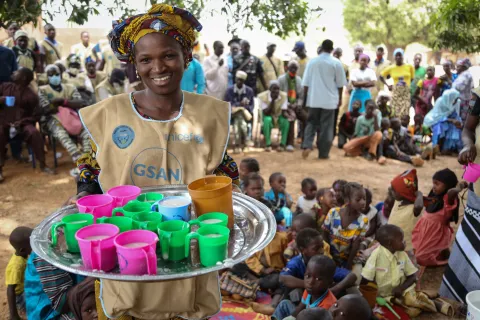
In Timbuktu a 2-kilogram increase is another victory against malnutrition.
European Union humanitarian aid is supporting the fight against severe acute malnutrition in Mali.

- Français
- English
This morning, Walima brought her seven-month-old granddaughter Bahamatou, for her third consultation with the Severe Malnutrition Recovery Ambulatory Unit (URENAS) at Bellafarendi Community Health Centre in Timbuktu. The little girl had been under observation there for several weeks. She suffers from severe acute malnutrition.
‘Bahamatou is an orphan. Her mother died a few hours after she was born. I've been looking after her ever since. She gained very little weight. I was worried. It was a member of the Support Group for Nutrition Activities who told me to come here,’ said Walima, Bahamatou’s grandmother. She adds that the little girl was often sick, and the family's meagre resources made her first months of life even more difficult.
When Bahamatou arrived at the malnutrition unit for her first consultation, at age six months and one week, she weighed 4.5 kg. She was immediately given urgent medical and nutritional care. Every month the unit treats on average 95 children suffering from severe acute malnutrition. According to the Malnutrition Severity Analysis (IPC 2023), more than 65,000 cases of global acute malnutrition, including 15,000 severe cases, are expected among children aged 0-59 months in the Timbuktu region in 2024.

Medical care for severely malnourished children includes routine treatment for all children and specialized care for those with medical complications. Nutritionally, the children receive a diet based on therapeutic milk or ready-to-use therapeutic food, depending on the type of treatment.
Bahamatou is now seven months old. After three weeks of treatment and around twenty doses of ready-to-use therapeutic food, the baby girl has gained almost 2 kilograms and now weighs just over 6 kilograms. It's another victory against severe acute malnutrition, another life saved. She leaves the consultation in her grandmother's arms with a week's supply of ready-to-use therapeutic food to continue her treatment.

For UNICEF and its partners, it is important that mothers and caregivers are at the centre of the humanitarian response. They become active players by contributing to the early detection of malnutrition cases. In Mali, 10,040 mothers and caregivers have been trained and equipped to detect and refer cases to health centres, community health sites and mobile clinics. In addition, community actors, in particular the Nutrition Activity Support Groups appointed by the community are trained to act as a bridge between the community and health services with the aim to strengthening the humanitarian response to malnutrition.
Thanks to European Union humanitarian aid, more than 7,800 children in Mali have received emergency treatment for severe acute malnutrition as part of the UNICEF Sahel Nutrition Emergency Response and Community-Based Management of Acute Malnutrition System Strengthening Project.