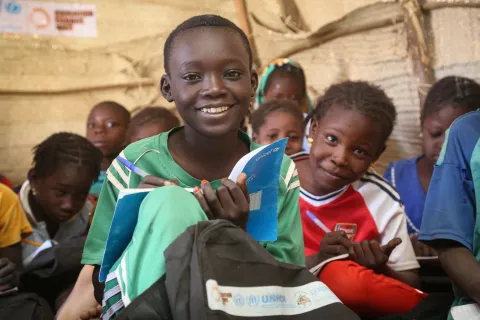
A supportive learning environment and its new model student.
Mahamadou is a model student and is excelling in his new school after his family was displaced due to insecurity.
- Français
- English
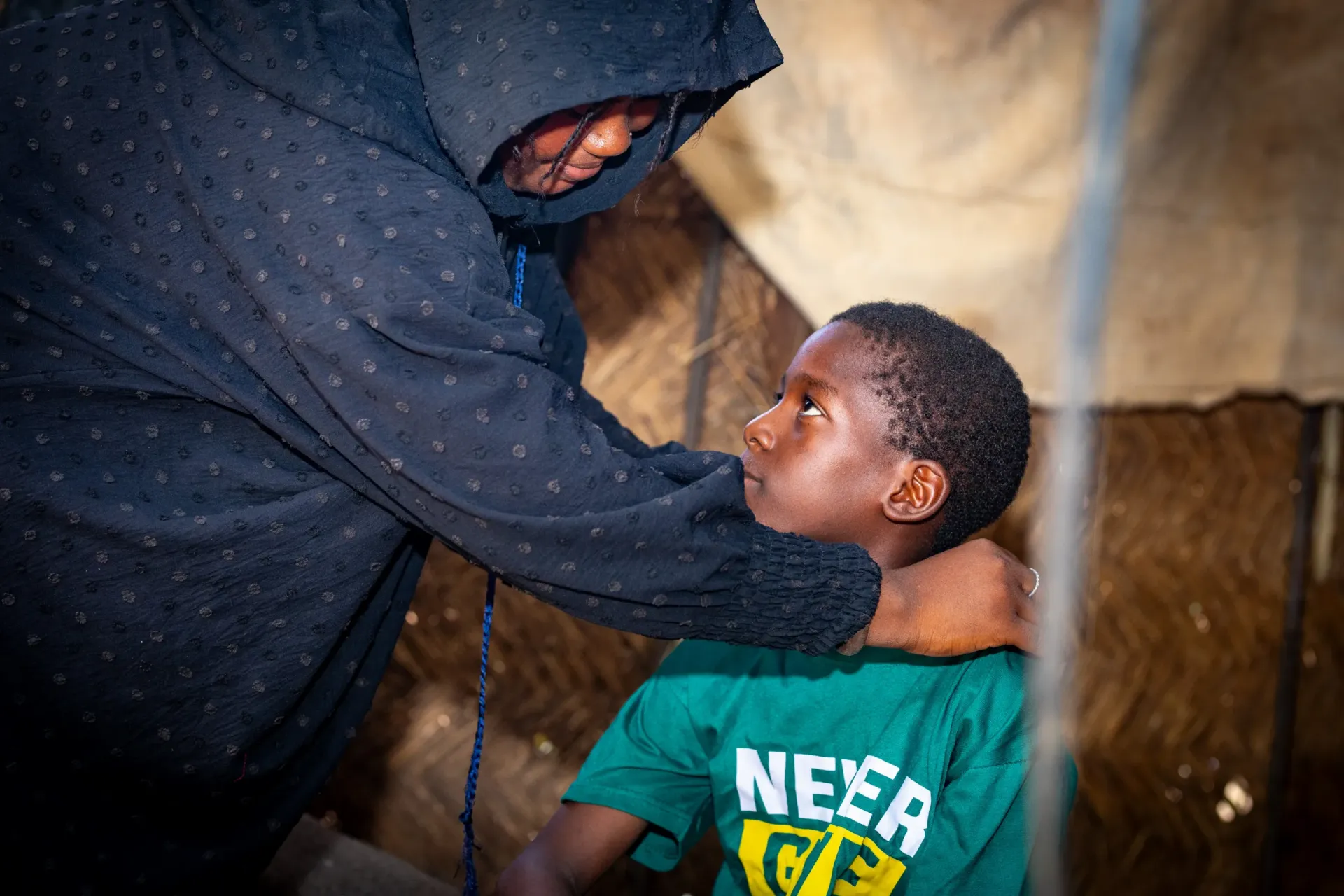
Mahamadou, 10, spent his early years in M’Bèwani, a village located a few kilometers from Markala in Ségou region. Before moving to Markala, Mahamadou attended a Koranic school in M’Bèwani, which is now closed due to insecurity.
“We were constantly under the control of armed groups who often threatened to kidnap my dad because of his work as a marabout [religious leader]. Following these repeated threats, one day, almost the entire village of M’Bèwani moved,” Mahamadou recounts.
Driven from their homes and forced to flee to the town of Markala, in central Mali. His father enrolled Mahamadou and his sister in the nearby public school. This move proved beneficial for Mahamadou, giving him the opportunity to access a more comprehensive and sustainable education.
“Our arrival in Markala was very difficult,” Mahamadou recalls. “It was the start of a difficult time for us, because we had problems with housing and food, and at first I did not go to school.”
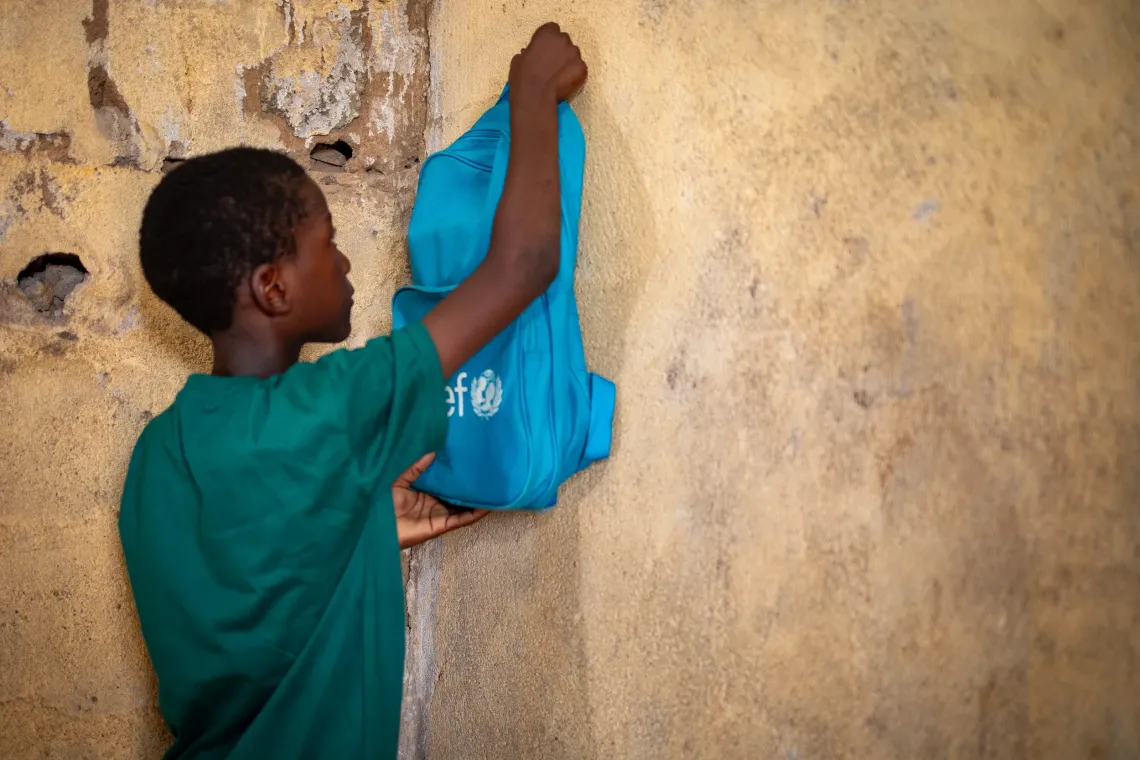
“Before, I was ashamed because I didn’t have all the supplies I needed for school, but now, I’ve been given a brand-new backpack with notebooks, pens, and other supplies,” explains Mahamadou, referring to supplies received as part of UNICEF’s “Safe Schools” project, supported by the Spanish National Committee for UNICEF and implemented by the NGO IEDA Relief.
Mahamadou is now among the top students in his class and has become a role model at his school. He speaks thoughtfully about the impact of this initiative: “All the children are studying in better conditions because they have received a school supply kit, the teachers have teaching kits, and the environment has become much safer.” He hopes that these inspiring initiatives will continue not only at his school, but also at all the other schools that welcome displaced children like him.
Support that brings hope to internally displaced people
In addition to supplies, the project provided several complementary forms of support, including the establishment of student councils in participating schools. School stakeholders also benefited from capacity-building in areas related to crisis situations, such as psychosocial support, mental health, conflict and disaster risk reduction. As a result, the school was able to develop and implement a risk reduction and response plan to which members of the children’s government contributed significantly.
“The support provided by UNICEF and implemented by NGO IEDA Relief has allowed all the children to study in better conditions, because every student received a school kit, the teachers were provided with teaching kits, and the environment has become much safer,” says Mahmadou.
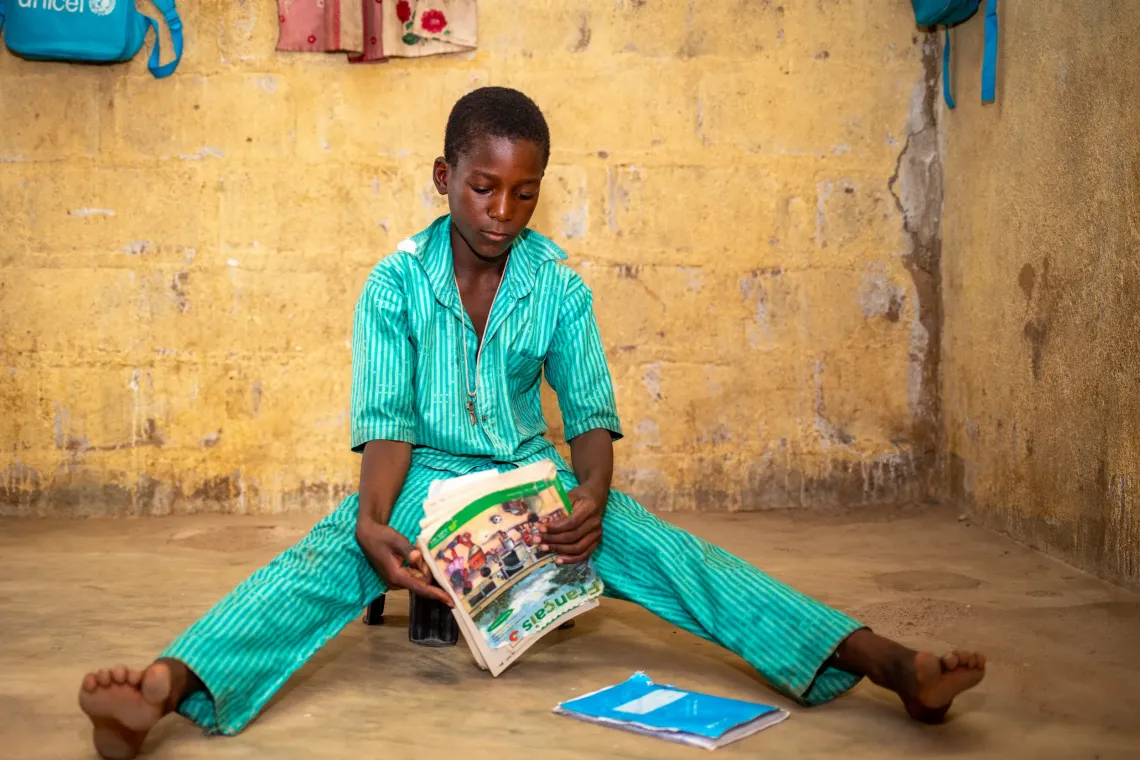
He hopes that these initiatives, made possible with the support of the Spanish National Committee for UNICEF, will continue in all other schools that welcome displaced children, to ensure every child has the right to a quality education.
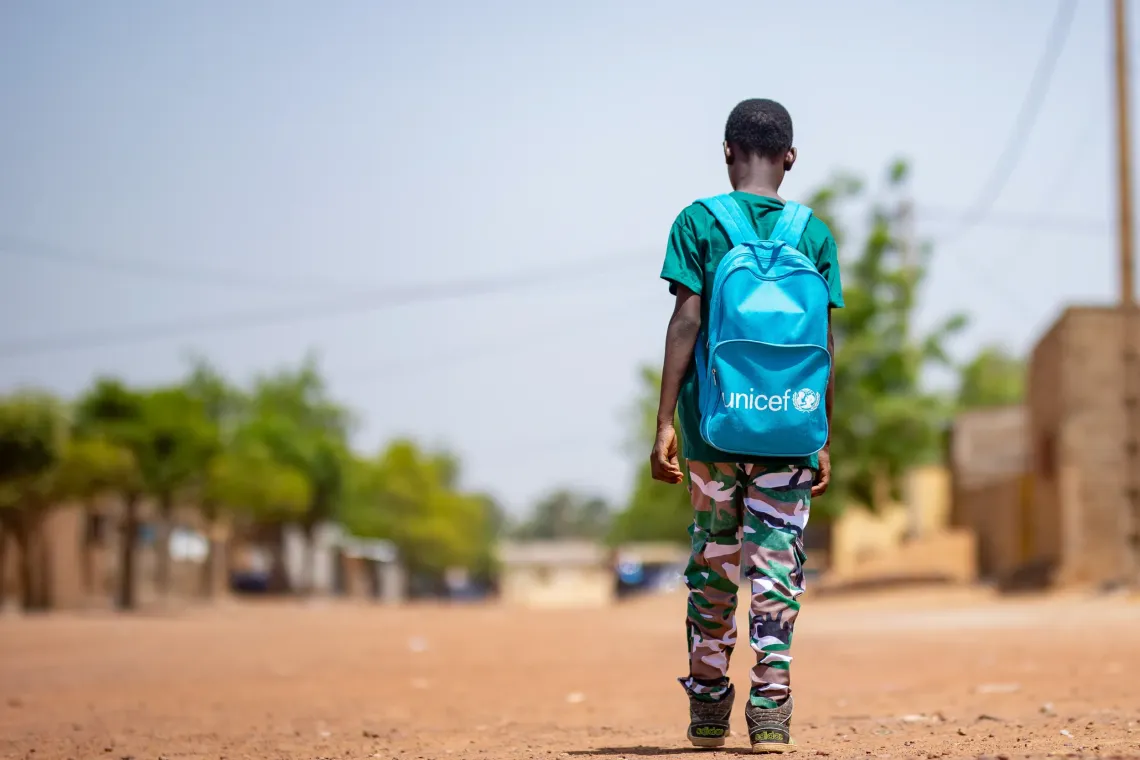
To improve learning conditions and student motivation in schools, Community Learning Centers (CACs), and radio listening groups in the project areas, a large-scale campaign to distribute school kits was carried out. More than 21 000 students, including 11,000 girls, received backpacks and supplies.
In addition, 2,000 out-of-school children aged 6 to 12, more than half of whom are displaced children, including the young student Mahamadou, were able to enroll or re-enroll in school.
The project also supports 29 schools and 12 Community Learning Centers in the Ségou and San regions with activities aimed at strengthening access to and continuity of quality, inclusive education in a conducive learning environment.