

It takes a whole community to support student well-being
That's why this School Management Committee has committed to girls’ education and environmental conservation
- Français
- English
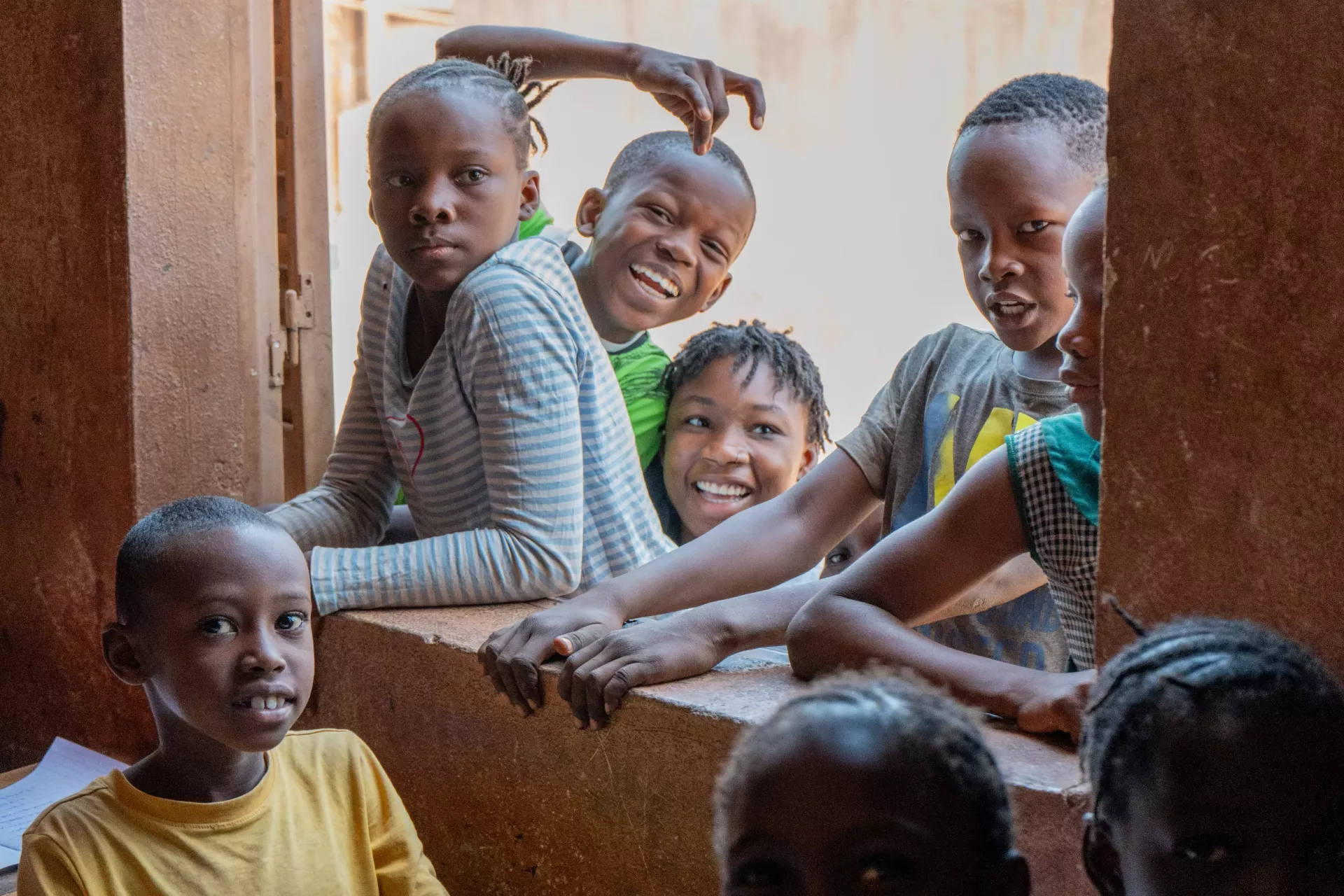
By mid-morning, the 436 students at J Fundamental School in Baco Djicoroni, a neighborhood in Bamako, Mali’s capital, are fully engaged in their lessons. Walking under the canopy that connects the classrooms, one can hear teachers explaining measurement units in mathematics or introducing a new French grammar rule. The youngest students concentrate on learning new syllables. A sea of hands rises when the teacher asks for volunteers to read from the board. The five classrooms have their windows wide open and on the other side of the building young trees are growing along the pathway that separates the classrooms from the lavatories.
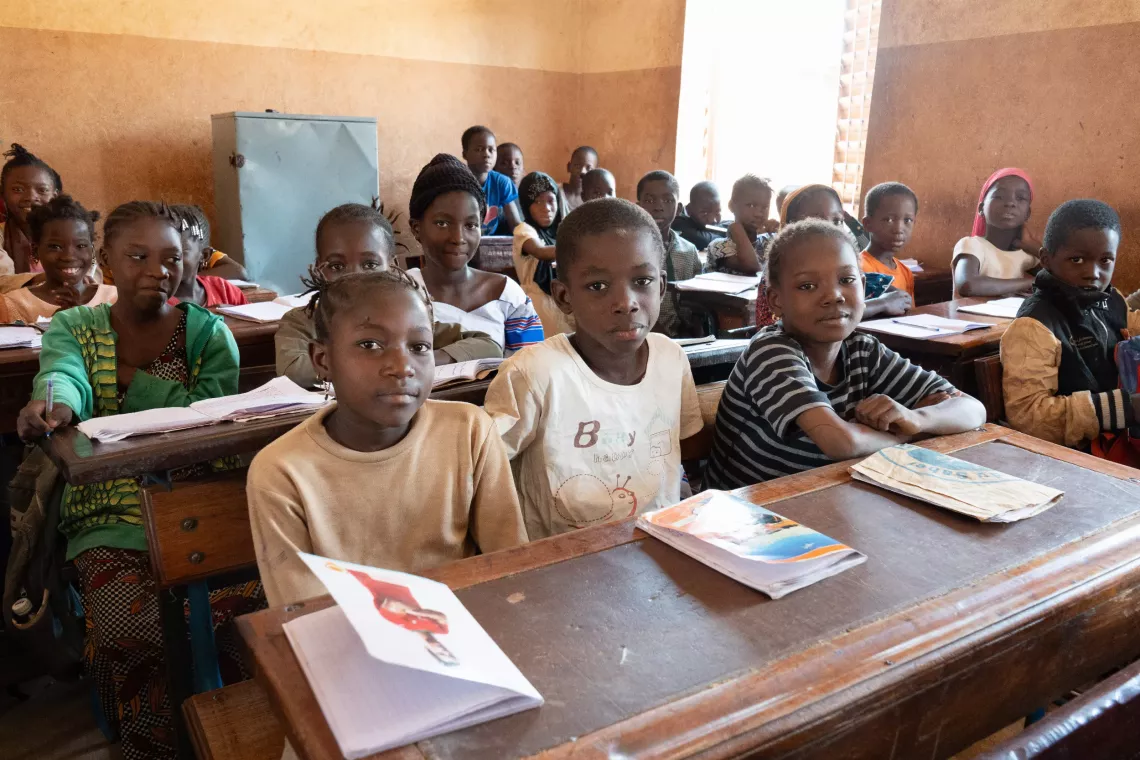
Nicknamed “Baco J” by the community, the school has received support from the Japanese government since its construction in 2011. It is now part of the “School for All” project, funded by the Japan International Cooperation Agency (JICA), which aims to promote the right to education for both girls and boys. As part of this initiative, School Management Committees (SMCs) have received training and support to enhance learning environments.
The SMC at Baco J pooled resources to plant trees in the schoolyard and ensure their watering and maintenance. Soon, students will benefit from green spaces that also help combat climate change. Another initiative driven by the SMC is the installation of lockable storage cabinets in each classroom, allowing teachers to securely store their materials instead of carrying them daily.
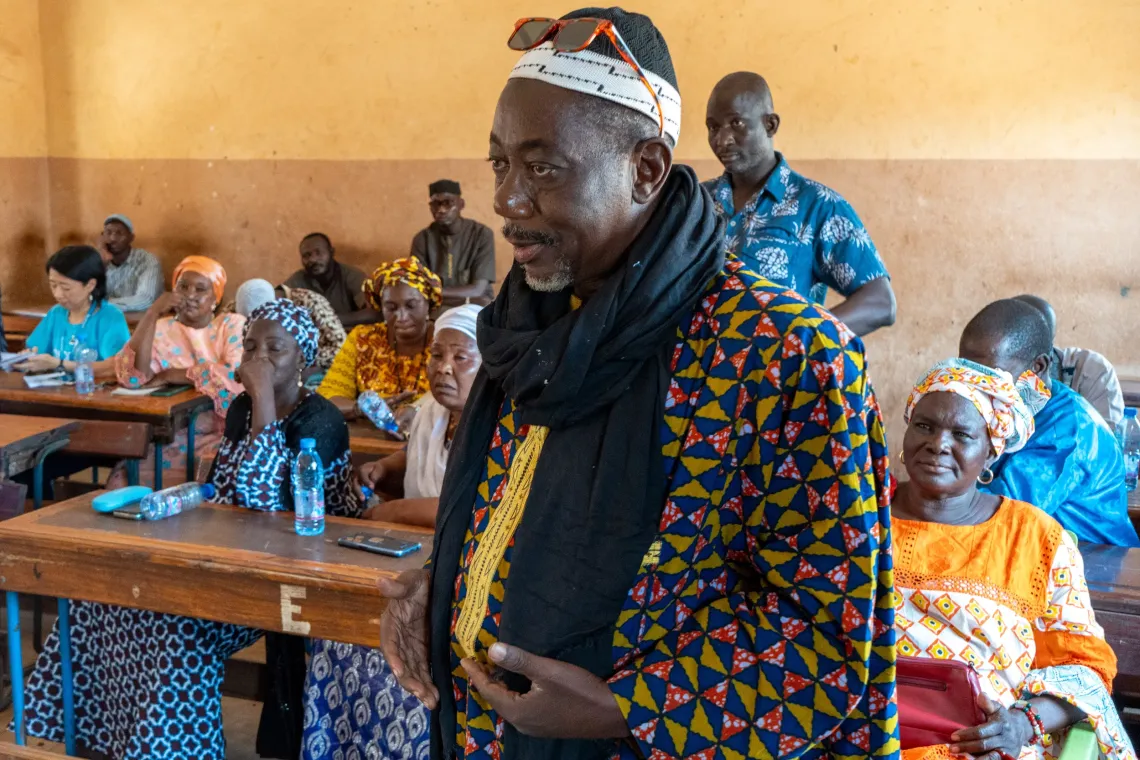
Sekou Sidibe, an electronics technician, is the President of the J School SMC as well as the broader network of school management committees. He has been actively involved in the school community for many years. His children, and now his grandchildren, attend J Fundamental School. Mr. Sidibe and the SMC are particularly committed to ensuring that girls enroll in school and complete their education.
To encourage parents to send their daughters to school, “the SMC has implemented measures to reduce tuition fees for girls,” explains Sidibe. Thanks to these efforts, Baco J is approaching gender parity, with 203 girls and 233 boys enrolled. in the second, fourth, and fifth grades, girls even outnumber boys.
According to Mr. Sidibe, one of the main reasons for school dropouts is financial hardship. Families in the neighborhood mainly rely on small-scale farming and trade. When resources are limited, families tend to prioritize boys’ education over that of girls.
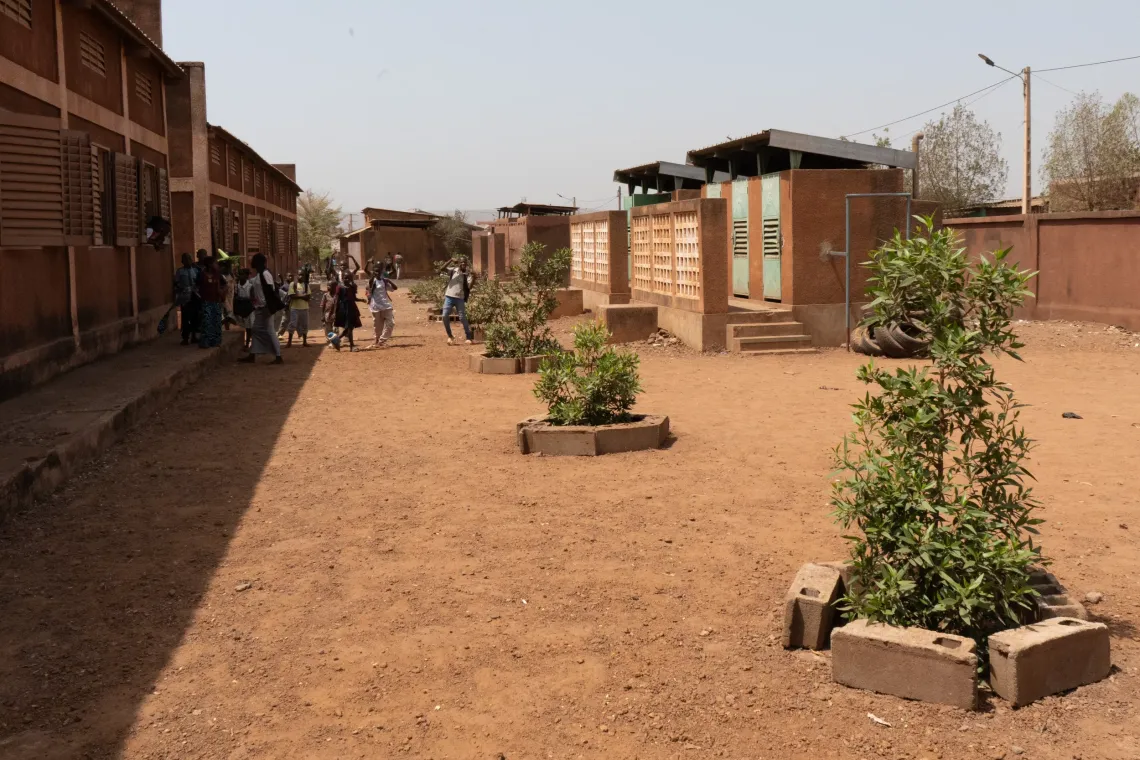
The SMC continues to develop projects to improve students’ well-being. The restrooms are currently being modified to accommodate individuals with reduced mobility, and the next step will be renovating classroom windows and benches.
The school is one of 433 Malian communities selected for the “School for All” project, funded by the Government of Japan through JICA in the Sahel region. This project aims to promote equal access to quality education for girls and boys in a safe and nurturing environment, with strong community involvement.
“Thank you to Japan! Thanks to this project, we now understand our roles and responsibilities,” concludes Mr. Sidibe.
Background
Each school in Mali has its own School Management Committee (CGS in French). The J school CGS is composed of 14 members: two teaching staff including the school director, two representatives from the parents' association, two from the mothers' association, two students, and community members. As part of the "School for All" project, each member of the CGS received training on their role and responsibilities. The Support Unit for Decentralization of Education (CADDE) within the Ministry of Education and the Teaching Academy also supports the CGS in their functions, in collaboration with UNICEF.


