Parenting in a changing Maldives: why supporting parents matter now more than ever
Marking Global Parenting Month 2026
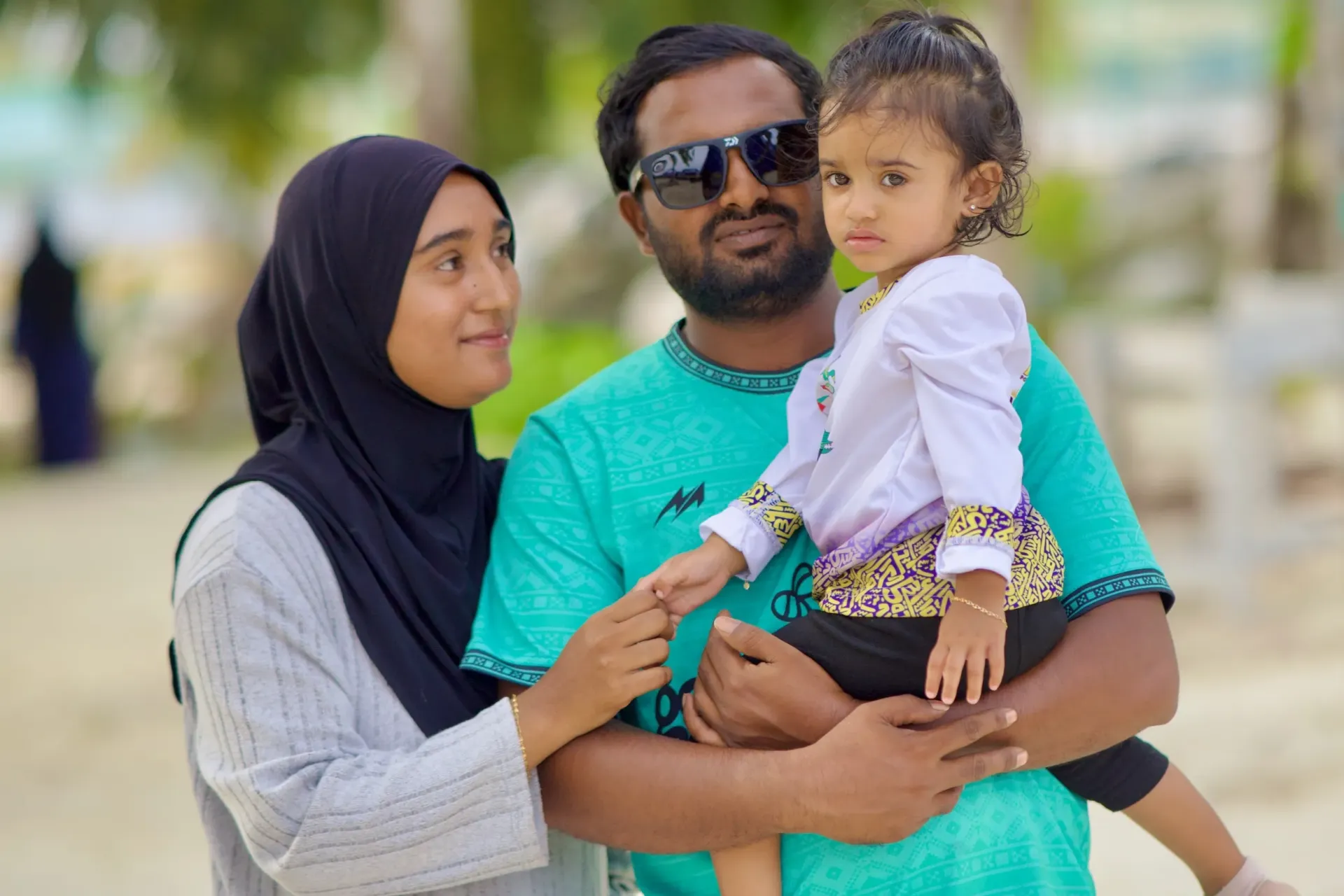
Every parent remembers a moment when they wished a child came with an instruction manual: whether it was the sleepless nights of infancy, the first day of school or the difficult conversations that emerge during adolescence, parenting does not come with a one-size-fits-all kit. In fact, it is one of the most important responsibilities any person can undertake, yet it is also one of the few for which no formal training is provided.
For generations, parenting knowledge was passed down naturally within families and close-knit communities. Grandparents, neighbours, aunts, uncles, teachers, and community leaders all played an essential role in guiding children and supporting caregivers along the way.
Today, however, these traditional support systems are changing. Across Maldives, as in many parts of the world, families are raising children in contexts that are more complex and fast-moving than ever before. Parents are navigating a world shaped by digital technologies, evolving family structures, economic pressures, climate uncertainty, and rapidly shifting social expectations. These changes are opening new opportunities for children, but they are also placing new demands on caregivers.
In this context, the need to better support parents and caregivers is not only timely—it is essential.
Families: the first layer of protection and development
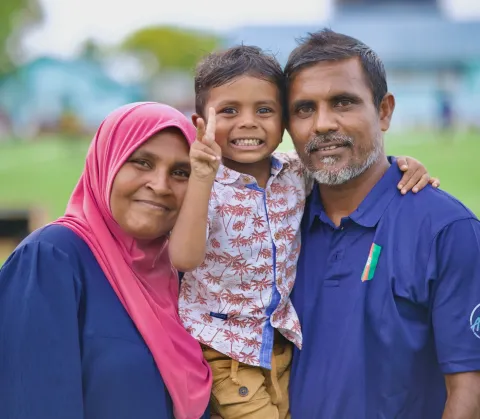
Families are the first and most important environment in which children grow, learn, and develop. Long before a child enters school, interacts with public services, or engages with wider society, they experience the world through their relationships with parents and caregivers.
These early relationships shape children's health, learning, wellbeing, confidence, and ability to thrive throughout their lives.
The evidence is clear: when parents and caregivers are supported, children are more likely to grow up healthy, safe, educated, and protected. Positive parenting contributes to stronger emotional wellbeing, improved educational outcomes, reduced exposure to violence, and greater resilience.
This is why parenting is not simply a private family matter. It is a child rights issue, a development issue, and an investment in the future of society.
The Convention on the Rights of the Child recognises parents as the primary caregivers and guides in a child's life. At the same time, it recognises that governments, communities, and institutions share responsibility for creating the conditions that enable families to fulfil this role.
Parenting support as a shared system of responsibility
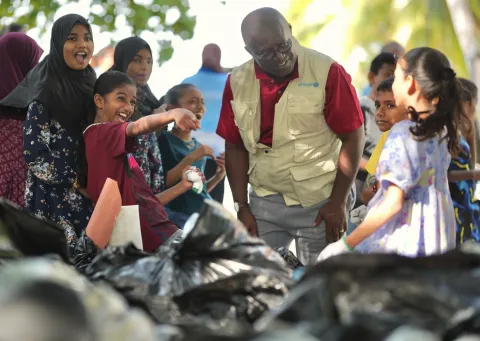
Too often, parenting is viewed as a responsibility that families must navigate alone. In reality, parents' ability to provide the care, protection, and guidance children need is shaped by the systems and support available around them. Whether it is health services providing advice on child development, teachers engaging caregivers in children's learning, workplaces adopting family-friendly policies, or social workers, health professionals, educators, and community leaders working together to strengthen families, each contributes to supporting parents in their vital role.
Parenting support is therefore not a single programme or intervention; it is an ecosystem of services, policies, and social norms that enables families to help children grow up safe, healthy, educated, and protected.
In Maldives, UNICEF is working with government partners to strengthen this ecosystem through initiatives such as the Beleniveriyaa - Joint Positive Parenting Programme, which provides parents and caregivers with practical knowledge and skills to support children's healthy development, positive behaviour, learning, and wellbeing. By creating opportunities for parents to learn, reflect, and connect with others facing similar challenges, the programme helps strengthen caregivers' confidence and capacity to nurture children in a rapidly changing world.
Such initiatives demonstrate that supporting parents is not simply about providing information. It is about creating sustained systems of support that empower families and contribute to stronger outcomes for children. Many of the challenges affecting children and adolescents today—including mental health concerns, violence, school disengagement, and online risks—cannot be addressed by children themselves, nor by parents acting in isolation, but stronger systems around families.
Strengthening systems that enable parenting
As Maldives advances its development agenda, the focus must shift from recognising the importance of parenting support to ensuring that it is consistently embedded within national systems and delivered at scale.
This means moving from fragmented efforts to a coordinated approach where parenting support is integrated across health, education, and social protection services. Every contact point between families and public systems should serve as an opportunity to strengthen parenting knowledge, confidence, and practice.
It also requires ensuring continuity of support across the full trajectory of childhood and adolescence. Parenting needs are evolving over time, from early nurturing and protection in infancy to guidance, communication, and trust-building during adolescence. Systems must therefore be designed to adapt alongside these changing developmental stages.
Equally important is ensuring equity of access. Families across all islands must be able to access timely, relevant, and culturally appropriate support, regardless of geography or socioeconomic status.
Within this context, initiatives such as the Beleniveriyaa programme reflect an important shift toward embedding parenting support within existing service delivery platforms, rather than treating it as a standalone or optional intervention. This approach helps ensure that parenting support becomes a consistent and integrated feature of how services are delivered to families.
Strengthening these systems is not an additional layer of investment; it is central to improving outcomes for children and ensuring that national progress is both inclusive and sustainable.
A collective commitment to children and families
Global Parenting Month is not only a moment to recognise the dedication of parents and caregivers. It is also an opportunity to reaffirm what the evidence has long made clear: no parent raises a child alone, and no child thrives in isolation.
Children’s outcomes are shaped not only within the home, but by the environments in which families live, learn, work, and access services. When these environments are supportive, predictable, and inclusive, parents are better equipped to provide the care, guidance, and stability that children need at every stage of development.
This is why strengthening support for families must be a shared national priority. It requires sustained commitment across government, schools, health systems, workplaces, communities, and civil society to ensure that parenting support is not fragmented or dependent on circumstances, but consistently available to every family.
As Maldives continues its development journey, the challenge is not the absence of commitment from parents. It is the need to ensure that systems and institutions are equally strong in supporting them, so that every caregiver, in every island, has access to the knowledge, services, and enabling conditions needed to raise children who can thrive.
UNICEF remains committed to working alongside the Government of Maldives and partners to strengthen these systems, expand access to quality parenting support, and ensure that every child grows up in a safe, nurturing, and enabling environment.
The future of the Maldives will be shaped by the children growing up today. That future will be determined not only by the dedication of families, but by the strength of the systems that stand behind them.