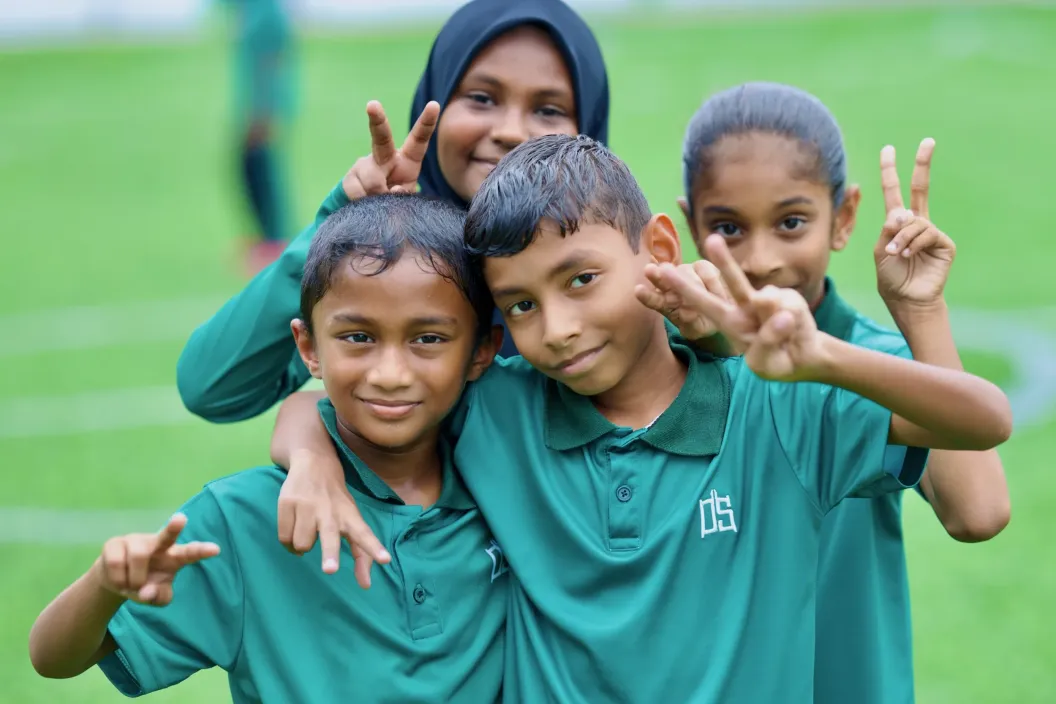
Children and young people in Maldives
Facts and figures

Maldives is one of the most distinctive countries in the world – economically, geographically, physically and socially.
The country consists of nearly 1,190 small coral islands spread across 90,000 square kilometres of the Indian ocean. Only 182 of the islands are inhabited.
Children make up 31 per cent of the population. About 10 per cent are young people aged 15 to 24.
Maldives has made exceptional progress for children and young people. But challenges remain; and new issues are emerging. In addition, UNICEF and partners are focused on securing the country’s hard-won successes so they are sustainable in the face of social, economic and climate risks.
Progress
In recent decades, Maldives has grown from one of the world’s least developed countries to an upper-middle income country. This economic growth meant that Maldives was able to achieve many of the world’s development targets, including:

Near universal primary and lower-secondary school completion

Major reductions in child and maternal mortality & elimination of many infectious diseases

Significant reductions in monetary poverty

Near universal access to healthcare
Challenges
Despite great progress, challenges remain for children and young people.
Family structures in Maldives are evolving and social dynamics are shifting with widespread access to digital technology, globalization and internal migration.
Traditional extended family structure is giving way to smaller nuclear families and households where caregivers work outside the house. Modern stress means parents struggle to spend adequate and quality time with their children. Some also lack the skills required to keep up as their children grow up in a digital and global world. In addition, housing for young families is a major challenge, especially in densely populated cities such as Malé.
Some of the challenges facing children and young people include:
Multidimensional poverty, which affects 28 per cent of Maldivians.

Mental health and well-being, growing concerns for children, young people and families.

Child protection concerns such as violence, exploitation and abuse and children exploited into crime.

Marginalization of children and young people with disabilities.

Socioeconomic changes and stresses of modern life that affect parents and caregivers’ capacity to provide safe, loving and nurturing environments for their children.

Low rates of upper-secondary school completion and high numbers of young people not in education, employment or training.

Emerging health and nutrition dangers – such as malnutrition, substance use and noncommunicable diseases..

The triple planetary crisis – climate change, biodiversity loss and pollution – an existential threat to the Maldives, one of the lowest and flattest countries in the world.