Growing with Rights: Why Evolving Capacities Matter when Responding to the Adolescent Challenge
OpEd to commemorate National Children’s Day 2026

On National Children's Day, we celebrate all children across Maldives – not only for who they are today, but for who they are becoming. It is also a moment to face a deeper reality: childhood is changing, and so too must the way we respond to the lives of young people as they grow.
Maldives has made significant progress in child survival, health, and education. But this progress brings into sharper focus a new challenge: adolescence. Today's adolescents are growing up amid climate change, mental health pressures, rapid digital transformation, and evolving expectations around learning and work. These are not distant issues; they are part of their daily lives.
Adolescence: more than a period of risk
Too often, responses to adolescence focus only on protection and on shielding young people from harm. Protection is essential. But it is not enough.
Adolescence is also a period of extraordinary development – physical, cognitive, emotional, social, and linguistic – when young people shape identity, deepen relationships, and begin engaging actively with the world.
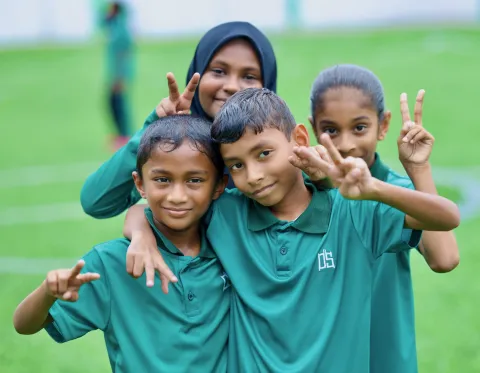
In Maldives, adolescents are already visible in climate action, public conversations, and digital spaces. The question is not whether they are ready to engage. It is whether our systems are ready to engage with them in return.
From protection to preparation
Protection alone, when it becomes the dominant response to adolescence, risks producing the very fragility it seeks to prevent. Our systems were built for younger, more dependent children. A child protection system designed to safeguard a seven-year-old is ill-equipped to support a sixteen-year-old through a mental health crisis. A curriculum focused on rote learning fails to engage a fifteen-year-old's critical thinking. The welfare system defaults to surveillance and control – tools that clash with the adolescent's drive for autonomy, becoming sources of friction rather than bridges to adulthood.
The shift needed is not an abandonment of care, but a deepening of it.
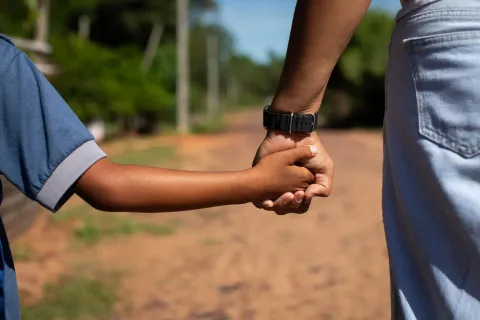
Think of scaffolding; at first, maximum support, then, as competence grows, a careful stepping back. Adolescents who are supported through manageable challenges learn that they can recover. That lesson becomes the foundation of lifelong resilience.
Justice systems must shift from punishing developmental behaviour to restoration and reintegration. Welfare must move from surveillance to mentoring and capability-building. Health systems must go beyond treating illness to building health literacy from within communities. And education must stretch beyond academic certification: the stark drop in enrolment after 16 years – fewer than half of young people progress to higher secondary – is a signal of disengagement that demands a response built around life skills, social-emotional learning, and genuine relevance to adolescent lives.
Evolving capacities and doing with, not for
The UN Convention on the Rights of the Child is clear: children are rights-holders from birth, and their capacities evolve over time. This principle of "evolving capacities" reflects a life-course view of childhood; not as separate stages, but as a continuous journey from early childhood through adolescence into adulthood. From this perspective, adolescence is not an isolated phase but a critical transition that requires systems which adapt as children grow, rather than treating them as static recipients of services.
Recognising this means moving from ‘doing’ for young people to ‘doing with’ them. It means creating space for meaningful participation in shaping the decisions that affect their lives; strengthening education to build critical thinking, emotional resilience, and life skills alongside academic knowledge; investing in mental health support that reflects real adolescent pressures; and ensuring digital environments are both safe and enabling. Participation must be real, structured, and sustained.
A shared responsibility
This requires commitment at every level. Policymakers must design systems that respond to adolescent realities. Schools must nurture well-being and skills alongside academic outcomes. Families must create space for dialogue and trust. And adolescents must be recognised not only as future leaders, but as active partners today.
On this National Children's Day, the message is clear: Maldives has built a strong foundation for its children. The next step is to ensure that as children grow, our systems grow with them, because children do not grow into their rights at a single moment. They grow with them, gradually, continuously, every day. Recognising their evolving capacities is not optional. It is essential.