From Zero-Dose to Protection: Fatima's Journey to Vaccination
“I feel proud knowing my baby is protected,” Fatima

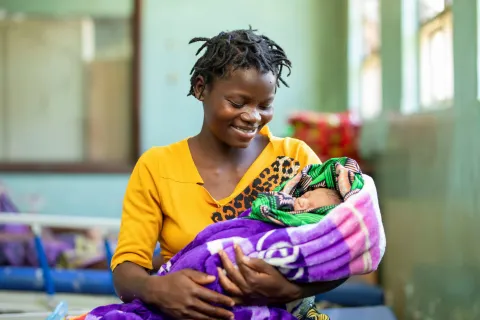
In the quiet village of Mluwira in Machinga, 18-year-old Fatima Jawadu holds her seven-month-old daughter, Sauda, with a newfound sense of relief.
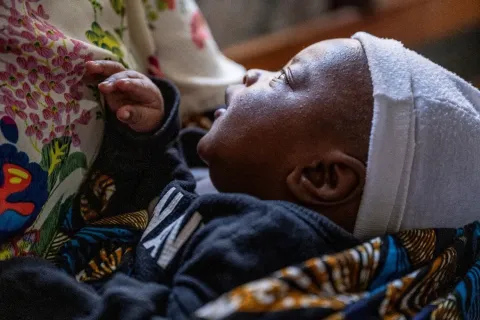
For months, little Sauda had not received a single vaccine, making her one of Malawi’s zero-dose children—infants who have never received routine immunizations. But that is no longer the case for Sauda.
With a health passport in hand, Sauda is catching up on the vaccines she had missed, thanks to UNICEF Zero-Dose Project funded by GAVI, the Vaccine Alliance.
The Barriers to Vaccination
Fatima’s journey to getting her child vaccinated was not an easy one. Like many young mothers in her community, she delivered Sauda at home with the assistance from her grandmother and a neighbor. While the birth was safe, the aftermath posed a challenge.
“When you have delivered at home and you go to the hospital, you pay a penalty,” Fatima explains. “I didn’t have the money.”
Without the means to pay the penalty, Fatima avoided the health facility. As a result, Sauda missed her routine immunizations. Even though healthcare workers regularly visited the village for under-five clinics, Fatima hesitated to attend.
“I knew vaccines help prevent diseases, but I felt ashamed and feared being questioned about why I was attending the clinic when I had not paid the penalty,” she admits.
A Turning Point: Community Support and Engagement
Fatima’s story took a different turn when the Zero-Dose Project reached her village. The project aimed to identify and support caregivers like Fatima, ensuring that no child is left behind in immunization efforts.
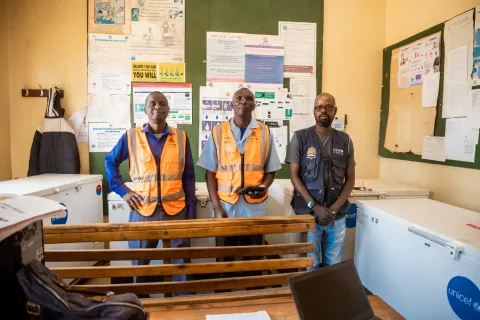
Local community health workers (CHWs) played a crucial role in the transformation. One health worker, Esnart James, whom Fatima had known from Namandanje Health Centre, took the time to speak with her.
“I kept engaging Fatima on the dangers of not presenting the child to the hospital. As a newborn, she needed to get the vaccine to prevent diseases,” says James.
James explained to Fatima that it was not too late, that her baby could still receive vaccines even at five months and engaged the health surveillance assistant of the area to support Fatima to get the child vaccinated.
“The penalty that Fatima needed to pay to the chief was K1,500 (about US$0.86). However, she could not afford it. After the health worker approached her, all she needed was to get her child a health passport, costing MK500 (about US$0.29), to go to the hospital,” said James.

Steven Njoka, the HAS responsible for Fatima’s area, made several follow ups to her house until she was convinced to take the child for vaccination. Njoka did not give up on Fatima despite having a huge responsibility to support more than 1,500 people in his catchment area.
“It was not a single day job to convince her to come to the clinic and she kept giving excuses. The day that she came was one of the most exciting moments of me as a health worker,” says Njoka.
Apart from the healthcare workers, community leaders, including the chief of the village, also encouraged Fatima to take the child to hospital for vaccination. They stepped in to support Fatima even though she had not paid the penalty.
“Our chief said every child in the village must be vaccinated,” Fatima shares. “That gave me confidence. With the chief’s blessings, I decided to go to the hospital.”
A Mother’s Determination
With the backing of her community, Fatima finally took Sauda to the under-five clinic. The experience, she says, was not as daunting as she had feared.
“The nurses welcomed me. They gave Sauda her first vaccines and even provided me with a health passport,” she says with a smile. “Now that Sauda is 10 months-old, she has caught up with all the vaccines she was supposed to receive at her age, and I make sure we attend all the clinic appointments.”
The health passport—a simple yet powerful document—now tracks Sauda’s immunization progress. With each visit, Fatima marks a milestone, ensuring her child is protected from preventable diseases.
Looking Ahead
Fatima’s journey highlights the barriers many young mothers face in accessing healthcare, but it also showcases the power of community-driven initiatives. Thanks to the Zero-Dose Project, Sauda is no longer at risk of vaccine-preventable illnesses.
“I feel proud knowing my baby is protected,” Fatima says. “I tell other mothers that it’s indeed important to vaccinate our children.”
In Malawi, parents' marital status significantly influences children's vaccination status as most zero-dose children come from single-mother households, according to Njoka. This disparity is driven by compounded challenges, including poverty. Through efforts under the Zero-Dose Project, Malawi moves closer to eliminating zero-dose children.