Water taps keep learners focused on studies at Mkazomba school
Promoting sanitation and hygiene

It is early morning, and students at Mkazomba Primary School in the capital of Malawi, Lilongwe are focused on their lessons. These days, girls and boys alike are able to pay attention in class without worry or distraction of how they will access safe water.
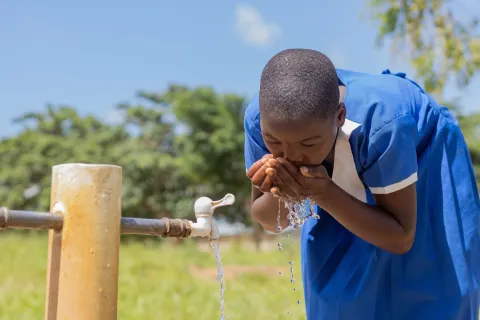
With thanks to the support of the UK Government and UNICEF, this school now has sinks with taps nearby classrooms, enabling learners to access safe, drinking water without having to trek for hundreds of metres to the nearest village to fetch water from a shallow well, where waterborne diseases are rife, and which was causing them to miss out on crucial hours at school.
With limited access to water, maintaining good sanitation and hygiene in the toilets and around the school had been difficult. So, when the school received a solar-powered water system that brought safe water close to their classrooms, all the learners experienced a dramatic improvement to school life.
Now, safe water is now just one metre away from their classrooms.
Today at least 6 taps are now dotted around the school and staff houses to cater for 1,507 learners, of which 52 per cent are girls.
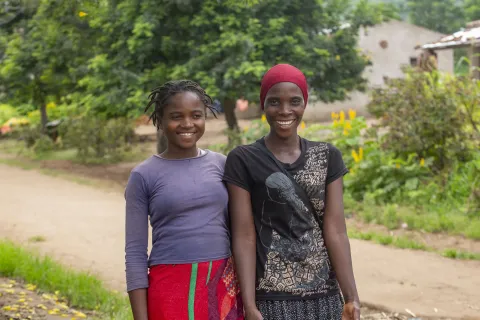
Sixteen-year-old Shira Chikuse, a Standard 7 student at the school, attests to the challenges she and her peers faced before the school had access to piped water.
“When we had to go to the shallow well in the local village, girls were beaten and bullied by boys, because some boys believed that they needed to access water first before girls,” Shira explains. She also recalls the fights between boys and girls to fetch water for cleaning toilets, mopping classes, and watering flowers.
“Girls felt a heavier burden to fetch water for these purposes unlike boys,” adds Shira, who lives at a nearby trading center and wants to become a nurse. She draws her nursing inspiration from the Social Studies subject which she says has stimulated her interest in improving the social wellbeing of her community.
“The coming of water taps connected to the solar-powered water scheme has eliminated the need for queuing to fetch water. Water is now available and conveniently located near my classroom,” says Shira, expressing her joy that the struggle over water between girls and boys at the school is no more.

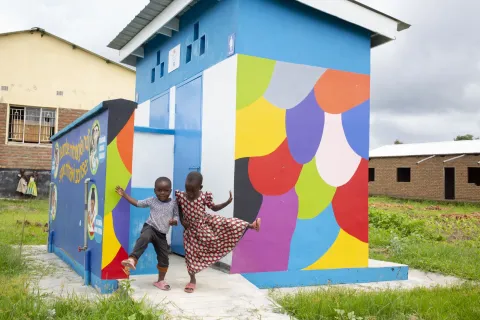
Thanks to this new development, children can now wash toilets and keep their environment clean. Flowers on the school lawns are also well-watered and blossoming.
Wilson Palipo, a 16-year-old Standard 8 student at the school echoes the importance of the water taps as he prepares to sit for national examinations for the Primary School Leaving Certificate this year. His perspective on water is connected to his interest in science subjects and ambition of becoming an engineer dealing with water issues.
“Water plays important roles in our lives. I recall a time when my education was disrupted due to illness caused by drinking unsafe water from the shallow well. Now, with reliable water supply, I rarely fall ill, and I consistently attend classes,” he says.

Clean water from the solar-powered water system has also brought joy to community members such as Martha Chikwasa, who now has a conveniently located water tap close to her home. She no longer worries about long walks to fetch water for her four-year-old child.
Deputy Headteacher Mr. Alfred Kondowe is proud that, among the 13 schools in their zone, Mkazombe is one of the primary schools that has received safe water support from UNICEF and partners.
UNICEF installed the solar-powered water-system, including two water storage tanks, water taps and handwashing facilities with the financial support of the Government of the United Kingdom through the Foreign, Commonwealth and Development Office (FCDO).
Kondowe says members of the surrounding community were trained in maintenance of the facilities to keep them operating continuously and sustain the supply of safe water to the learners and the community.
“The enrollment of girls is increasing because they can now maintain good menstrual hygiene, and we also see that the school dropout of girls during their menstrual periods has reduced,” he says. “This initiative is promoting good hygiene practices and reducing the risk of waterborne diseases in the community as well.”